
3 Essential Tips to Maximize Metal Laser Cutting Machine Efficiency
Table of Contents
Introduction
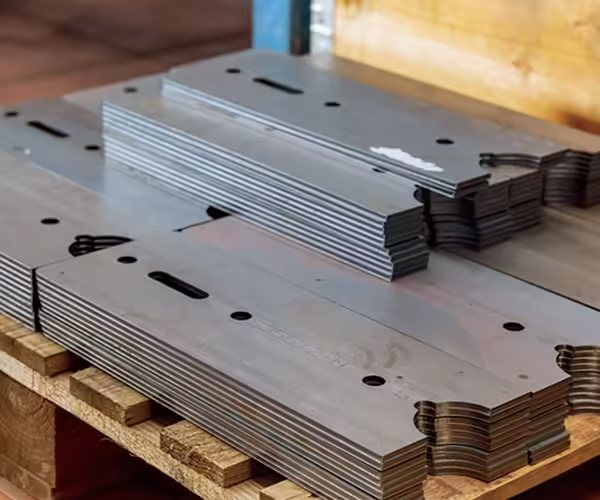
Metal laser cutting machines have become indispensable in modern manufacturing, allowing for precise and rapid cutting of a wide variety of metals. Their efficiency, however, depends on more than simply turning the machine on. Factors such as regular maintenance, proper material selection, operator expertise, and precise adjustment of cutting parameters significantly influence productivity and overall operational costs. Manufacturers and workshop managers must understand how each of these elements interacts to achieve consistent, high-quality results. Enhancing the efficiency of a metal laser cutting machine is not only about increasing output; it is also about reducing material waste, preventing downtime, and extending the lifespan of expensive equipment.
Maintaining Peak Performance of Metal Laser Cutting Machines
One of the most critical aspects of ensuring efficient operation is consistent maintenance and calibration. The optical system, consisting of lenses and mirrors, is particularly sensitive to dust, debris, or minor misalignments. Even small accumulations on these components can reduce laser power and compromise cutting precision. Regular inspections and cleaning routines are vital to ensure the beam remains focused and accurate.
Over time, misalignment of mechanical parts can occur due to vibrations or heavy usage, which may lead to uneven cuts or increased material consumption. In addition to optics and alignment, the smooth operation of the gantry and rails is essential. Lubrication of moving components ensures that the cutting head moves precisely, maintaining uniform cut quality across large sheets of metal. The exhaust and filtration systems also play a significant role; they help prevent overheating and maintain air quality, both of which impact machine performance.
Preventive maintenance schedules are more effective when operators maintain detailed logs, noting every inspection and service activity. Some modern machines even come equipped with automated diagnostic systems that alert staff to potential issues before they escalate, allowing for timely intervention that prevents costly breakdowns.
Material Selection and Preparation Impact Efficiency
The type and condition of metal being processed have a direct effect on cutting performance. Metals differ in thickness, reflectivity, and thermal conductivity, which can alter cutting speed and energy usage. For example, thinner sheets generally allow faster cuts at lower laser power, while highly reflective metals, such as aluminum, may require special coatings or laser settings to prevent reflection losses. Ensuring the material is clean and free from oils, rust, or dust is crucial, as surface contamination can cause inconsistent cuts and reduced quality.
Preparing the metal in advance, such as flattening warped sheets or standardizing dimensions, not only improves cut accuracy but also enhances workflow efficiency. By organizing materials and pre-marking cut lines, operators can reduce errors and optimize machine utilization, leading to smoother operations and reduced waste.
Parameter Optimization and Software Utilization

Modern metal laser cutting machines rely heavily on software for precision and efficiency. Adjusting cutting parameters such as laser power, cutting speed, gas type, and focus position is essential for achieving high-quality results. Using too much power can waste energy and shorten the lifespan of components, while insufficient power can leave rough or incomplete cuts.
Cutting speed must be carefully balanced with material characteristics; matching the speed to the type and thickness of metal ensures optimal edge quality and reduces the formation of dross. The selection and pressure of assist gases, like oxygen or nitrogen, also influence cut quality, preventing oxidation and improving edge smoothness. Focus position is another crucial factor, as proper focal alignment guarantees clean cuts and minimal residual material.
Software tools further enhance efficiency by optimizing nesting layouts, monitoring machine health, and tracking production metrics. These systems allow operators to identify bottlenecks, anticipate maintenance needs, and make data-driven adjustments, improving both throughput and part quality.
Comparative Table: Factors Influencing Metal Laser Cutting Machine Efficiency
| Factor | Low Efficiency Scenario | High Efficiency Practice | Expected Outcome |
|---|---|---|---|
| Maintenance | Dusty optics and misalignment | Regular cleaning and calibration | Improved cut quality and reliability |
| Material Selection | Unclean, reflective, or thick sheets | Proper pre-screened, leveled metals | Reduced energy use and faster cuts |
| Laser Parameters | Incorrect power or speed | Adjusted to material type and thickness | Cleaner edges, consistent quality |
| Gas and Focusing | Wrong gas type or misaligned focus | Optimized gas type, pressure, and focus | Minimal dross, smoother cuts |
| Operator Handling | Limited experience or poor monitoring | Trained operator using software tools | Fewer errors, reduced downtime |
This table emphasizes how maintenance, material choice, parameter settings, and operator expertise collectively influence efficiency. Focusing on all these aspects ensures a metal laser cutting machine performs at its full potential while minimizing waste and operational interruptions.
Integrating Additional Efficiency Strategies

Beyond maintenance, material preparation, and parameter optimization, other factors play an important role in maximizing machine performance. Regular operator training ensures staff are familiar with the latest software features, cutting techniques, and safety protocols. The production environment also affects efficiency; maintaining proper temperature and humidity prevents thermal distortion of the material and ensures consistent cutting results. Preventive maintenance scheduling, rather than reactive repairs, reduces unplanned downtime and helps plan production flows more accurately. Workflow integration, including efficient handling of raw materials and collection of finished parts, minimizes idle time and allows the machine to operate continuously without interruptions.
By combining these strategies with the three essential tips, workshops can achieve smoother operations, higher throughput, and more reliable product quality.
Conclusion
Maximizing the efficiency of a metal laser cutting machine requires a comprehensive approach. Proper maintenance, careful material selection, precise parameter adjustments, and skilled operators work together to enhance performance, reduce errors, and extend machine longevity. Advanced software and monitoring tools further improve production by providing actionable insights and predictive maintenance alerts. Companies that embrace these strategies can expect significant gains in productivity, quality, and cost-effectiveness, making their metal laser cutting operations more competitive and sustainable in today’s manufacturing landscape.
FAQ
Q1: How frequently should maintenance and calibration be performed on a metal laser cutting machine?
Maintenance should follow the manufacturer’s recommendations, typically ranging from every few weeks for optics cleaning to quarterly or semiannual calibration checks, depending on usage intensity.
Q2: Can all metals be processed at the same efficiency?
No. Reflective metals, thick alloys, or materials with surface contamination often require adjusted power, speed, and gas settings to maintain efficiency.
Q3: How critical is operator training in maximizing efficiency?
It is extremely important. Operators who understand software controls, cutting parameters, and maintenance requirements can significantly reduce errors and downtime.
Q4: Does optimizing laser power really improve energy efficiency?
Yes. Correct power settings reduce unnecessary energy consumption and prevent premature wear on laser components, contributing to overall cost savings.
Q5: Are there tools that monitor efficiency in real-time?
Many Metal Laser Cutting Machine include monitoring dashboards, predictive maintenance alerts, and nesting software that tracks material usage and cutting performance, helping operators make informed decisions.
If you enjoyed this article on Jinbolida’s smart manufacturing and digital factory expertise, follow us for more insights and updates:
- 📘 Facebook: Stay tuned for our latest smart production line projects → Facebook
- 📱 WhatsApp: Contact us anytime for custom production solutions → Chat Now
- ▶️ YouTube: Watch our automated line demos and real-world applications → YouTube
Let’s keep innovating and shaping the future of smart manufacturing — together! 🚀
 English
  Arabic
  Russian
  Spanish
  French