
3 Steps to Master Channel Steel: Boost Project Efficiency
Table of Contents
Introduction
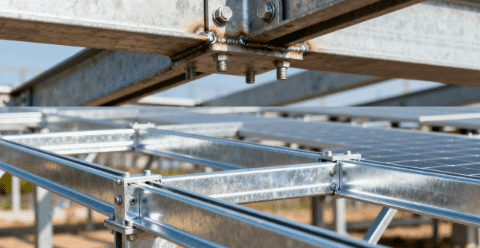
In the vast landscape of industrial and construction materials, channel steel stands as a fundamental component, crucial for a myriad of applications from architectural structures to vehicle manufacturing. For B2B buyers, understanding and optimally utilizing channel steel is not just about procurement; it’s about leveraging its inherent properties and the latest manufacturing advancements to significantly boost project efficiency. This blog post delves into a three-step approach to mastering channel steel, guiding you through selection, processing, and application to achieve unparalleled project success and operational excellence.
Step 1: In-Depth Understanding and Precise Selection of Channel Steel
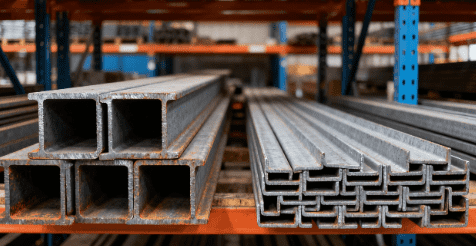
Mastering channel steel begins with a comprehensive grasp of its varieties, specifications, and performance characteristics. The right choice at this initial stage can save considerable time and resources downstream.
Channel Steel Family Tree: Essential Differences Between Ordinary and Light Channel Steel
Channel steel, characterized by its concave groove-shaped cross-section, is a type of structural steel widely used in construction and machinery. Broadly, it’s categorized into ordinary channel steel and light channel steel. Hot-rolled ordinary channel steel typically ranges from 5# to 40#, while hot-rolled variable ordinary channel steel, supplied by agreement between demand and supply sides, spans 6.5# to 30#. Differentiating between these types is crucial for ensuring the chosen material can withstand the specific loads and environmental conditions of your project.
Cold-Formed Channel Steel: Four Types and Their Application Scenarios
Beyond the basic hot-rolled forms, channel steel can also be cold-formed, offering distinct advantages for certain applications. According to shape, channel steel can be divided into four types: cold-formed equal-leg channel steel, cold-formed unequal-leg channel steel, cold-formed inner-curling channel steel, and cold-formed outer-curling channel steel. Each type is engineered for specific structural demands, influencing its suitability for various projects such as building structures, curtain wall engineering, and mechanical equipment.
Understanding Channel Steel Naming Conventions: hbd Dimensions and # Designation
To make precise selections, B2B buyers must be familiar with the standard ways channel steel specifications are expressed. Standards are denoted by the millimeter dimensions of its web height (h), leg width (b), and web thickness (d), such as 100485.3, which indicates a channel steel with a web height of 100 mm, leg width of 48 mm, and web thickness of 5.3 mm, also referred to as 10# channel steel. When channel steel of the same web height has different leg widths and web thicknesses, distinctions are made by adding ‘a’, ‘b’, ‘c’, etc., to the type number, such as 25#a, 25#b, 25#c. This detailed notation ensures you specify the exact channel steel required for optimal performance.
Material Composition of Channel Steel: How Carbon Structural Steel and Low-Alloy Steel Affect Performance
The performance of channel steel is inherently tied to its material composition. The raw steel billets used for producing channel steel are typically carbon structural steel or low-alloy steel with a carbon content not exceeding 0.25%. This composition directly impacts the material’s mechanical properties, including its ability to be welded or riveted effectively.
Assessing Welding and Riveting Performance: Key to Strong Channel Steel Structural Connections
In many industrial applications, channel steel structures rely on strong, reliable connections. Therefore, channel steel is required to possess good welding, riveting performance, and comprehensive mechanical properties. Evaluating these characteristics is paramount for ensuring the integrity and longevity of any structure. For instance, in architectural structures, robust welding ensures the stability and safety of the entire framework.
Industry Standard Compliance: Essential Reading for Channel Steel Project Conformity
Adherence to industry standards is non-negotiable for B2B projects. Channel steel typically comes in a hot-processed, normalized, or hot-rolled state. Understanding and verifying that your chosen channel steel meets relevant industry standards is crucial for project conformity, safety, and regulatory approval. This due diligence ensures the material performs as expected in demanding environments.
Step 2: Efficient Processing and Smart Manufacturing of Channel Steel
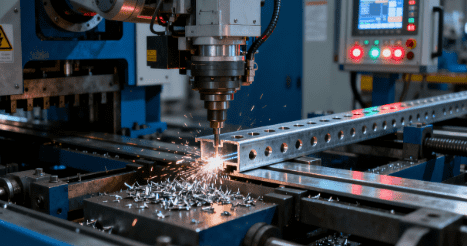
Once the right type of channel steel is selected, the next step involves optimizing its processing and manufacturing. Modern smart factory solutions are revolutionizing this stage, dramatically boosting efficiency and precision.
Smart Production Lines: Revolutionary Solutions for Boosting Channel Steel Processing Efficiency
Smart production lines represent a significant leap forward in manufacturing, offering integrated solutions for processing various profiles, including channel steel. These lines are equipped with automated forming, punching, and assembly capabilities, delivering consistent quality with high efficiency. They can significantly improve manufacturing efficiency with minimal manual intervention. Companies specializing in digital factory solutions provide such comprehensive smart factory overall solutions.
Nanometer-Level Precision Transmission: Core Technology for Ultimate Channel Steel Machining Accuracy
At the heart of high-efficiency processing lies precision. Leading companies are at the forefront of nanometer-level precision transmission technology, developed in partnership with top universities. This core technology enables exceptionally accurate machining, which is critical for complex industrial applications.
Achieving Superior Accuracy: R-Angle, Length, and Hole-to-Hole Precision in Channel Steel
Precision is not merely a buzzword; it’s a measurable outcome with significant implications for project quality and efficiency. Modern machine groups can produce steel formwork with an r-angle accuracy of less than 0.5°, a length accuracy of less than 0.2 mm, and a hole-to-hole accuracy of plus or minus 0.2 mm. This level of precision is a tenfold improvement over the industry standard of 1-2 mm. Such advancements are vital for applications requiring exacting standards, like steel formwork production lines that can replace less precise wooden formwork and costly aluminum formwork.
Table 1: Comparison of Channel Steel Processing Precision
| Feature | Industry Standard Accuracy | Advanced Smart Production Line Accuracy | Improvement Factor |
| R-angle Accuracy | 1-2 mm | < 0.5° | ~10x |
| Length Accuracy | 1-2 mm | < 0.2 mm | ~10x |
| Hole-to-hole Accuracy | 1-2 mm | ± 0.2 mm | ~10x |
Automated Eight-Station Punching: The Secret to High-Efficiency PV Bracket Production
For specific applications such as photovoltaic (PV) brackets, specialized equipment offers immense efficiency gains. Automated eight-station punching lines are primarily used for high-efficiency PV bracket production. These lines deliver precise, flexible, and continuous manufacturing, capable of supporting quick switching between C and Z steel profiles, and ensuring fast and accurate production for diverse solar mounting system needs.
Cold Bending Forming Process: Channel Steel Production for Energy Optimization and Environmental Trends
The choice of manufacturing process also contributes to efficiency and sustainability. Cold bending forming, as opposed to traditional hot processing, offers benefits in terms of energy consumption and environmental impact. Producing channel steel through cold bending allows for energy optimization and aligns with modern environmental trends, reducing the overall carbon footprint of production.
Reducing Manual Intervention: Benefits of Lean Management in Channel Steel Production Lines
Automation in channel steel production lines significantly reduces the need for manual intervention, leading to “less labor” and streamlined operations. This lean management approach not only cuts down on labor costs but also minimizes human error, resulting in higher consistency and quality in the final channel steel products. Features like automated stacking further enhance efficiency by handling finished products without manual effort.
Patented Products and Processes: Ensuring High-Quality Channel Steel Production Competitiveness
Innovation, often protected by patents, drives competitiveness and ensures high-quality output. Companies leveraging patented products and processes in their channel steel production lines achieve high precision and high efficiency, coupled with long mold life. This commitment to advanced R&D, often through partnerships with global research teams, is crucial for staying ahead in the industry.
C/U-Shaped Steel Feeding and Punching System: Automated Solutions for Precision Hole Processing
Precision hole processing in C/U-shaped steel (related to channel steel applications) is greatly enhanced by automated systems. Integrated feeding and punching systems ensure accurate and efficient hole creation, vital for components used in various structures and assemblies. This level of automation is also seen in photovoltaic connector automatic punching, cutting, and forming lines, specializing in high-speed processing of solar mounting components.
Step 3: Optimizing Project Application and Boosting Efficiency with Channel Steel
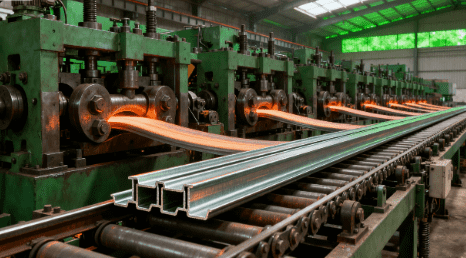
The final step involves strategically applying channel steel to maximize project efficiency, leveraging its structural advantages and integrating it with advanced solutions.
Channel Steel in Building Structures: Accelerating Project Construction and Stability
Channel steel is a primary component in building structures, where its strength contributes to stability and durability. By selecting the correct type and utilizing efficiently processed channel steel, construction projects can accelerate their timelines. The ability to quickly and accurately assemble structural components directly impacts project speed.
Channel Steel in Curtain Wall Engineering: Balancing Structural Strength and Aesthetic Design
In modern curtain wall engineering, channel steel provides essential structural support. Its use allows for designs that balance robust structural strength with desired aesthetic appeal. Precision-engineered channel steel ensures that these complex systems are not only secure but also meet the stringent visual and functional requirements of contemporary architecture.
Solar Bracket Channel Steel Selection: Ensuring Efficient Installation and Long-Term Durability
The booming solar energy sector heavily relies on channel steel for photovoltaic (PV) support structures. The right selection of channel steel, often in C or Z profiles produced on intelligent manufacturing lines, ensures efficient installation and the long-term durability of solar arrays. These lines offer quick switching between C and Z steel profiles, optimizing production for diverse solar mounting system needs.
Steel Formwork Production Line: Cost-Effectiveness and Precision Advantage Over Traditional Templates
Innovations in steel formwork production, enabled by advanced channel steel processing, offer significant advantages. Machine groups producing high-strength alloy formwork can replace non-reusable wooden formwork and high-cost aluminum formwork. This not only provides superior precision (R-angle, length, hole-to-hole accuracy) but also results in cost-effectiveness and reduced environmental impact, aligning with green construction initiatives.
Digital Factory Solutions: Intelligent Integration and Optimization of the Channel Steel Supply Chain
Beyond individual production lines, digital factory solutions offer an overarching approach to intelligent integration and optimization across the entire channel steel supply chain. These solutions provide full-chain manufacturing capability, from precision parts to complete digital factory setups, integrating production across the entire value chain. This holistic approach ensures seamless coordination and efficiency from raw material to final product.
Customized Production Line Design: Meeting Diverse B2B Project Needs for Channel Steel
Recognizing that every B2B project has unique requirements, companies offer customized production line design solutions. Whether for specific dimensions, complex geometries, or unique production volumes, these tailored solutions ensure that the channel steel processing capabilities precisely match the project’s demands, optimizing efficiency and minimizing waste. This flexibility is a hallmark of advanced manufacturing.
Fast Delivery Capability: Smart Production Lines as Key to Ensuring Channel Steel Project Timelines
In B2B projects, timely delivery is often critical. Smart production lines, characterized by high efficiency, low energy consumption, less labor, and fast delivery capabilities, are instrumental in meeting tight project timelines for channel steel components. The ability to record production quantity and equipment energy consumption in real-time through cloud transmission further enhances control and responsiveness.
Conclusion
Mastering channel steel is a multi-faceted endeavor that extends beyond mere material procurement. It encompasses a deep understanding of its diverse types and specifications, embracing advanced smart manufacturing techniques for unparalleled precision and efficiency, and strategically applying these insights to optimize project outcomes. By following these three steps – precise understanding and selection, efficient processing and smart manufacturing, and optimized project application – B2B buyers can harness the full potential of channel steel, boosting project efficiency, reducing costs, and achieving superior results in an increasingly competitive industrial landscape.
FAQ
Q1: What are the main types of channel steel available for B2B projects?
A1: The main types include ordinary channel steel and light channel steel, as well as cold-formed varieties like equal-leg, unequal-leg, inner-curling, and outer-curling channel steel. Each type is suitable for different structural and application requirements.
Q2: How are channel steel dimensions typically specified?
A2: Channel steel dimensions are usually specified by its web height (h), leg width (b), and web thickness (d) in millimeters (e.g., 100485.3). A corresponding “#” designation, like 10# channel steel, is also common. For identical web heights, ‘a’, ‘b’, ‘c’ suffixes differentiate variations in leg width and web thickness.
Q3: Why is precision so important in channel steel processing?
A3: Precision in channel steel processing (e.g., R-angle accuracy, length accuracy, hole-to-hole accuracy) is critical for structural integrity, ease of assembly, and overall project quality. High precision minimizes waste, reduces rework, and ensures components fit together seamlessly, ultimately boosting project efficiency.
Q4: Can smart production lines handle different types of channel steel profiles?
A4: Yes, smart production lines are often designed with flexibility in mind. For instance, intelligent manufacturing lines for photovoltaic supports can feature interchangeable C/Z-shaped steel profiles, allowing for quick switching and diverse manufacturing capabilities. Forming machines are also available for W, L, Z-shaped steel.
Q5: How do smart factory solutions contribute to cost reduction in channel steel projects?
A5: Smart factory solutions reduce costs through several mechanisms: increased efficiency, lower energy consumption, less reliance on manual labor, faster delivery times, and reduced material waste due to high precision. They can also replace high-cost materials like aluminum formwork with more economical and precise steel alternatives.
If you enjoyed this article on Jinbolida’s smart manufacturing solutions and digital factory expertise, don’t forget to join us on social media for more industry insights, updates, and community discussions. Jinbolida specializes in providing smart production lines such as Steel Formwork Production Lines, Photovoltaic Equipment Production Lines, and High-Speed Tube Manufacturing Equipment, leveraging core technologies like nanometer-level precision transmission.
• 📘 Facebook – Connect with us here for the latest on our smart production lines and global impact: https://www.facebook.com/profile.php?id=61577965371544
• 📱 WhatsApp – Feel free to inquire about our customized production line design solutions and high-efficiency equipment at any time: https://wa.me/8613335170705
• ▶️ YouTube – Watch demonstrations of our automated forming, punching, and assembly lines, and explore our applications in Construction and Steel Structure, Photovoltaic and Solar Energy, and more: https://www.youtube.com/@JINBOLIDA-d3c
Let’s keep exploring the boundless possibilities of smart manufacturing, learning, and growing together. With 15 years of experience, over 326 patents, and serving 120+ countries, Jinbolida continues to drive innovation in smart equipment. Thanks for reading, and see you in the next post! 🚀
 English
  Arabic
  Russian
  Spanish
  French