
6 Surprising Ways to Reduce Waste in Roll Formed Steel Channel Production
Table of Contents
Introduction
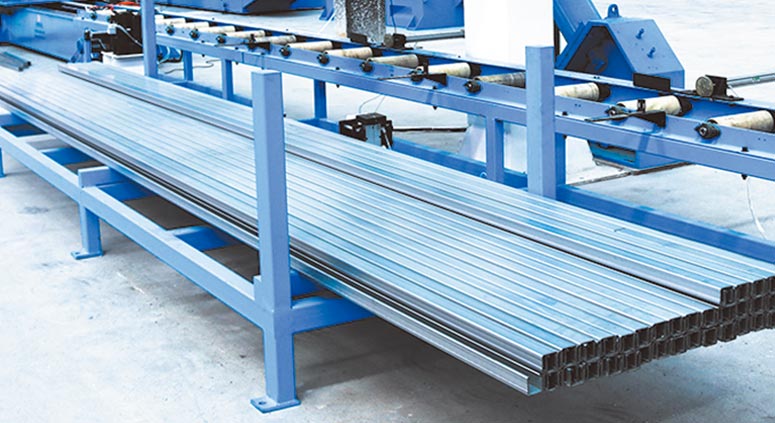
Roll formed steel channel production is a cornerstone of modern manufacturing, particularly in construction, solar photovoltaic supports, and industrial applications. Despite technological advancements, waste during production remains a significant challenge, impacting both costs and environmental footprint. The roll formed steel channel process, whether producing C-channel or U-channel profiles, involves precise metal forming, cutting, and finishing operations that demand attention to detail. Even minor errors in setup, material selection, or equipment operation can result in scrap steel, energy waste, or suboptimal product quality.
With global sustainability goals gaining prominence, manufacturers of roll formed steel channel must focus on strategies that minimize waste while maintaining high efficiency, precision, and output quality. According to a report by the World Steel Association, optimized forming processes can reduce scrap rates by up to 20% in high-speed roll forming operations.
This article explores six practical and surprising ways to reduce waste in roll formed steel channel production, supported by examples, technical data, and actionable insights for factory managers, engineers, and plant operators.
1. Optimize Material Selection for Roll Formed Steel Channel
Choose the Right Coil Material

Selecting high-quality steel coils for roll formed steel channel production directly affects waste levels. Low-grade steel may contain surface defects, inconsistent thickness, or high residual stress, leading to:
- Scrap during forming due to bending cracks
- Increased trimming waste
- Product rejection due to uneven edges
Using standardized, pre-tested coils ensures minimal scrap and reduces downtime caused by material inconsistencies. For example, choosing cold-rolled steel over hot-rolled for high-precision channels can improve dimensional accuracy and reduce edge trimming losses.
Material Thickness and Yield Optimization
Careful planning of coil thickness relative to channel dimensions is essential. Overly thick material can cause unnecessary trimming waste, while under-thick material may fail to meet structural specifications. Modern roll forming equipment allows precise adjustments of rollers to accommodate slight thickness variations, minimizing waste while maintaining strength and load-bearing properties.
Supplier Collaboration
Working closely with steel suppliers to specify tolerance levels (±1 mm) and surface finish requirements can further reduce defects. The use of high-quality raw material aligns with advanced machines like the Solar Photovoltaic Bracket C-Channel Steel Roll Forming Machine, which maintains ±1 mm precision across lengths up to 45 meters per minute.
2. Upgrade Roll Forming Machinery to Reduce Scrap

Servo-Controlled Roll Forming Machines
Modern roll forming machines with servo tracking and automated mold changeover are game-changers for minimizing waste in roll formed steel channel production. These machines allow manufacturers to produce precise channel lengths consistently while significantly reducing off-spec products during frequent changeovers between different channel profiles.
Precision Length Control
Servo-controlled cutting systems monitor the exact channel length in real time. This ensures that each roll formed steel channel meets the target specifications with minimal deviation, often achieving ±1 mm accuracy. Reducing cutting errors directly translates into lower scrap rates, which is crucial when producing high volumes of channels for construction or solar support applications.
Intelligent Mold Adjustment
Automated mold changeover minimizes the risk of operator error during profile switches. When transitioning between C-channel and U-channel production, the machine automatically adjusts roller spacing, forming angles, and cutting positions, which eliminates the need for trial-and-error setups that typically generate scrap.
Example: Solar Photovoltaic Bracket U-Channel Steel Forming Machines use servo tracking cutting combined with intelligent mold adjustment to maintain consistent output. Plants report up to 12% reduction in scrap due to miscuts and overproduction, especially in high-speed operations.
Benefits of Upgrading Machinery
- Reduced material waste from precise forming and cutting
- Increased production efficiency and uptime
- Lower energy consumption due to consistent operation
- Enhanced safety by reducing manual adjustments
Energy-Efficient Machines
Energy efficiency may seem unrelated to material waste, but in roll formed steel channel production, inconsistent forming speeds due to power fluctuations often lead to defects or aborted runs, generating unnecessary scrap.
Low-Power Consumption and Stable Forming Speeds
High-efficiency machines with optimized motors (e.g., 40 KW power units) maintain constant roll forming speed. This prevents issues like warping, stretching, or uneven bends in the steel, which are common when machines slow or speed up unexpectedly. The result is fewer defective channels and a more predictable production yield.
Cloud-Based Energy Monitoring
Some modern roll forming machines integrate cloud-based monitoring systems that track energy consumption, production rates, and downtime. By correlating energy spikes or drops with scrap events, operators can adjust operational parameters to reduce waste and improve overall plant efficiency.
Indirect Waste Reduction
Energy-efficient machines lower the risk of overheating, motor burnout, or mechanical stress on rollers, all of which can cause defective roll formed steel channel products. Over time, this results in significant savings in both material and maintenance costs.
Predictive Maintenance
Predictive maintenance is a cornerstone of waste reduction in roll formed steel channel production. It relies on sensors and diagnostic tools to monitor machine health in real time.
Roller Alignment Monitoring
Misaligned rollers can deform steel channels, creating defective parts that must be scrapped. Sensors detect even slight deviations and alert operators before production quality is affected.
Wear Detection and Replacement Scheduling
Cutting knives, forming rollers, and mold components wear down over time. Predictive maintenance systems track wear patterns and recommend replacements before they cause off-spec production, reducing scrap and downtime.
Calibration Alerts
Hydraulic adjustments, roller tension, and feed rates are critical parameters in producing accurate roll formed steel channel. Predictive systems alert operators when calibration drifts beyond safe limits, preventing errors that could lead to hundreds of kilograms of wasted steel per month in high-volume plants.
Benefits:
- Early detection of potential failures
- Reduced downtime and unexpected scrap
- Improved overall plant productivity
- Enhanced equipment lifespan and ROIs.
3. Implement Smart Cutting and Length Management
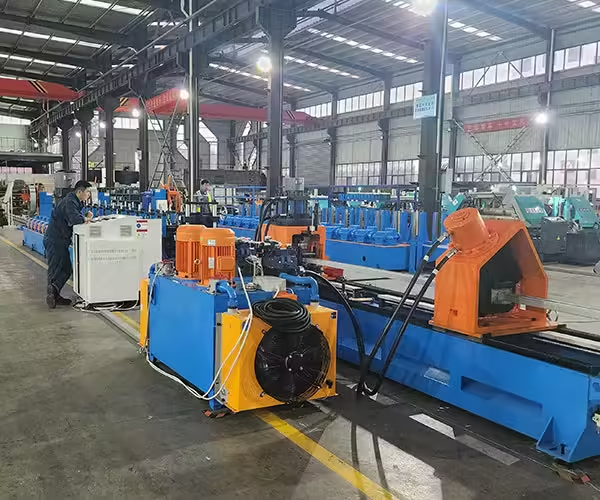
Minimize Overcutting and Scrap
Cutting errors are a major source of waste in roll formed steel channel production. Intelligent cutting systems allow:
- Accurate length measurement with ±1 mm tolerance
- Real-time monitoring of cumulative cutting errors
- Adjustment for thermal expansion of steel during high-speed operations
Cutting Sequence Optimization
By analyzing production schedules and channel orders, plants can reduce offcuts. Producing multiple channels with similar lengths in one batch decreases total scrap.
Table: Comparison of Waste Reduction Methods in Roll Formed Steel Channel Production
| Strategy | Description | Typical Waste Reduction | Equipment Example |
|---|---|---|---|
| Material Selection | Use high-quality, pre-tested steel coils | 5-10% scrap reduction | Cold-rolled steel coils |
| Servo-Controlled Forming | Automated mold adjustment & cutting | 8-12% scrap reduction | Solar PV C/U-channel machines |
| Predictive Maintenance | Sensor-based alignment and wear detection | 3-7% scrap reduction | Roll forming machines with sensors |
| Cutting Optimization | Smart cutting lengths & batch sequencing | 6-10% scrap reduction | Servo tracking cutting systems |
| Production Scheduling | Group orders by size to reduce offcuts | 4-8% scrap reduction | ERP-integrated production planning |
| Operator Training | Skilled operation to reduce errors | 5-9% scrap reduction | Training programs & simulators |
This table demonstrates the measurable benefits of integrating advanced equipment, material management, and operational planning to minimize waste in roll formed steel channel production.
4. Enhance Operator Skills and Training
Importance of Skilled Operators
Even the most sophisticated roll forming machines require skilled operators to achieve minimal waste. Operators must understand machine behavior, forming tolerances, and production sequencing. Common consequences of inadequate training include:
- Incorrect roller adjustments causing bent or twisted channels
- Misalignment during forming leading to scrap
- Overproduction of defective channels due to poor changeover handling
Simulation-Based Training
Virtual reality (VR) simulators or CAD-based training systems allow operators to practice machine setup, mold changeover, and troubleshooting without using raw materials. These simulated environments provide:
- Familiarity with both C-channel and U-channel profiles
- Experience responding to unexpected malfunctions
- Reduced trial-and-error in real production, saving steel and time
Standard Operating Procedures (SOPs)
Developing SOPs for roll forming, cutting, and mold changeover ensures consistent output quality. For example, clearly defining steps for switching between C-channel and U-channel profiles reduces error rates and scrap from improper setup.
5. Optimize Production Planning and Scheduling
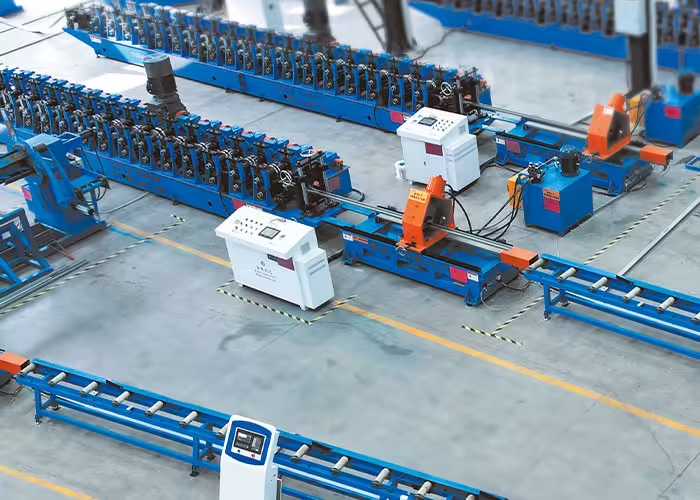
Batch Processing for Roll Formed Steel Channel Orders
Grouping orders with similar specifications minimizes machine setup changes and reduces scrap from trial runs. Efficient batch processing also:
- Reduces energy waste
- Decreases labor-intensive handling
- Lowers production downtime
Inventory Management
Maintaining optimal stock of steel coils prevents production stops due to missing material, which often results in rushed setups and increased scrap. Using cloud-based data monitoring, production managers can track coil usage and energy consumption in real time, as seen in modern Solar Photovoltaic Bracket machines.
Lean Manufacturing Techniques
Applying lean principles, such as 5S organization and Kaizen continuous improvement, helps identify bottlenecks in roll formed steel channel production and eliminate sources of waste systematically.
6. Maintain Equipment for Consistent Production Quality
Routine Maintenance Schedules
Preventive maintenance is critical to reducing waste. Key tasks include:
- Checking roller alignment
- Inspecting cutting knives for sharpness
- Verifying mold changeover systems
Shutdown Memory Function
Machines with shutdown memory functions recall previous settings without manual readjustment, preventing errors that can create defective roll formed steel channel products.
Lubrication and Wear Monitoring
Proper lubrication of rollers and inspection of mold wear ensures uniform forming, reducing the likelihood of producing out-of-tolerance channels.
Conclusion
Reducing waste in roll formed steel channel production requires a combination of advanced equipment, strategic planning, skilled operators, and proper maintenance. By focusing on material quality, smart cutting systems, predictive maintenance, batch scheduling, and operator training, manufacturers can improve efficiency, reduce scrap, and lower costs.
Modern machines such as Solar Photovoltaic Bracket C-Channel and U-Channel forming machines exemplify the impact of technology on waste reduction, demonstrating how precision, high speed, and intelligent monitoring systems transform production. Adopting these six strategies allows companies to maintain high-quality output, optimize material usage, and contribute to sustainability goals while ensuring profitability.
FAQ
Q1: How can roll formed steel channel scrap be minimized during cutting?
A: Use servo tracking cutting systems with ±1 mm tolerance, optimize batch lengths, and schedule similar-size orders together to reduce offcuts.
Q2: What is the impact of material selection on waste in roll formed steel channel production?
A: High-quality, pre-tested steel coils reduce defects, misalignment, and trimming waste, directly lowering scrap rates.
Q3: Are operator skills really important for waste reduction?
A: Yes, skilled operators ensure proper roller alignment, mold changeover, and equipment handling, significantly reducing defective channels.
Q4: How often should roll forming equipment be maintained?
A: Preventive maintenance should be conducted daily or weekly depending on output, including roller alignment, lubrication, and cutting knife inspection.
Q5: Can technology alone eliminate waste in roll formed steel channel production?
A: Technology helps, but combining advanced machinery with skilled operators, proper material management, and lean production practices yields the best results.
If you enjoyed this article on Jinbolida’s smart manufacturing and digital factory expertise, follow us for more insights and updates:
- 📘 Facebook: Stay tuned for our latest smart production line projects → Facebook
- 📱 WhatsApp: Contact us anytime for custom production solutions → Chat Now
- ▶️ YouTube: Watch our automated line demos and real-world applications → YouTube
Let’s keep innovating and shaping the future of smart manufacturing — together!
 English
  Arabic
  Russian
  Spanish
  French