
8 Common H Beam Problems and Solutions
Introduction
H beams are the backbone of modern construction, offering exceptional strength, stability, and load-bearing capability. However, improper material selection, manufacturing defects, environmental exposure, and installation mistakes can lead to structural issues. In this article, we explore the 8 most common H beam problems, provide practical solutions, and share expert insights to help engineers, contractors, and facility managers enhance safety, efficiency, and longevity in construction projects.
Key Takeaways:
- Identify the 8 most common H beam problems in construction projects
- Understand practical solutions for material, installation, and environmental issues
- Compare different H beam specifications and designs to prevent failures
- Improve safety, durability, and structural performance
- Learn maintenance strategies for long-term reliability
- Examine expert recommendations and real-world case studies
- Explore cost-effective solutions for recurring issues
- Understand environmental and regulatory considerations affecting H beams
Table of Contents
1. H Beam Material Defects
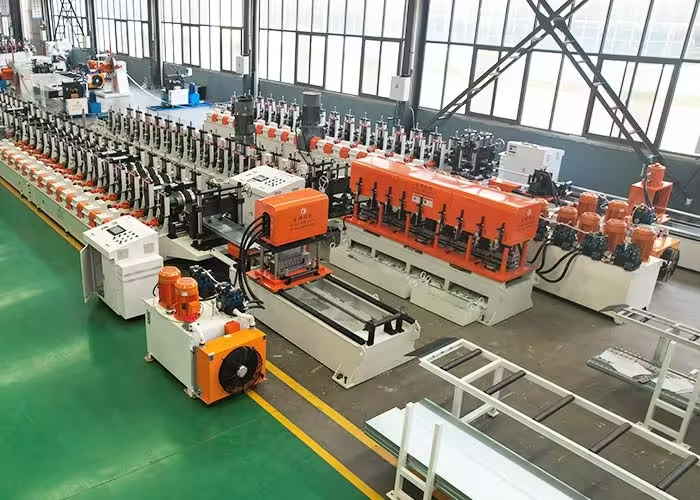
Material quality is a critical factor that directly impacts the structural performance of H beams. Using low-grade steel or poorly treated material can result in cracking, warping, or early fatigue.
Causes of Material Defects
- Low-grade steel that fails to meet ASTM A36, EN 10025, or JIS G3101 standards
- Inconsistent heat treatment causing uneven microstructure
- Impurities such as sulfur, phosphorus, or non-metallic inclusions
Practical Solutions
- Source H beams from certified manufacturers with quality assurance certificates
- Verify mill test reports, chemical composition, and mechanical properties
- Conduct ultrasonic or magnetic particle testing for hidden defects
Expert Opinion:
Dr. Li Ming, a structural steel consultant, emphasizes:
“Material inspection is non-negotiable. Even minor impurities can reduce fatigue life by up to 30% in high-stress applications.”
2. Improper H Beam Dimensions
Even small deviations in height, flange width, or web thickness can compromise load-bearing efficiency. Dimensional inaccuracies are a leading cause of misalignment and uneven stress distribution.
Importance of Correct Dimensions
- Ensures even load distribution across connected beams
- Prevents bending or deflection under service loads
- Facilitates proper fitting with columns, brackets, and joints
Solutions
- Implement stringent dimensional checks before installation
- Specify acceptable tolerance ranges in engineering drawings
- Use precise laser measuring tools during fabrication and installation
Case Study:
In a 2022 high-rise project in Shanghai, beams with a 1.5% flange width deviation caused a temporary misalignment of 15 mm, delaying construction by 3 weeks and requiring rework. Strict pre-installation measurement avoided recurrence in subsequent floors.
3. H Beam Corrosion Issues
Corrosion is one of the most damaging environmental factors for H beams. Rust not only reduces structural integrity but also increases maintenance costs and risk of failure.
Common Causes
- Humidity, rain, or coastal saline exposure
- Contact with chemicals such as industrial pollutants or cleaning agents
- Lack of protective coatings or poor galvanization
Prevention Strategies
- Apply hot-dip galvanization or epoxy coatings
- Use stainless or weather-resistant steel for critical structures
- Implement regular inspections and touch-ups on exposed surfaces
Data Insight:
According to a 2023 study by the International Journal of Structural Engineering, properly coated H beams can resist corrosion for 25+ years, while untreated steel in humid environments may fail in under 10 years.
4. Welding Defects on H Beams
H beams often require welding for connections and reinforcements. Poor weld quality can lead to cracks, porosity, and structural failure under stress.
Common Welding Defects
- Cracks due to improper preheating or cooling
- Porosity caused by trapped gas or moisture
- Incomplete fusion between plates and flanges
Solutions
- Use certified welders and follow ISO 9606 welding standards
- Conduct ultrasonic or radiographic inspection post-welding
- Apply proper preheating and controlled cooling to minimize residual stress
Expert Insight:
John Anderson, welding inspector for a European construction firm, notes:
“More than 40% of H beam failures we investigate are linked to weld defects that could have been prevented with proper QA protocols.”
5. Load-Bearing Miscalculations
Overloading is a critical risk factor. Incorrect load calculations may cause bending, buckling, or even catastrophic collapse.
Causes
- Neglecting live load variations
- Underestimating dynamic load conditions, such as wind or seismic forces
- Using H beams below required grade or thickness
Solutions
- Always consult structural engineers for load calculations
- Apply safety factors per local building codes
- Monitor installed beams for stress or deformation with sensors or visual inspections
Case Study:
In a 2021 warehouse project, engineers discovered that live load assumptions were 20% underestimated. Reinforcing H beams with additional web stiffeners prevented structural compromise without replacing the beams.
6. H Beam Alignment Errors
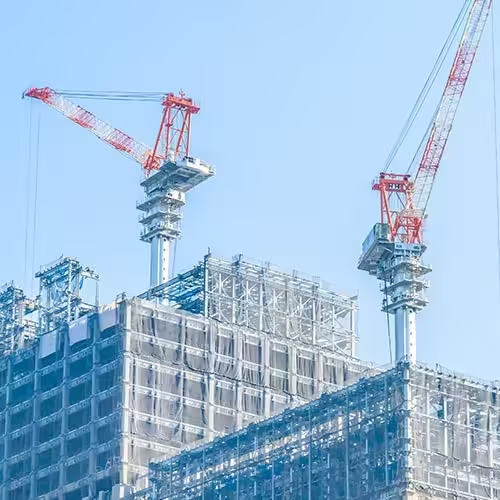
Proper alignment ensures even load transfer and stability. Misaligned beams can lead to joint stress, structural inefficiency, and safety hazards.
Common Alignment Issues
- Beams installed at incorrect angles
- Lack of leveling or temporary support during assembly
Solutions
- Use laser-guided leveling tools for precise alignment
- Install temporary supports or shims during construction
- Conduct final inspection before applying operational loads
Practical Tip:
Installing alignment sensors can provide real-time feedback to crews during large-scale installations, preventing costly corrections later.
7. Surface Damage or Deformation
H beams may experience dents, bends, or scratches during transportation, storage, or handling. Even minor surface damage can reduce load capacity and stress resistance.
Causes
- Improper crane or forklift handling
- Stacking without protective spacers
- Accidental collisions during on-site movement
Preventive Measures
- Implement strict handling protocols
- Use padded lifting equipment and transport supports
- Inspect beams upon delivery for defects and repair minor damages
8. Environmental and Temperature Effects
Environmental factors such as extreme heat, cold, or humidity affect H beam performance. Thermal expansion and contraction can stress connections and joints.
Environmental Challenges
- Expansion/contraction from temperature fluctuations
- Corrosion in humid or coastal environments
- Chemical exposure in industrial areas
Solutions
- Use temperature-tolerant coatings or expansion joints
- Regularly inspect critical structural areas
- Select H beams with weather-resistant steel for harsh climates
H Beam Problem Comparison Table
| Problem Type | Cause | Solution | Severity |
|---|---|---|---|
| Material Defects | Low-quality steel, impurities | Certified steel, inspections | High |
| Dimensional Errors | Manufacturing deviations | Measurement, tolerance specification | Medium |
| Corrosion | Humidity, chemicals | Coatings, galvanization | High |
| Welding Defects | Cracks, porosity | Certified welders, inspection | High |
| Load Miscalculations | Overloading, miscalculation | Engineer review, safety factor | High |
| Alignment Errors | Improper installation | Laser leveling, supports | Medium |
| Surface Damage | Handling errors | Safe transport, inspect | Medium |
| Environmental Effects | Temperature, humidity, chemicals | Protective coatings, monitoring | Medium |
Advanced Inspection Techniques for H Beams
- Ultrasonic Testing (UT): Detects internal flaws and cracks
- Radiographic Testing (RT): Provides a complete internal image of welds
- Magnetic Particle Testing (MPT): Highlights surface and near-surface defects
- Laser Scanning: Measures alignment and deformation accurately
Conclusion
H beams are critical to modern construction, offering strength, stability, and versatility. Understanding common problems—material defects, dimensional issues, corrosion, welding flaws, load miscalculations, alignment errors, surface damage, and environmental impacts—allows engineers and builders to prevent failures, reduce maintenance costs, and improve structural safety.
Proper selection, installation, and inspection of H beams, combined with adherence to standards, ensure long-lasting performance and reliability. By following the outlined solutions, construction professionals can enhance efficiency and safety while optimizing the lifespan of their H beams.
FAQ
How often should H beams be inspected in industrial buildings?
A1: Inspection is recommended during installation, post-transport, and every 6–12 months depending on environmental exposure.
Can minor dents in H beams affect structural safety?
A2: Yes, small surface damage can create stress concentration points. Minor dents should be repaired immediately.
Are coated H beams completely corrosion-proof?
Coatings significantly reduce risk, but regular inspection and maintenance are still necessary.
What is the most common cause of H beam failure?
Welding defects and material quality issues are the leading causes, followed by overload and alignment errors.
Can H beams be used in extreme temperature environments?
Yes, with proper steel grades, coatings, and expansion joints, H beams can perform reliably in most climates.
If you enjoyed this article on Jinbolida’s smart manufacturing and digital factory expertise, follow us for more insights and updates:
- 📘 Facebook: Stay tuned for our latest smart production line projects → Facebook
- 📱 WhatsApp: Contact us anytime for custom production solutions → Chat Now
- ▶️ YouTube: Watch our automated line demos and real-world applications → YouTube
Let’s keep innovating and shaping the future of smart manufacturing — together! 🚀
 English
  Arabic
  Russian
  Spanish
  French