
8 Positive Automatic Punching Machine Features
Table of Contents
Introduction
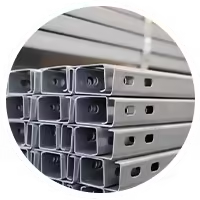
Automatic punching machines play a critical role in modern manufacturing, especially in the photovoltaic (PV) bracket and steel structure industries. These machines efficiently punch, bend, cut, and form C-shaped or U-shaped steel components, ensuring high precision and repeatable quality.
With the rising demand for solar energy and robust steel frameworks, manufacturers require machines that can handle large-scale production while minimizing waste and labor. Automatic punching machines are designed to meet these requirements, offering high speed, accuracy, and versatility.
In this article, we explore eight positive features of automatic punching machines and how these benefits improve manufacturing processes, reduce costs, and enhance product quality.
High Efficiency and Continuous Production
Automatic punching machines are engineered for speed and high-volume production. Features that enhance efficiency include:
- Multi-station punching: Machines like three-station or nine-station hydraulic punching machines can perform multiple operations simultaneously.
- High-speed feeding: Maximum feeding speeds can reach up to 120 meters per minute.
- Fully automated operation: Continuous punching without manual intervention reduces downtime and increases output.
Example: A nine-station punch machine can punch three sides of C-shaped steel with three hole types per side at 70–90 times per minute, significantly improving throughput in PV bracket production.
Ultra-High Precision and Consistent Quality
Precision is crucial when producing photovoltaic brackets and structural steel components. Key precision features include:
- Punching accuracy: ±0.01–0.5 mm depending on machine type and mold setup.
- Servo-driven motors: Ensure consistent hole positioning and cutting quality.
- Precision molds: High-quality molds reduce deviation and improve yield rates.
List: Precision benefits of automatic punching machines
- Uniform hole size and spacing
- Consistent alignment for assembly
- Minimal scrap and material waste
- Reduced rework costs
Versatility and Multi-Process Capabilities
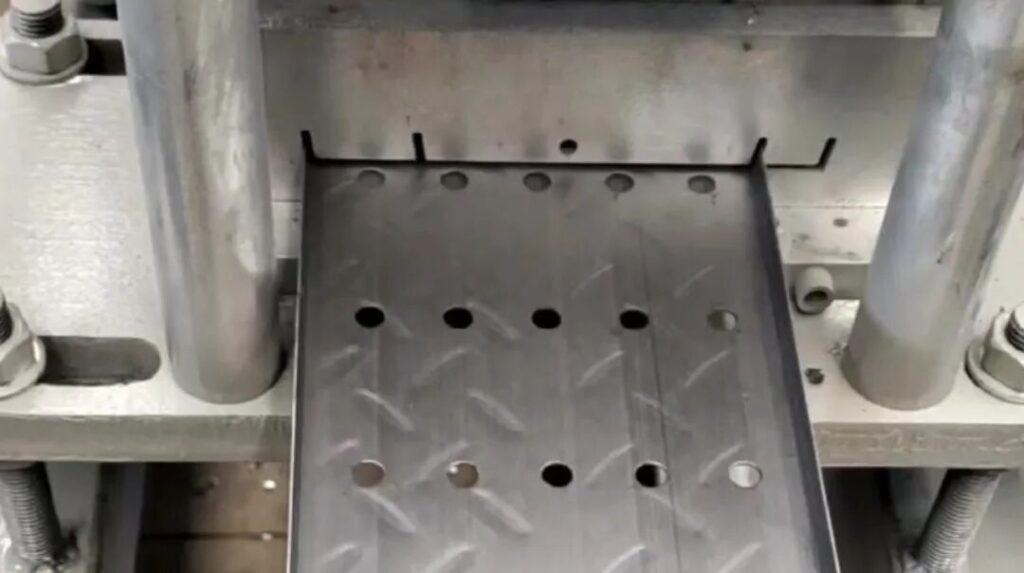
Modern automatic punching machines can handle various processes and materials:
- Multiple forming operations: Punching, bending, cutting, and stretching.
- Material compatibility: Cold-rolled steel, hot-rolled steel, stainless steel, and aluminum.
- Length capacity: Some machines process steel sections up to 8.5 meters long.
List: Applications in different industries
- Photovoltaic bracket production (C-shaped & U-shaped steel)
- Structural steel frameworks
- Automotive components
- Hardware and metal sheet fabrication
Energy Efficiency and Cost Savings
Automatic punching machines reduce operational costs through energy-efficient design and material optimization:
- Optimized material layout: Reduces steel waste and scrap rates.
- Energy-saving hydraulic systems: Lower unit energy consumption.
- Reduced labor requirements: Automation decreases reliance on manual operators.
Example calculation:
A three-station hydraulic punching machine consumes 45 kW per 8-hour shift, processing 1200 C-shaped brackets with minimal scrap.
Cost-saving highlights:
- Reduced electricity and hydraulic consumption
- Lower unit cost per piece
- Faster ROI due to higher throughput
Advanced Automation and Smart Controls
Automatic punching machines feature integrated control systems that enhance performance:
- CNC human-machine interface (HMI): Easy programming and operation.
- Sensors and feedback systems: Omron photoelectric sensors detect misalignment.
- USB/manual programming: Enables quick adjustments for new product specifications.
Benefits of automation:
- Fewer human errors
- Real-time monitoring of production
- Quick changeover for different products
Durability and Low Maintenance
Durability ensures long-term reliability:
- Heavy-duty stamping presses: Designed for continuous industrial use.
- Heat-treated jaws and guide rails: Maintain structural integrity.
- Hydraulic system lifespan: 5+ years with proper maintenance.
Maintenance checklist:
- Inspect hydraulic fluid and pump systems weekly
- Clean molds and die sets after each shift
- Check alignment and lubrication of guide rails
Safety Features and Worker Protection
Safety is essential in high-speed punching operations:
- Emergency stop buttons: Instantly halts production.
- Safety guards and shields: Protect operators from moving parts.
- Photoelectric sensors: Detect material misalignment to prevent jams.
List: Safety advantages
- Reduced workplace accidents
- Less manual handling of heavy steel
- Compliance with OSHA and other regulations
Table: Comparison of Automatic Punching Machine Types
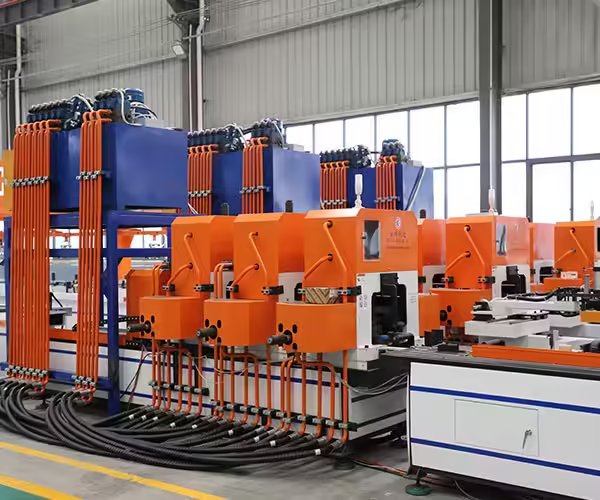

| Feature | Three-Station Hydraulic Punching Machine | Nine-Station Punch Machine |
|---|---|---|
| Material Types | C-shaped, U-shaped steel | C-shaped steel (up to 8.5 m) |
| Processing Accuracy | ±0.1 mm | ±0.5 mm |
| Production Speed | ≤35 m/min | 12–18 m/min (punching), 120 m/min feeding |
| Pressure Range | 63–800 tons | 70–90 times/min punching |
| Equipment Power | 5–100 kW | 14 kW |
| Maximum Chuck Rotation | 100 r/min | 100 r/min |
| Key Features | Multi-station punching, automated | Servo-driven, CNC control, hydraulic |
| Advantages | High productivity, low waste | High precision, flexible operation, energy saving |
This table provides a clear overview of performance metrics, processing capabilities, and advantages of two widely used types of automatic punching machines, helping manufacturers make informed decisions.
Conclusion
Automatic punching machines offer high-speed production, precision, versatility, energy efficiency, durability, advanced automation, and safety. They are critical for manufacturers in photovoltaic bracket production and steel structure fabrication, where accuracy, consistency, and throughput are essential.
Investing in a reliable automatic punching machine enhances operational efficiency, reduces costs, ensures consistent quality, and safeguards workers. With proper maintenance, these machines provide years of reliable service, making them an indispensable asset in modern industrial production.
FAQ
What is an automatic punching machine used for?
It is used for punching, cutting, bending, and forming metal components like C-shaped and U-shaped steel for PV brackets and steel structures.
Can one machine handle multiple steel shapes?
Yes, advanced machines can process various shapes, lengths, and thicknesses, suitable for multiple industrial applications.
How precise are automatic punching machines?
Modern machines achieve positioning accuracy between ±0.01 mm and ±0.5 mm depending on model and setup.
What maintenance is required?
Regular checks of hydraulic systems, molds, guide rails, and lubrication ensure long-term durability.
Are these machines cost-effective?
Yes, despite initial investment, they reduce labor, waste, downtime, and energy consumption, offering excellent ROI.
If you enjoyed this article on Jinbolida’s smart manufacturing and digital factory expertise, follow us for more insights and updates:
- 📘 Facebook: Stay tuned for our latest smart production line projects → Facebook
- 📱 WhatsApp: Contact us anytime for custom production solutions → Chat Now
- ▶️ YouTube: Watch our automated line demos and real-world applications → YouTube
Let’s keep innovating and shaping the future of smart manufacturing — together! 🚀
 English
  Arabic
  Russian
  Spanish
  French