
9 Ultimate Butt Welders Tips for Efficient Strip Welding
Key Takeaways at a Glance
Before we dive into technical details, here’s what this in-depth guide will help you understand:
- Why butt welders are essential in modern strip processing lines
- How welding method selection directly affects productivity and waste
- What truly defines weld quality beyond surface appearance
- The role of alignment systems in consistent butt welding
- How automated butt welders outperform manual systems over time
- Which technical parameters matter most in real-world applications
- How engineers evaluate weld strength and reliability
- What industry experts prioritize when selecting butt welders
- How to compare different butt welding solutions objectively
Table of Contents
Introduction
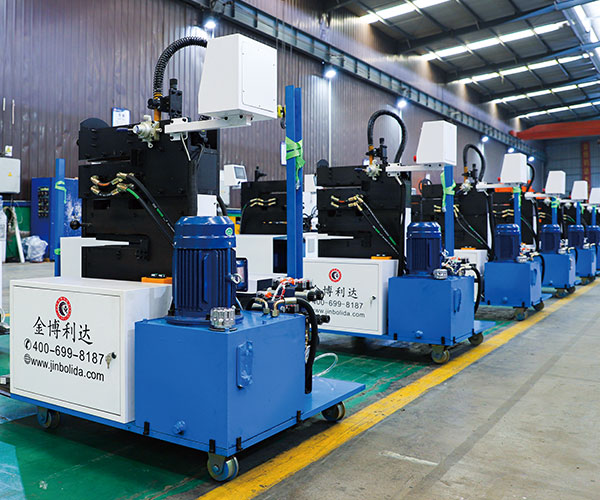
In today’s manufacturing environment, efficiency is no longer optional—it is a baseline requirement. Steel processors, coil service centers, and automated production lines are under constant pressure to reduce downtime, minimize scrap, and maintain consistent quality.
This is where butt welders play a critical role.
Rather than overlapping materials or relying on temporary joining methods, butt welders create a precise end-to-end joint that allows steel strips to flow continuously through downstream processes such as rolling, coating, slitting, or stamping.
From an engineering perspective, butt welding is not just a joining process—it is a system-level productivity enabler.
According to widely accepted welding engineering principles, a properly executed butt weld can achieve mechanical strength equal to or greater than the base material. This is why butt welders are commonly used in applications where zero waste, dimensional consistency, and automation compatibility are required.
Understanding Butt Welders in Modern Manufacturing
What Are Butt Welders?
Butt welders are machines designed to join two metal workpieces along the same plane using controlled heat and pressure. In strip steel applications, they are primarily used to weld the tail of one strip to the head of another.
This allows production lines to operate continuously without stopping for material changes.
Why Butt Welding Is Preferred in Strip Processing
Compared to lap welding or mechanical fastening, butt welding offers:
- Uniform material thickness
- Reduced material consumption
- Stronger metallurgical bonding
- Cleaner downstream processing
Industry welding engineers often point out that material continuity is one of the most underestimated advantages of butt welders in automated systems.
Tip 1: Choose Butt Welders Based on Strip Thickness and Width
Matching Machine Capability to Real Production Needs
One of the most common mistakes in selecting butt welders is overspecification. While higher capacity machines may seem more powerful, they are not always better suited for thin strip applications.
For most steel strip welding operations, an effective working range includes:
- Thickness: 1.0–3.0 mm
- Width: 50–300 mm
Operating outside the optimal range increases the risk of thermal distortion and inconsistent weld penetration.
Engineering Insight
Welding engineers emphasize that process stability, not maximum capacity, is the primary driver of weld consistency in thin materials.
Tip 2: Understand Why TIG Welding Dominates Butt Welders
TIG Welding as a Preferred Butt Welding Method
Tungsten inert gas (TIG) welding is widely used in butt welders for strip processing due to its precise heat control and clean weld characteristics.
Unlike resistance welding, TIG welding allows:
- Controlled arc stability
- Smooth, burr-free weld seams
- Minimal post-weld finishing
Concept Focus: Heat Input Control
In butt welders, excessive heat input can weaken surrounding material. TIG welding offers superior control, reducing the heat-affected zone while maintaining joint strength.
Tip 3: Alignment Systems Define Butt Welders Performance

Why Alignment Is More Critical Than Welding Power
Accurate alignment ensures both strips meet perfectly before welding. Modern butt welders often use four hydraulic cylinders for automatic double-sided alignment.
Misalignment—even by fractions of a millimeter—can result in:
- Incomplete fusion
- Reduced tensile strength
- Increased scrap rates
Industry Consensus
Experienced production engineers agree that poor alignment accounts for more weld failures than insufficient welding current.
Tip 4: Manual vs Automated Butt Welders — A Practical Comparison
Operational Differences That Matter
| Aspect | Manual Butt Welders | Automated Butt Welders |
|---|---|---|
| Alignment Accuracy | Operator-dependent | Consistent & repeatable |
| Productivity | Limited | High throughput |
| Labor Dependency | High | Low |
| Weld Consistency | Variable | Stable |
| Scalability | Low | High |
Automated butt welders equipped with PLC control systems are increasingly becoming the industry standard.
Tip 5: PLC Centralized Control Enhances Process Reliability
Why Control Systems Matter in Butt Welders
PLC-based butt welders allow centralized control of welding parameters, alignment timing, and safety interlocks through a touchscreen interface.
This improves:
- Process repeatability
- Operator safety
- Error traceability
Automation Principle
Standardized control logic reduces human variability, which is essential in continuous production environments.
Tip 6: Focus on Weld Strength, Not Just Visual Quality
Understanding Tensile Strength in Butt Welding
A high-quality butt weld should match or exceed the tensile strength of the parent material. This ensures the welded joint will not fail during tension, bending, or rolling operations.
Modern butt welders can achieve weld strengths that eliminate material waste entirely.
Concept Comparison: Appearance vs Performance
A smooth weld seam improves feeding, but structural integrity ensures long-term reliability.
Tip 7: Internal Component Quality Affects Butt Welders Longevity

Why Components Matter More Than the Frame
High-performance butt welders integrate electrical and control components from established industrial suppliers. This ensures long-term operational stability.
Key component areas include:
- Arc welding units
- PLC controllers
- Hydraulic systems
Industry experts often stress that component quality determines machine lifespan, not just mechanical design.
Tip 8: Optimize Power Consumption for Sustainable Operation
Typical Power Requirements for Butt Welders
Most strip butt welders operate efficiently within a power range of 10–15 kW. Excessive power does not improve weld quality and may increase operating costs.
Energy Efficiency Perspective
Optimized power usage aligns with modern sustainability goals and reduces thermal stress on components.
Tip 9: Design for Automation, Not Just Welding
Butt Welders as Part of a Production System
Modern butt welders are designed to integrate seamlessly into automated production lines. Features such as compact weld seams and no grinding requirements improve overall throughput.
Automation-focused butt welders support:
- Faster coil changeovers
- Reduced manual handling
- Predictable output quality
Technical Parameters Commonly Evaluated in Butt Welders
| Parameter | Typical Value Range |
|---|---|
| Strip Thickness | 1.0–3.0 mm |
| Strip Width | 50–300 mm |
| Welding Method | TIG Butt Welding |
| Alignment System | Hydraulic Double-Side |
| Control System | PLC + Touchscreen |
| Power Consumption | 10–15 kW |
Butt Welders in Real Production Scenarios

Continuous Strip Processing Lines
In continuous strip processing lines, butt welders play a vital role in maintaining uninterrupted material flow. By welding the tail end of one strip to the head of the next, the production line can continue running without frequent stops for manual changeovers. This significantly reduces idle time and stabilizes overall throughput.
From an operational perspective, consistent butt welding also helps maintain uniform strip tension and tracking, which is essential for downstream processes such as leveling, coating, or slitting. Over time, fewer stoppages translate into higher yield, lower scrap rates, and more predictable production scheduling.
Coil Joining in Rolling Mills
In rolling mills, butt welders are widely used for coil joining to ensure smooth and reliable transitions between coils. A properly executed butt weld allows the strip to pass through rolling stands without sudden thickness changes or mechanical shock, which could otherwise damage equipment or affect product quality.
Rolling mill operators value butt welders because strong, well-aligned welds reduce the risk of strip breakage during high-speed rolling. This not only protects the rolling equipment but also improves operational safety and minimizes unplanned downtime.
Precision Manufacturing Applications
Precision manufacturing industries often operate under strict dimensional and tolerance requirements, leaving little margin for welding inconsistencies. In these environments, butt welders provide the level of control needed to produce stable, repeatable weld joints that do not interfere with precision forming or finishing processes.
Consistent butt welding performance ensures that welded joints behave similarly to the base material during bending, stamping, or surface treatment. As a result, manufacturers in high-precision sectors rely on butt welders to support quality assurance goals while maintaining efficient production flow.
Expert Perspectives on Butt Welders Selection
Engineering Viewpoint
Welding engineers emphasize alignment precision and thermal control as the top priorities.
Production Management Viewpoint
Plant managers value labor savings, uptime, and maintenance simplicity.
Quality Control Perspective
Quality teams focus on tensile strength consistency and defect reduction.
These viewpoints collectively shape how modern butt welders are evaluated.
FAQ
What are butt welders mainly used for?
Butt welders are mainly used to join steel strip ends to enable continuous production without stopping the line.
Are butt welders suitable for automated production lines?
Yes, modern butt welders are specifically designed for automated and high-throughput environments.
Do butt welders reduce material waste?
When properly configured, butt welders can achieve near-zero material waste.
How strong are butt welds compared to base material?
High-quality butt welds can match or exceed the tensile strength of the parent material.
Are PLC-controlled butt welders difficult to operate?
Most PLC systems use touchscreen interfaces designed for simple and intuitive operation.
Final Thoughts: Making Butt Welders Work for You
Selecting the right butt welders is not about choosing the most powerful machine—it is about choosing the most appropriate system for your production goals.
By focusing on alignment, welding method, control systems, and integration capability, manufacturers can significantly improve efficiency, consistency, and long-term reliability.
In modern strip processing, butt welders are no longer optional equipment—they are a strategic investment in production performance.
If you enjoyed this article on Jinbolida’s smart manufacturing and digital factory expertise, follow us for more insights and updates:
- 📘 Facebook: Stay tuned for our latest smart production line projects → Facebook
- 📱 WhatsApp: Contact us anytime for custom production solutions → Chat Now
- ▶️ YouTube: Watch our automated line demos and real-world applications → YouTube
Let’s keep innovating and shaping the future of smart manufacturing — together!
 English
  Arabic
  Russian
  Spanish
  French