
Best Metal Cutting Laser Machines for SMEs: Advanced Guide to Smart Fabrication
/ Best Metal Cutting Laser Machines for SMEs: Advanced Guide to Smart Fabrication
Introduction
In the era of Industry 4.0 and smart manufacturing, small and medium-sized enterprises (SMEs) are under immense pressure to deliver high-quality metal parts faster and at lower cost. Traditional cutting methods like shearing, plasma cutting, or mechanical sawing are often slow, imprecise, and generate significant material waste. Metal cutting laser machines provide a transformative advantage: ultra-precise cuts with minimal kerf width, burr-free edges, and the flexibility to switch between designs without tooling changes.
According to a recent report by MarketsandMarkets, the global laser cutting machine market is projected to grow from USD 3.6 billion in 2025 to over USD 5.2 billion by 2030, driven largely by increased adoption in small and medium-sized manufacturing environments. This growth reflects not just broader automation trends but also concrete ROI successes among SMEs that adopt laser cutting technologies.
This comprehensive guide explores how SMEs can select, use, and maintain metal cutting laser machines to maximize output, reduce costs, and stay competitive in modern fabrication industries.
Table of Contents
Why Metal Cutting Laser Machines Matter for SMEs
Precision and Accuracy: The Core Advantage
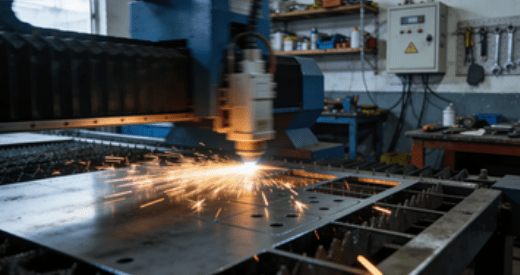
Metal cutting laser machines use concentrated light beams to melt, burn, or vaporize material with micron-level precision. This enables:
- Tight tolerances often within ±0.05 mm
- Minimal thermal distortion on thin or complex parts
- Reduced need for secondary finishing
Precise cuts translate into fewer rejects, lower scrap rates, and more predictable production outcomes — a crucial benefit for SMEs operating on tight margins.
Material Flexibility and Broad Compatibility
Today’s laser systems cut a wide range of metals — including mild steel, stainless steel, aluminum, copper, and alloys — often on the same machine. This versatility enables SMEs to serve multiple industries (automotive, aerospace, signage, furniture) with fewer specialized machines.
Speed and Throughput
A well-tuned laser cutter can process parts much faster than traditional methods. For example, a 2 kW fiber laser machine can cut 10 mm mild steel at over 1 m/min — significantly faster than equivalent plasma systems — while maintaining superior edge quality.
Classification of Metal Cutting Laser Machines for SMEs
Sheet Metal Laser Cutting Systems
What They Are
Sheet metal cutting systems focus on flat or large-format metal plates. Ideal for fabrication shops that produce enclosures, panels, brackets, and decorative metalwork, these systems combine high power and range with automated handling.
Typical Technical Specs
- Cutting range: up to 24 m length × 2.5 m width
- Laser power: 1.5 kW – 20 kW
- Dimensional precision: ±0.05 mm
- Repeatability: ±0.03 mm
- Weight: ≈10 tons
- Service life: 20,000+ hours for main components
Key Use Cases
- Automotive body components
- Architectural cladding
- Industrial enclosures
- High-precision prototype work
Tube & Pipe Laser Cutting Machines
What They Are
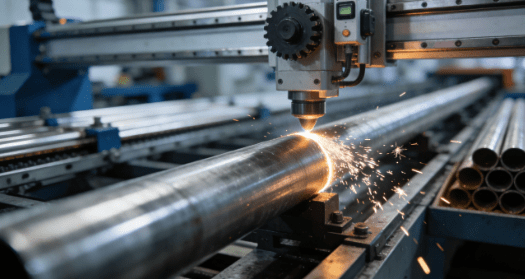
These machines specialize in cutting cylindrical or profile materials — round tubes, square tubes, rectangular channels, and angle steels — with high precision and flexibility.
Typical Technical Specs
- Compatible profiles: round, square, rectangular, channel, angle
- Laser power: 1 kW – 30 kW
- Cutting speed: up to 80 m/min
- Accuracy: ±0.05 mm
- Weight: 1–5 tons
Key Use Cases
- Furniture frames
- Automotive exhaust and chassis components
- Construction steel profiles
- Fitness equipment structures
How to Evaluate Metal Cutting Laser Machines
Understand Your Cut Requirements
Ask:
- What metals and thicknesses will you cut most often?
- Do you need flat plate or tube/profile cutting?
- What production volume do you expect per shift?
Matching machine capabilities to real workload helps avoid overspending on power or capacity you don’t need.
Laser Power Matters — But Not Alone
Laser power is often the first spec people see, but laser efficiency, beam quality, and cutting head design also impact performance. A lower-power laser with excellent beam focus can outperform a higher-power unit with poor optics.
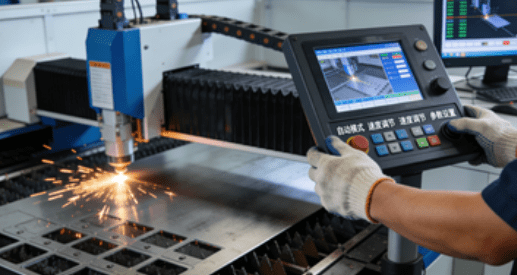
Check Software and Automation Support
Modern laser machines come with:
- Nesting software to maximize sheet utilization
- CAD/CAM interfaces for design-to-production workflows
- Automated loading/unloading for reduced labor
Automation is a significant competitive edge for SMEs.
Mid-Article Table: Sheet vs Tube Laser Cutting Machines
| Feature | Sheet Metal Laser Cutting | Tube/Pipe Laser Cutting |
|---|---|---|
| Best for | Large flat plates | Tubes, profiles |
| Laser Power Typical | 1.5–20 kW | 1–30 kW |
| Cutting Speed | Medium–High | High |
| Precision | ±0.05 mm | ±0.05 mm |
| Flexibility | High | Very High |
| Automation Support | Yes | Yes |
| Material Waste | Low | Very Low |
| Payback Period | ~12–24 months | ~12–24 months |
This table helps SMEs decide based on material type and typical production needs.
Cost, ROI, and Productivity Analysis
Typical Cost Breakdown for SMEs
| Cost Category | Typical Range |
|---|---|
| Initial Machine Investment | $80,000 – $400,000+ |
| Installation & Integration | $5,000 – $20,000 |
| Training & Onboarding | $2,000 – $7,000 |
| Annual Maintenance | $3,000 – $10,000 |
| Consumables (Nozzles, Lenses) | $500 – $2,000/year |
Laser cutting machines represent a significant investment, but when evaluated over a 3–5 year timeline, the productivity and quality gains often justify the expense.
ROI Scenarios for Typical SMEs
An SME using a metal cutting laser machine for email parts production might see:
- 25–40% reduction in labor cost
- 10–20% reduction in material waste
- 30–50% faster order turnaround
- Payback commonly achieved within 12–24 months
These figures vary by industry and curriculum, but they illustrate why laser systems have become a strategic tool rather than a luxury.
Maintenance and Lifecycle Optimization
Regular Maintenance Best Practices
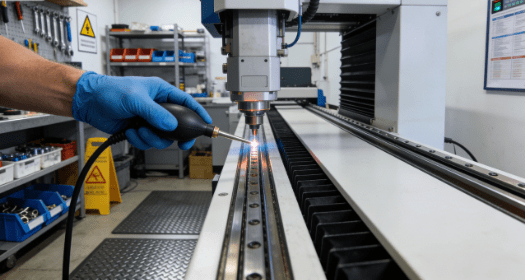
Laser cutting machines require routine attention to:
- Clean and align optics
- Replace lenses and nozzles periodically
- Check gas supply and pressure
- Inspect drive rails and bearings
- Monitor coolant temperature and filters
Consistent maintenance prolongs machine life and preserves cut quality.
Predictive Maintenance with Data Monitoring
Advanced machines use sensors and IoT connectivity to provide:
- Tool health dashboards
- Error alerts before failures occur
- Usage-based part replacement forecasts
Predictive maintenance can reduce unplanned downtime by up to 30–40%, according to industry studies.
Common Troubleshooting Scenarios
Even with good maintenance, metal cutting laser machines can encounter issues. Below are common scenarios and practical fixes that help operators quickly restore production.
Poor Cutting Quality Despite Machine Specs
Many manufacturers assume that high-end machine specs guarantee perfect cuts. However, cutting quality depends on multiple factors beyond power rating. Even a top-tier metal cutting laser machine can produce poor results if key variables are mismanaged.
Possible Causes:
- Dirty or misaligned laser optics
Beam distortion caused by dirty optics leads to irregular cut shapes and inconsistent kerf width. - Improper focus settings
Incorrect focus position results in uneven cutting depth, dross, or incomplete penetration. - Incorrect material handling
Warped sheets, uneven surfaces, or improper clamping can cause vibrations and uneven cuts.
Fix:
Professional cleaning, recalibration, and material-specific cut settings. In many cases, a simple optics alignment and focus adjustment can restore cut quality immediately.
Uneven Edge Finish or Burrs
Burrs and uneven edge finishes are common problems in metal cutting laser machines, especially when processing thicker materials or using incorrect gas settings.
Possible Causes:
- Improper gas selection (oxygen vs nitrogen)
Oxygen produces faster cuts but can create oxidation and rougher edges. Nitrogen delivers cleaner edges but requires higher power and pressure. - Incorrect power and speed settings
If power is too high or speed too low, excessive heat causes dross and melting. If speed is too fast, the cut may not fully penetrate. - Workpiece not lying flat
Warped or uneven workpieces lead to inconsistent focal distance, causing burrs or incomplete cuts.
Fix:
Adjust gas and parameters, ensure a stable work surface, and use proper material supports. For high-precision work, always check that the workpiece is flat and securely clamped.
Unexpected Machine Stops or Errors
Unexpected shutdowns are one of the most disruptive issues for metal cutting laser machines. They can halt production instantly and cause schedule delays.
Possible Causes:
- Overheating
Overheating can trigger protective shutdowns to prevent damage to the laser source or cutting head. - Sensor failures
Faulty sensors (temperature, pressure, or motion) can cause false alarms or stop commands. - Software communication errors
Network instability or software glitches may interrupt production commands or machine operation.
Fix:
Check cooling systems, run diagnostic software, and update firmware. For persistent issues, consult the machine manufacturer or certified service provider to avoid long-term damage.ostic software, update firmware.
Expert Insights and Industry Perspectives
Authority View: Manufacturing Efficiency
“For SMEs, laser cutting is not just a technology upgrade — it is a strategic investment that enhances flexibility, precision, and operational resilience.”
— Dr. Lena Martinez, Industrial Laser Systems Consultant
Authority View: Cost and Production Balance
“The ROI for laser cutting machines becomes particularly compelling when you factor in reduced rework, improved quality, and faster turnaround times — critical in small batch, high mix scenarios.”
— Michael Huang, Manufacturing Efficiency Analyst
How to Compare Laser Machines Before Purchase
Evaluate Technical Specifications
Look beyond power rating. Assess:
- Beam quality factor
- Cutting head flexibility
- Automation support & software
- Compatibility with existing workflows
Assess Vendor Reliability
Choose suppliers with strong service networks, training programs, and part availability. A 5-year warranty on key components is a strong indicator of reliability.
Get Trial Cuts Before Buying
Many vendors will offer demo cuts on real parts. This can save costly mismatches between machine capability and real production needs.
Conclusion
For SMEs, metal cutting laser machines offer unprecedented capability — producing complex parts with precision, speed, and minimal waste. By aligning machine selection with real production needs, adopting standardized maintenance, and leveraging automation and predictive technologies, SMEs can transform their fabrication capabilities and compete confidently in demanding manufacturing landscapes.
Whether you are cutting sheet metal, tubular profiles, or structural components, the strategic adoption of laser cutting technology can be a significant driver of both operational efficiency and long-term business growth.
FAQ
What materials can metal cutting laser machines handle?
Most systems cut mild steel, stainless steel, aluminum, copper, and many alloys, depending on power and optics.
How often should I replace consumable parts?
Lenses and nozzles typically require replacement every 500–1500 hours depending on use intensity and material type.
Can laser cutting machines work with automation?
Yes, many systems integrate with robots, conveyors, and automated loading/unloading for continuous production.
Are metal cutting laser machines suitable for custom manufacturing?
Absolutely — laser systems excel in high-mix, low-volume production due to rapid design flexibility and no tooling changes.
How do I calculate payback period?
Estimate reductions in labor cost, material waste, and cycle time gains; then compare to total machine and integration costs.
If you enjoyed this article on Jinbolida’s smart manufacturing and digital factory expertise, follow us for more insights and updates:
- 📘 Facebook: Stay tuned for our latest smart production line projects → Facebook
- 📱 WhatsApp: Contact us anytime for custom production solutions → Chat Now
- ▶️ YouTube: Watch our automated line demos and real-world applications → YouTube
Let’s keep innovating and shaping the future of smart manufacturing — together!
 English
  Arabic
  Russian
  Spanish
  French