
Butt Fusion Welding Machine Sizing: A Practical Buyer’s Guide
Table of Contents
Choosing the correct butt fusion welding machine is not simply a matter of matching a machine to one pipe diameter. Buyers must also consider pipe material, SDR, wall thickness, required fusion pressure, jobsite conditions, power supply, production volume, and future project needs.
A machine that is too small cannot safely clamp or fuse the required pipe. An oversized machine may increase purchase cost, transport difficulty, setup time, and energy consumption without adding practical value.
Key takeaways:
- Select the machine according to actual pipe outside diameter, not only nominal pipe size.
- Confirm both the minimum and maximum clamping ranges.
- Check whether the equipment supports the required pipe material and SDR.
- Calculate pressure using the pipe fusion area and the manufacturer’s approved joining procedure.
- Choose manual, hydraulic, or automatic controls according to workload and quality requirements.
- Verify heater capacity, facer performance, power supply, and generator compatibility.
- Consider transport, trench access, operator skill, data logging, and future pipe sizes.
- Request a documented configuration before placing a bulk or project order.
What Does Butt Fusion Welder Sizing Mean?
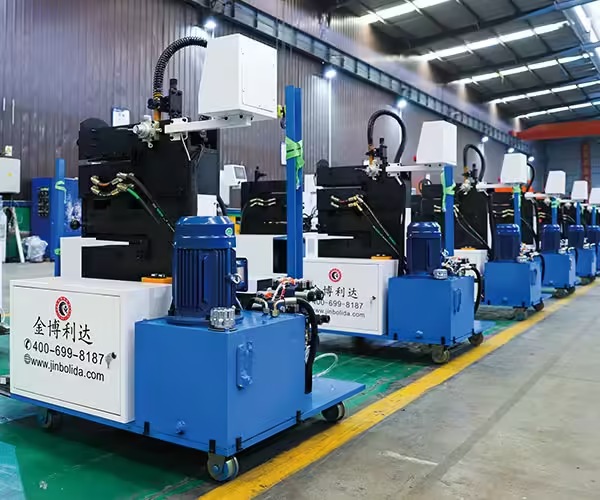
Butt fusion welder sizing is the process of matching the machine’s mechanical, hydraulic, heating, and control capabilities to the pipes that will be joined. The objective is to create repeatable joints while keeping the equipment practical for the intended worksite.
For most buyers, machine sizing begins with pipe outside diameter. However, diameter alone does not describe the full workload placed on a butt fusion welding machine.
Pipe Diameter Range
Every machine has a defined clamping range, such as a group of compatible pipe outside diameters. The largest listed diameter usually requires the main clamp configuration, while smaller sizes may require reduction inserts.
The buyer should confirm the actual outside diameter in millimeters or inches. Nominal descriptions can vary between pipe standards and markets, so relying only on terms such as “4-inch pipe” may lead to an incorrect order.
Pipe Wall Thickness
Two pipes with the same outside diameter may have very different wall thicknesses. A thicker wall normally has a larger fusion area and may require greater force, longer heating time, and a more capable hydraulic system.
Wall thickness is commonly connected to SDR or dimension ratio. Buyers should therefore provide the complete pipe specification instead of giving the diameter alone.
Required Fusion Force
Fusion force is the force applied to bring and hold the heated pipe ends together according to an approved procedure. It depends on factors such as pipe size, wall thickness, fusion area, interfacial pressure, machine geometry, and drag resistance.
A suitable butt fusion welding machine must deliver this force smoothly and maintain it within the required range. Maximum hydraulic pressure by itself does not prove that a machine is correctly sized.
How Does Pipe Diameter Affect Machine Selection?
Pipe diameter determines whether the pipe can physically fit inside the machine’s clamps. It also affects machine weight, frame dimensions, facer size, heater diameter, transport requirements, and the force needed during fusion.
Larger pipes generally require a stronger chassis, more powerful hydraulic components, and heavier handling equipment. For this reason, selecting a machine only by its maximum clamping diameter is not enough.
Minimum Clamping Diameter
The minimum diameter indicates the smallest pipe that the machine can securely hold when the correct reduction inserts are installed. If the pipe is too small for the frame or inserts, alignment may become unstable.
Before purchasing, ask whether all required inserts are included in the quotation. A machine may advertise a wide range while supplying only the main clamps as standard.
Maximum Clamping Diameter
The maximum diameter should be treated as a physical limit, not necessarily the best everyday production size. If most of your projects use the machine at its upper limit, examine hydraulic capacity, frame rigidity, heater recovery, and handling efficiency carefully.
Allow Room for Real Working Conditions
Pipe ovality, surface damage, fittings, confined spaces, and cold-weather work can make clamping more difficult. The machine must remain practical under field conditions, not only when holding a perfect pipe in a factory demonstration.
How to Match a Butt Fusion Welding Machine to Pipe SDR
SDR is the ratio between pipe outside diameter and minimum wall thickness. A lower SDR generally indicates a thicker pipe wall for the same outside diameter.
Because thicker walls create a larger fusion area, SDR influences the required fusion force and cycle conditions. A buyer should therefore submit both outside diameter and SDR when asking a supplier to recommend a butt fusion welding machine.
Understanding the Basic SDR Relationship
The simplified relationship is:
SDR = Pipe outside diameter ÷ Minimum wall thickness
For example, two PE pipes may have the same outside diameter but different SDR values. The lower-SDR pipe will normally have a thicker wall and place a greater load on the fusion equipment.
Why Diameter Alone Can Be Misleading
Suppose a contractor regularly works with 315 mm pipe. A basic inquiry that states only “315 mm” does not reveal whether the pipe is thin-wall non-pressure pipe or a thicker pressure-pipe specification.
The supplier cannot properly evaluate the hydraulic requirement without additional information. Pipe material, SDR, applicable joining standard, and working environment should be included in the technical inquiry.
Butt Fusion Welder Size Comparison
The following table provides a purchasing framework rather than universal machine specifications. Actual clamping ranges, pressure capacities, and power requirements differ between manufacturers and models.
| Project profile | Typical machine priority | Suitable control type | Main points to verify | Common buying risk |
|---|---|---|---|---|
| Small-diameter repair work | Portability and fast setup | Manual or compact hydraulic | Insert sizes, total weight, heater voltage | Buying a heavy machine that is difficult to move |
| Utility pipe installation | Stable pressure and repeatability | Hydraulic | SDR range, drag compensation, pressure gauge accuracy | Matching only the maximum pipe diameter |
| Large-diameter pipeline work | High force and frame rigidity | Hydraulic or automatic | Cylinder area, heater capacity, lifting method | Insufficient force for thick-wall pipe |
| Workshop production | Cycle consistency and productivity | Hydraulic or automatic | Facer speed, data recording, cooling workflow | Ignoring daily production volume |
| Remote construction site | Power flexibility and durability | Hydraulic | Generator compatibility, cable length, weather protection | Unstable power reducing heater performance |
| Regulated gas or water project | Process control and traceability | Automatic or data-logging hydraulic | Applicable procedure, calibration, weld records | Purchasing without confirming project standards |
This comparison shows why there is no single best size for every buyer. The correct choice depends on the relationship between pipe dimensions, workload, quality requirements, and field logistics.
Manual vs Hydraulic Butt Fusion Welding Machine
Control type is another important part of sizing. A small manual machine may be suitable for occasional work, while repetitive or large-diameter projects usually need controlled hydraulic force.
The decision should reflect joint frequency and process requirements rather than purchase price alone.
Manual Butt Fusion Machine
A manual system uses operator-applied force or mechanically assisted movement. It is usually compact, relatively simple, and convenient for smaller pipes or low-volume jobs.
However, joint consistency depends heavily on operator skill. It may not be suitable when the fusion procedure requires precise and repeatable pressure control.
Best Fit
Manual equipment may suit repair teams, light workshop use, training environments, or projects involving a narrow range of small pipe diameters. Buyers should still confirm that the machine complies with the approved procedure for the pipe being joined.
Hydraulic Butt Fusion Machine
A hydraulic butt fusion welding machine uses cylinders and a hydraulic unit to move the carriage and apply fusion force. This arrangement provides more controllable pressure and is generally better suited to medium- and large-diameter PE pipe.
It can also reduce operator fatigue during repetitive work. The hydraulic system must nevertheless be correctly sized for the pipe fusion area and expected drag force.
Best Fit
Hydraulic models are commonly selected for water, gas, industrial, mining, and infrastructure pipelines. They are especially useful when contractors handle several SDR values within the same pipe diameter range.
Automatic or CNC-Controlled Machine
Automatic controls can guide or record selected stages of the fusion cycle. Depending on the model, functions may include pressure control, timing, temperature monitoring, operator prompts, and joint-data recording.
These features do not replace a qualified procedure or trained operator. They can, however, improve repeatability and traceability on projects with formal documentation requirements.
How Much Hydraulic Capacity Does the Machine Need?

Hydraulic capacity must be evaluated using more than the pressure number displayed on a gauge. The relationship between gauge pressure and actual carriage force depends on the machine’s cylinder area and configuration.
Ask the supplier to show how the recommended gauge pressure is calculated for your pipe dimensions and joining procedure.
Pipe Fusion Area
The fusion area is based on the cross-sectional area of the pipe wall. As outside diameter and wall thickness increase, the area that must be fused also increases.
This is one reason why two jobs involving the same outside diameter may need different pressure settings. The SDR value changes the wall thickness and therefore changes the required force.
Machine Cylinder Area
The effective piston area converts hydraulic pressure into carriage force. Two machine models can show the same gauge pressure but produce different actual forces because their cylinder dimensions are different.
A reliable quotation should identify the applicable machine model and provide the pressure calculation method or approved pressure table.
Drag Pressure
Drag pressure is the additional pressure needed to move the carriage and pipe before fusion pressure is applied. Long pipe strings, rough supports, uneven ground, cold hydraulic oil, and poor alignment may all increase drag.
Why Drag Must Be Measured
Drag is not a fixed value that can be assumed for every joint. The operator should measure it under the actual setup and account for it according to the approved fusion procedure.
Check the Heater and Facer Capacity
The frame may fit the pipe, but the heater and facer must also support the full diameter range. An undersized heating plate can produce uneven melting, while a weak facer may struggle to create parallel, clean pipe ends.
For this reason, a butt fusion welding machine should be evaluated as a complete system rather than as an independent frame.
Heater Plate Coverage
The heater must cover the complete pipe-end surface. It should also maintain the required surface temperature uniformly across the working area.
Ask the supplier about temperature control, heater coating, temperature tolerance, warm-up time, and the method used to verify the actual plate temperature.
Heater Recovery
High-volume production and large pipe ends remove considerable heat from the plate. A heater with slow recovery may extend cycle time or make consecutive joints less consistent.
Ambient temperature and wind also affect performance. Buyers working in cold climates should discuss environmental limits and weather protection with the supplier.
Facer Performance
The facer removes a controlled layer of material and creates clean, parallel pipe ends. It must have enough torque and cutting coverage for the largest and thickest pipes in the intended range.
A good setup should produce continuous shavings from both ends. Operators must then remove loose shavings without contaminating the prepared fusion surfaces.
Power Supply and Jobsite Requirements
Electrical compatibility is often overlooked until the machine arrives at the project. Heater voltage, hydraulic unit voltage, facer power, plug type, phase, frequency, and generator capacity must all be confirmed before shipment.
A machine with the correct clamping range may still be unusable if the available power source cannot support its startup and continuous loads.
Voltage and Frequency
Provide the supplier with the actual site voltage, frequency, and phase. Do not assume that a plug adapter will solve an electrical mismatch.
Incorrect power conditions can affect heating stability, motor performance, safety, and component life. Confirm whether the supplied controls and protection devices match local requirements.
Generator Compatibility
Remote sites frequently depend on portable generators. The generator must support the combined operating requirements of the heater, facer, hydraulic unit, and any auxiliary tools.
Avoid Selecting by Rated Watts Alone
Startup current, cable length, voltage drop, generator regulation, and simultaneous loads can affect real performance. Ask the machine supplier and generator provider to confirm compatibility based on the complete equipment configuration.
Worksite Conditions That Change the Right Machine Size
The largest possible model is not always the most useful choice. A machine may have sufficient technical capacity but be too heavy or wide for trench work, urban repair sites, or mountain projects.
Operational access should therefore be considered during butt fusion welding machine sizing.
Trench or Above-Ground Fusion
Some projects allow the pipe to be joined above ground and then positioned. Others require fusion inside a trench or restricted work area.
For confined operations, check whether the machine can be separated into lighter modules. Also confirm the space needed to open clamps, install inserts, remove the heater, and operate the facer safely.
Transport and Lifting
Large equipment may require a crane, excavator, forklift, or dedicated trailer. The buyer should ask for the weight of each major component instead of relying only on total machine weight.
Climate and Contamination
Wind, rain, dust, low temperature, and direct sunlight can affect pipe preparation and fusion control. Shelters, end plugs, pipe rollers, cleaning materials, and temperature verification tools may be necessary.
The equipment size does not remove the need for a controlled working environment. Machine selection and jobsite preparation must be planned together.
Should You Choose One Wide-Range Machine or Several Machines?

A wide-range machine appears economical because it can cover many pipe diameters. In practice, frequent insert changes, heavier components, and longer setup times can reduce efficiency when most work involves small pipe.
Several dedicated machines may offer better productivity for contractors running multiple crews or working on different pipe sizes simultaneously.
One Wide-Range Machine
This option can reduce the number of capital purchases and simplify inventory. It may work well when pipe sizes change occasionally and the team can transport the larger frame without difficulty.
The buyer should calculate the cost of inserts, lifting equipment, setup time, and production interruptions before deciding.
Multiple Dedicated Machines
Using separate small-, medium-, and large-range units can improve crew mobility and reduce changeover time. It also provides some operational flexibility if one machine is under maintenance.
The disadvantage is a higher initial investment and more equipment to calibrate, transport, store, and service.
A Practical Decision Rule
Choose according to the sizes used most frequently, not every size that might appear in a future project. If a rare large diameter accounts for only a few joints, renting or subcontracting that portion may be more economical than buying an oversized machine.
Standards and Procedure Compatibility
Machine capability and jointing procedure must be evaluated together. Buyers should not copy temperature, time, or pressure settings from an unrelated pipe or machine.
ISO 21307 establishes principles and specified procedures for butt fusion jointing of PE piping system components. ASTM F2620 covers heat fusion joining procedures for polyethylene pipe and fittings. Applicable national rules, project specifications, and pipe-manufacturer instructions may add further requirements.
Machine Compliance
The selected butt fusion welding machine should be capable of operating within the parameters required by the applicable procedure. Buyers may need documentation covering pressure accuracy, heater control, calibration, safety systems, and equipment identification.
Operator Qualification
Correctly sized equipment cannot compensate for untrained operation. Facing, alignment, cleanliness, heating, changeover, pressure application, and cooling must all be performed correctly.
Documentation and Traceability
For regulated or high-value projects, consider a machine that can record joint number, operator identity, pipe details, time, temperature, pressure, and cycle status. Confirm which data fields are recorded and how the files can be exported.
Butt Fusion Welding Machine Buying Checklist
Before requesting a final quotation, prepare a technical data sheet containing the real operating conditions. This makes supplier comparisons more accurate and reduces the risk of missing components.
Pipe Information
Provide the following:
- Pipe material, such as compatible PE grades
- Minimum and maximum outside diameter
- SDR or wall thickness for every important diameter
- Pipe standard and intended application
- Pipe or fitting type
- Required joining procedure
Production Information
Explain how the machine will be used:
- Expected joints per shift
- Workshop or field operation
- Average and peak pipe sizes
- Number of operating crews
- Typical ambient temperature
- Trench or above-ground work
- Required weld records
Equipment Configuration
Ask the supplier to clearly list:
- Base frame and clamping range
- Reduction inserts included
- Hydraulic unit and effective cylinder area
- Facer and heater specifications
- Voltage, phase, and frequency
- Data logger or automatic controller
- Pipe supports and rollers
- Tool box and spare parts
- Component weights and packing dimensions
- Calibration and inspection documents
- Training, warranty, and technical support
You can also review these essential butt welding machine tips to understand how preparation, alignment, pressure, cooling, and maintenance influence joint quality.
Common Butt Fusion Welder Sizing Mistakes
Most selection problems come from incomplete project information rather than from complicated calculations. Recognizing these mistakes can prevent an expensive purchasing error.
Selecting Only by Maximum Diameter
A machine advertised for the largest required pipe may not include inserts for smaller diameters. It may also be unnecessarily heavy for daily work.
Ignoring SDR and Wall Thickness
Diameter establishes physical fit, while wall thickness strongly affects fusion area and required force. Both must be included in machine selection.
Comparing Gauge Pressure Directly
Gauge readings cannot be compared across different machine designs without knowing effective cylinder area. Ask each supplier to explain actual carriage force and pressure calculations.
Forgetting Drag Resistance
The force needed to move the pipe may vary between a smooth workshop floor and an uneven field installation. Machine capacity and the approved procedure must account for real drag.
Underestimating Power Demand
A small generator or long undersized cable can cause unstable heater performance. Electrical supply should be verified as part of the purchase, not after delivery.
Buying for Every Possible Future Size
Excess capacity increases weight and cost. Select for realistic project demand while allowing sensible room for growth.
Conclusion
Correct butt fusion welding machine sizing requires more than choosing the largest pipe diameter shown in a product catalog. The machine must clamp the actual outside diameter, deliver sufficient controlled force for the relevant wall thickness, heat and face the full pipe end, operate with the available power supply, and remain practical at the worksite.
Begin with a detailed pipe schedule and identify the diameters and SDR values used most often. Then compare clamping range, inserts, hydraulic capacity, cylinder area, heater performance, facer capability, controls, portability, and documentation.
For a project-specific recommendation, send your pipe specifications, required diameter range, power conditions, and application details through the Jinbolida contact page. You can also explore the company’s industrial equipment solutions when planning a broader production or machinery project.
FAQ
What size butt fusion welding machine do I need?
You need a model whose clamping range covers the actual outside diameters of your pipes and whose hydraulic, heater, and facer capacities support their wall thicknesses. Provide the supplier with pipe material, diameter, SDR, standard, and project conditions before accepting a recommendation.
Can one butt fusion machine weld different pipe sizes?
Yes. Many machines use reduction inserts to clamp several smaller diameters within the main frame range. Confirm that the required inserts are available and included in the quotation.
Is pipe diameter enough to choose a fusion welder?
No. Pipe diameter confirms physical fit, but SDR, wall thickness, material, joining procedure, and drag force affect the required machine performance.
Is a larger butt fusion welding machine always better?
No. A larger unit may be heavier, more expensive, slower to move, and less convenient for small-pipe work. The best machine is the one that covers the normal workload with adequate technical capacity and practical portability.
How do I choose between manual and hydraulic models?
Manual equipment may suit smaller pipes and occasional work. Hydraulic equipment is generally more appropriate when higher force, repeatable pressure, larger diameters, or frequent production is required.
Can the same machine fuse PE and PP pipe?
Only when the equipment, tooling, temperature control, and approved procedure are suitable for the specific material. PE and PP joining parameters should not be treated as interchangeable.
What information should I send when requesting a quotation?
Send a pipe schedule listing material, outside diameter, SDR or wall thickness, applicable standard, joint quantity, working environment, power supply, and required level of automation. Photos or drawings of fittings and worksite constraints can also help.
How much extra size capacity should I buy?
Allowing some capacity for confirmed future projects can be reasonable. However, buying a much larger machine for uncertain work may increase total ownership cost without improving current productivity.
Do I need a data-logging fusion machine?
Data logging is valuable when the client, utility, inspector, or project specification requires traceable joint records. Confirm the exact recorded parameters and export format before purchasing.
How can I confirm the supplier’s size recommendation?
Ask for a written configuration showing the pipe range, inserts, effective cylinder area, pressure calculation method, heater capacity, facer capability, electrical requirements, and applicable joining procedure. If project standards apply, have the configuration reviewed by the responsible engineer or pipe-system provider.
If you enjoyed this article on Jinbolida’s smart manufacturing and digital factory expertise, follow us for more insights and updates:
- 📘 Facebook: Stay tuned for our latest smart production line projects → Facebook
- 📱 WhatsApp: Contact us anytime for custom production solutions → Chat Now
- ▶️ YouTube: Watch our automated line demos and real-world applications → YouTube
Let’s keep innovating and shaping the future of smart manufacturing — together!
 English
  Arabic
  Russian
  Spanish
  French