
Choosing the Right Hydraulic Plate Shear for Your Workshop
In today’s competitive metalworking industry, the right equipment can make or break your workshop’s productivity. A hydraulic plate shear is a cornerstone for any facility handling steel sheets, combining precision, speed, and reliability. Choosing the right model ensures your workshop maximizes output, reduces waste, and maintains high-quality results with minimal effort. This guide will walk you through everything you need to know before making this crucial investment.
Key Points Covered in This Article
- Understanding what a hydraulic plate shear is and how it works
- Key features to consider when selecting a hydraulic plate shear
- Comparing hydraulic plate shear types and their applications
- Integrating hydraulic shears into your workflow for efficiency
- Maintenance tips and best practices for longevity
- FAQs addressing common user concerns
- Data-driven insights and real-world specifications
Table of Contents
Understanding Hydraulic Plate Shear
What is a Hydraulic Plate Shear?
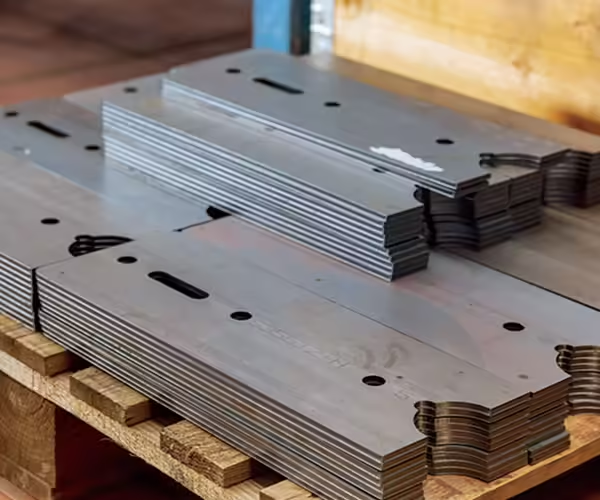
A hydraulic plate shear is a machine designed for cutting steel plates with precision and efficiency. Unlike mechanical shears, it uses hydraulic pressure to drive a heavy-duty blade, ensuring smoother cuts, minimal deformation, and higher reliability.
How Does a Hydraulic Plate Shear Work?
Hydraulic plate shears use hydraulic cylinders to generate force. The blade moves down with controlled pressure, cutting the steel sheet cleanly. Advantages include:
- Uniform cutting force across thick plates
- Reduced material warping
- High repeatability for batch production
Key Features to Consider in a Hydraulic Plate Shear
Cutting Capacity and Range
- Plate thickness: Typically ranges from 1 mm to 25 mm. Some advanced CNC models handle up to 50 mm steel plates.
- Plate width: Commonly up to 2,500 mm, with custom models available for larger workshops.
- Shear length: Can vary from 2 m to 6 m, depending on production needs.
Choosing a machine with slightly higher capacity than your current requirements future-proofs your investment.
Blade Quality and Material
- High-strength alloy blades are standard, maintaining sharpness for 500–1,000 hours of cutting.
- Replaceable upper and lower blades extend machine lifespan.
- Hardened steel or tungsten carbide tips improve performance for stainless or alloy steels.
Precision and Repeatability
- Modern hydraulic plate shears can achieve cutting accuracy of ±0.05 mm.
- Repeatability ensures consistent results across hundreds of cuts.
- CNC-controlled shears enhance repeatability for complex, multi-part projects.
Safety Features
- Light curtains, emergency stops, and foot pedal operation minimize workplace accidents.
- Safety interlocks prevent accidental operation when the blade is exposed.
Types of Hydraulic Plate Shears and Comparisons
| Type | Best For | Advantages | Limitations | Typical Cutting Thickness |
|---|---|---|---|---|
| Manual Hydraulic Plate Shear | Small workshops | Affordable, simple operation | Limited automation, slower for large batches | 1–15 mm |
| CNC Hydraulic Plate Shear | Medium to large workshops | High precision, programmable cuts | Higher upfront cost | 1–25 mm (some up to 50 mm) |
| Hydraulic Swing Beam Shear | High-volume cutting | Fast, minimal deformation | Less suitable for very thick plates | 3–20 mm |
Hydraulic vs Mechanical Plate Shear
- Hydraulic: Consistent pressure, smooth cuts, ideal for thicker plates.
- Mechanical: Faster for thin sheets, less precise, higher risk of material distortion.
Tip: For workshops producing mixed plate sizes and thicknesses, a hydraulic shear with CNC control is generally the most versatile option.
Integrating Hydraulic Plate Shears into Your Workflow

Pairing with Other Equipment
- Combine with laser cutting machines for precision finishing on complex shapes.
- Integrate with CNC punching machines to reduce handling and increase throughput.
Automation and Smart Manufacturing
- Modern hydraulic shears can be connected to software systems for automated cutting schedules.
- Small-batch customization is possible without manual adjustment, saving labor and time.
Operator Training
- Proper training ensures maximum machine lifespan and cutting quality.
- Workshops should include hands-on sessions and digital tutorials for new operators.
Maintenance and Longevity Tips
Regular Blade Inspection
- Inspect for cracks, chipping, and dullness.
- Replace as needed to maintain accuracy and reduce hydraulic stress.
Hydraulic Oil Maintenance
- Check oil levels weekly; change every 2,000–3,000 operating hours.
- Use manufacturer-recommended hydraulic oil to prevent system damage.
General Equipment Care
- Tighten bolts and check alignment monthly.
- Clean the machine and remove metal debris to avoid scratches and contamination.
Data-Driven Insights: Specifications You Should Know
| Parameter | Typical Range | Importance |
|---|---|---|
| Plate Thickness | 1–25 mm | Determines maximum material the shear can handle |
| Plate Width | ≤2,500 mm | Influences machine size and workshop space requirements |
| Cutting Precision | ±0.05 mm | Key for high-quality fabrication |
| Blade Lifespan | 500–1,000 hrs | Impacts maintenance frequency and cost |
| Hydraulic Pressure | 160–250 bar | Ensures smooth operation on thicker plates |
Choosing a shear with slightly higher precision and pressure than your current needs ensures long-term flexibility.
Advanced Concepts: Enhancing Efficiency with Hydraulic Plate Shears

Minimizing Material Waste
- Proper blade selection and alignment reduce scrap.
- CNC programming optimizes cut layout for maximum material use.
Energy Efficiency
- Modern shears consume less power compared to older mechanical models.
- Hydraulic energy recovery systems are increasingly available, lowering electricity costs.
Environmental Considerations
- CNC and automated shears minimize metal dust and waste.
- Digital cutting systems align with smart, eco-friendly manufacturing trends.
Conclusion
A hydraulic plate shear is a vital investment for any steel-processing workshop. By understanding cutting capacity, precision, blade quality, and safety, you can select the ideal machine for your production needs. Incorporating CNC or automation features enhances efficiency, reduces waste, and ensures long-term reliability. Proper maintenance, operator training, and workflow integration maximize the return on investment, making hydraulic plate shears a cornerstone of modern metal fabrication.
FAQ
1. What thickness of steel can a hydraulic plate shear handle?
Most industrial hydraulic shears handle 1–25 mm; heavy-duty models go up to 50 mm for thicker steel applications.
2. Are hydraulic plate shears cost-effective?
Yes, they reduce waste, maintenance, and labor compared to mechanical shears. Over time, they save both material costs and production hours.
3. Can I cut stainless steel with a hydraulic plate shear?
Yes, high-quality shears cut mild steel, stainless steel, and alloy plates efficiently. Use hardened or tungsten-tipped blades for maximum durability.
4. How do I maintain cutting precision?
Keep blades sharp, monitor hydraulic pressure, and consider CNC control for repetitive cuts. Regular maintenance ensures consistent results.
5. Should I invest in manual or CNC hydraulic shears?
Manual shears are fine for occasional cuts. CNC models are better for high-volume, complex, or precision cutting tasks.
6. How do I choose the right shear for my workshop?
Assess your typical plate size, thickness, batch volume, and level of automation needed. Choose slightly above your maximum expected workload for future-proofing.
7. What safety measures are recommended?
Use light curtains, emergency stop buttons, and foot pedal controls. Proper operator training is essential.
If you enjoyed this article on Jinbolida’s smart manufacturing and digital factory expertise, follow us for more insights and updates:
- 📘 Facebook: Stay tuned for our latest smart production line projects → Facebook
- 📱 WhatsApp: Contact us anytime for custom production solutions → Chat Now
- ▶️ YouTube: Watch our automated line demos and real-world applications → YouTube
Let’s keep innovating and shaping the future of smart manufacturing — together!
 English
  Arabic
  Russian
  Spanish
  French