
Everything You Should Know About Building Steel Structure
Table of Contents
Introduction
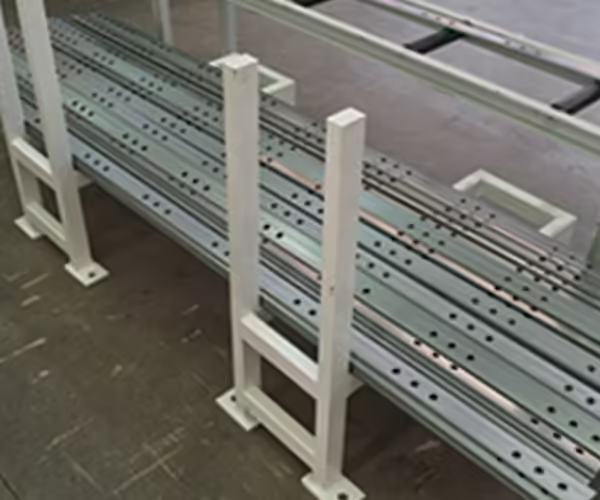
The world of modern architecture is changing fast — and Building Steel Structure systems are now at the heart of that transformation. From skyscrapers to prefabricated homes, the demand for precision-formed, sustainable, and modular steel components is growing.
One critical technology driving this revolution is the building steel forming machine, a cold-rolling system designed to shape various construction materials such as wall panels, roof sheets, door frames, and structural components.
These machines transform metal coils — usually carbon steel, galvanized steel, stainless steel, or aluminum — into precisely engineered profiles, enabling buildings that are stronger, lighter, and more efficient.
How a Building Steel Structure Forming Machine Works
Understanding the Cold-Roll Forming Process
Unlike traditional hot forming, cold-roll forming operates at room temperature. It gradually bends the steel coil through multiple roller stations, shaping it into the desired profile without heating or welding.
Key process steps:
- Uncoiling & Leveling – Metal coils are loaded and flattened.
- Feeding – The coil passes into a series of precision rollers.
- Forming – Each roller stage progressively shapes the material.
- Cutting & Collection – Finished sections are cut to length and stacked.
- Control & Automation – A PLC system ensures accurate, high-speed, and repeatable production.
This continuous forming process allows manufacturers to produce long, seamless components used in Building Steel Structure systems — ideal for modern modular architecture.
Key Structural Elements of a Building Steel Forming System

Every advanced forming line includes several essential elements that define its performance and precision:
Core Elements
- Base Frame: Provides stability and absorbs vibration.
- Roller Sets (Mold Steel): Made from hardened alloy steel (like Cr12MoV or SKD11) for precision and wear resistance.
- Hydraulic Cutting Unit: Ensures clean, burr-free edges.
- PLC Control System: Enables smart automation and monitoring.
- Servo Motor Drives: Maintain synchronized motion across all rollers.
Supporting Elements
- Decoiler System – Holds and unwinds the steel coil.
- Straightening Machine – Aligns and flattens before forming.
- Output Table – Collects and stacks formed components.
These elements work together to maintain consistent geometry, tight tolerances, and repeatable quality — the hallmarks of high-performance steel structure production.
Applications of Building Steel Structure Components
Construction and Architecture
- Wall and roof panels
- Floor decking systems
- Light steel frames and trusses
- Purlins (C/Z-type)
- Facade systems
Infrastructure and Industrial Use
- Bridge decks
- Tunnel lining molds
- Storage and logistics shelving
- Precast concrete molds
Prefabrication and Modular Buildings
As modular and prefabricated construction expands globally, cold-roll-formed components are essential for speed, precision, and flexibility — all vital to the Building Steel Structure ecosystem.
Performance Advantages: Why Choose Steel Forming Technology?

Technical Benefits
- High dimensional accuracy — typically within ±0.2 mm.
- Superior surface quality — no oxidation or distortion.
- Continuous production — efficient, low labor cost.
- Material savings — minimal scrap compared to hot forming.
Operational Advantages
- Automation-ready: Integration with CAD/CAM and MES systems.
- Low maintenance: Long roller life and reduced downtime.
- Eco-efficient: No fuel heating; lower energy footprint.
Economic Comparison: Cold-Roll vs. Traditional Steel Fabrication
| Feature | Cold-Roll Forming | Traditional Fabrication |
|---|---|---|
| Precision | ±0.2 mm | ±1 mm |
| Energy Use | Low | High |
| Production Speed | Continuous | Intermittent |
| Waste Rate | <3% | 10–15% |
| Automation | Full | Limited |
The comparison makes it clear: Building Steel Structure manufacturing with cold-roll forming is cleaner, faster, and more cost-efficient.
Material Considerations: The Role of Mold Steel and Alloys
Common Materials Used
- Carbon Steel – High strength and economical.
- Galvanized Steel – Corrosion-resistant for exterior panels.
- Stainless Steel – Aesthetic and rust-proof for facades.
- Aluminum – Lightweight and easy to transport.
Importance of Mold Steel in Roller Design
The rollers (mold elements) are the heart of the forming system. They determine the accuracy, surface finish, and longevity of the entire machine.
Common mold steels include:
- Cr12MoV – High wear resistance.
- SKD11 / D2 – Excellent hardness retention.
- H13 – Superior thermal and mechanical stability.
Maintenance and Operation Best Practices
Routine Maintenance Checklist
- Regular lubrication of roller bearings.
- Check alignment and gap between roller stations.
- Clean rollers to avoid surface defects.
- Monitor hydraulic system pressure and oil quality.
- Inspect sensors and PLC connections weekly.
Operator Tips
- Always calibrate the control system before production.
- Use certified steel coils to ensure consistency.
- Schedule preventive maintenance rather than reactive repairs.
Maintaining these machine elements ensures that Building Steel Structure components stay precise and durable across long production runs.
Comparing Building Steel Structure Systems
Steel vs. Concrete Structures
| Feature | Building Steel Structure | Concrete Structure |
|---|---|---|
| Weight | Light | Heavy |
| Flexibility | High | Low |
| Construction Time | Fast | Slow |
| Recyclability | Excellent | Poor |
| Maintenance | Easy | Moderate |
Conclusion: Steel structures are ideal for fast-paced, modular, and sustainable construction projects.
Modular vs. On-Site Fabrication
- Modular systems leverage precision factory forming and assembly-line control.
- On-site fabrication depends heavily on manual labor and weather conditions.
In today’s market, modular Building Steel Structure production is the clear winner in consistency and scalability.
Industry Trends and Future Outlook

1. Smart Automation & AI Integration
AI algorithms now monitor roller alignment, predict maintenance needs, and optimize coil feed speeds.
2. Sustainable Manufacturing
Energy-efficient drives, recyclable materials, and closed-loop lubrication systems reduce carbon footprints.
3. Rapid Urbanization & Prefabrication
Cities are expanding vertically, and Building Steel Structure solutions allow faster and safer construction of skyscrapers and green buildings.
4. Material Innovation
Next-generation high-strength alloys and composite steels are extending structure lifespans while reducing weight.
Conclusion
The evolution of Building Steel Structure systems represents more than just advanced machinery — it’s a new mindset in modern construction.
By combining intelligent design, efficient cold-roll forming, and high-performance steel alloys, builders can achieve:
- Faster project completion
- Higher precision and safety
- Better sustainability outcomes
From industrial warehouses to futuristic modular homes, Building Steel Structure technology is shaping the skyline of tomorrow — efficiently, intelligently, and beautifully.
FAQ
What is a Building Steel Structure and why is it used?
It’s a framework made from prefabricated steel components — beams, columns, trusses — assembled to create a durable, flexible, and lightweight building shell. It’s used for commercial buildings, factories, warehouses, and modern homes.
Is a steel structure stronger than concrete?
Yes, steel structures offer better strength-to-weight ratios and resist bending, tension, and vibration more effectively than concrete.
Can I use steel structures for residential buildings?
Absolutely. Prefabricated and light-gauge steel framing is increasingly common in sustainable housing projects.
How long does a steel structure last?
Typically 50–100 years with proper maintenance and corrosion protection.
What are the main components of a Building Steel Structure?
- Beams and columns
- Roof and wall panels
- Purlins (C/Z profiles)
- Fastening systems
- Protective coatings
Is cold-roll forming eco-friendly?
Yes — it consumes less energy, produces minimal waste, and eliminates heating emissions compared to traditional fabrication.
How do I choose between galvanized and stainless steel for my project?
Use galvanized steel for cost-effective, corrosion-resistant structures; choose stainless steel for architectural aesthetics or coastal environments.
What’s the difference between modular steel buildings and welded frames?
Modular systems are prefabricated, faster to assemble, and more precise, while welded frames require on-site work and longer installation time.
If you enjoyed this article on Jinbolida’s smart manufacturing and digital factory expertise, follow us for more insights and updates:
- 📘 Facebook: Stay tuned for our latest smart production line projects → Facebook
- 📱 WhatsApp: Contact us anytime for custom production solutions → Chat Now
- ▶️ YouTube: Watch our automated line demos and real-world applications → YouTube
Let’s keep innovating and shaping the future of smart manufacturing — together! 🚀
 English
  Arabic
  Russian
  Spanish
  French