
How CNC and Laser Machine Improve Precision Manufacturing
Key Takeaways
- Learn how CNC and laser machines enhance accuracy, efficiency, and scalability in modern manufacturing.
- Understand differences between CNC machining and laser cutting for specific applications.
- Explore material versatility, production speed, and cost-saving advantages.
- Examine industry standards, case studies, and real-world applications.
- Compare high-precision sheet metal, tube, and complex component processing.
- Review FAQs tailored for engineers, manufacturers, and procurement professionals.
Introduction
Precision manufacturing has become a cornerstone of modern industry. From aerospace components requiring micron-level accuracy to customized furniture and automotive parts, manufacturers are under constant pressure to improve quality, speed, and flexibility. CNC (Computer Numerical Control) and laser machines have emerged as key technologies in this evolution, offering high-precision, programmable, and automated solutions that streamline production while minimizing errors.
Modern manufacturing demands a combination of digital workflows, real-time monitoring, and automated quality control. CNC machines provide programmable mechanical accuracy, while laser machines offer contactless precision cutting, engraving, and marking. When integrated, these technologies redefine what is possible in terms of efficiency, customization, and cost-effectiveness.
Table of Contents
CNC and Laser Machine Overview
What is a CNC Machine?
CNC machines are computer-controlled tools that automate drilling, cutting, milling, and shaping of materials. They reduce human error, maintain tight tolerances, and increase throughput. Modern CNC systems also integrate sensors for real-time adjustments, enabling precision in large-scale production.
What is a Laser Machine?
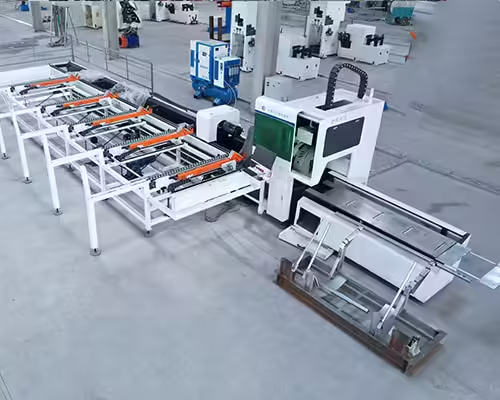
Laser machines utilize focused light energy to cut, engrave, or mark materials with exceptional precision. With micron-level accuracy, they create smooth, burr-free edges and are highly efficient for both sheet and tubular materials. Non-contact laser cutting reduces tool wear and prevents material deformation.
CNC vs Laser: Key Differences
| Feature | CNC Machine | Laser Machine |
|---|---|---|
| Accuracy | ±0.05mm typical | ±0.03mm possible |
| Material Types | Metals, plastics, wood | Metals, plastics, composites |
| Speed | Moderate | High, especially for thin or complex parts |
| Tool Wear | Requires regular replacement | Minimal; non-contact |
| Best Use | Machining components, shaping | Cutting, engraving, marking |
Precision Advantages of CNC and Laser Machines
Micron-Level Accuracy
Laser machines can achieve ±0.03mm tolerances, while CNC systems maintain ±0.05mm. This precision is crucial in aerospace, automotive, and medical industries where even small deviations can compromise assembly or safety.
Repeatability and Consistency
Both technologies allow for repeatable operations across hundreds or thousands of parts, reducing variation and ensuring quality consistency.
Efficiency Gains
- Laser cutting is up to 5× faster than traditional mechanical methods for sheet metal.
- CNC machining automates repetitive tasks, freeing human operators for more complex work.
- Combination of both allows for mass production and small-batch custom orders simultaneously.
Reduced Waste
- Non-contact laser cutting reduces material deformation.
- CNC toolpath optimization minimizes scrap and improves raw material usage by up to 15%, according to a 2022 SME Whitepaper on Smart Manufacturing.
Material and Application Insights
Sheet Metal Laser Cutting
- Range: Plate length ≤ 24m, width ≤ 2.5m
- Laser Power: 1.5–20 KW
- Accuracy: ±0.05mm; Repeatability ±0.03mm
- Use Cases: Aerospace panels, automotive body parts, electrical enclosures
Tube Laser Cutting
- Tube Types: Round, square, rectangular, angle steel, channel steel
- Laser Power: 1–30 KW
- Accuracy: ±0.05mm
- Advantages: Supports chamfering, drilling, and complex profiles
- Industries: Automotive frames, construction, furniture
CNC Machining Centers
CNC machines are ideal for:
- Engine and transmission parts
- Industrial molds and dies
- Precision fixtures for assembly lines
Case Study: A German automotive manufacturer integrated CNC and tube laser machines to produce tubular seat frames, achieving a 4× speed improvement and 15% reduction in material waste, with ±0.05mm tolerances maintained across 10,000 units.
Advanced Features and Integration

Digital and Smart Manufacturing
Modern CNC and laser systems support:
- CAD/CAM integration for direct design-to-production workflows
- Automated job sequencing and nesting to optimize cutting paths
- IoT-enabled monitoring for predictive maintenance
Environmental and Sustainability Benefits
- Energy-efficient laser cutting machines consume 30–50% less power compared to older mechanical methods.
- Reduced tool wear and scrap contribute to sustainable manufacturing practices.
- Digital precision minimizes rework, saving both materials and energy.
Safety and Operational Improvements
- Non-contact laser processing reduces exposure to sharp tools or heat.
- Automated CNC machining reduces operator fatigue and risk.
- Hydraulic and servo-assisted platforms improve ergonomics and machine accessibility.
Industry Standards and Compliance
ISO and ASTM Standards
- ISO 9001:2015: Quality management system for precision manufacturing
- ISO 2768: General tolerances for linear and angular dimensions
- ASTM E384: Microhardness testing relevant to laser-processed metals
Compliance Implications
Following these standards ensures products meet international quality and safety requirements. Manufacturers can guarantee both consistency in tolerances and regulatory compliance across global markets.
Equipment Comparison: Sheet vs Tube vs CNC
| Feature | Sheet Metal Laser | Tube Laser | CNC Machining |
|---|---|---|---|
| Accuracy | ±0.03mm | ±0.05mm | ±0.05mm |
| Speed | High | High | Moderate |
| Material Types | Metals & non-metals | Tubular metals | Metals, plastics, composites |
| Complexity | Complex cuts & engraving | Complex profiles | Milling, drilling, threading |
| Ideal Use | Aerospace, electronics | Automotive frames, furniture | Engines, molds, fixtures |
Real-World Applications
Automotive Industry
Laser machines cut chassis and body panels with minimal secondary finishing. CNC machines drill and mill components with tight tolerances for engines and transmissions.
Aerospace and Defense
High-strength alloys are machined and cut with laser precision to meet rigorous safety standards. Components must comply with ±0.05mm tolerances to ensure flight safety.
Furniture Manufacturing
Tube lasers create chair and table frames quickly, while CNC machines handle intricate wood milling. Combined, they reduce production time while maintaining quality.
Latest Research and Industry Reports
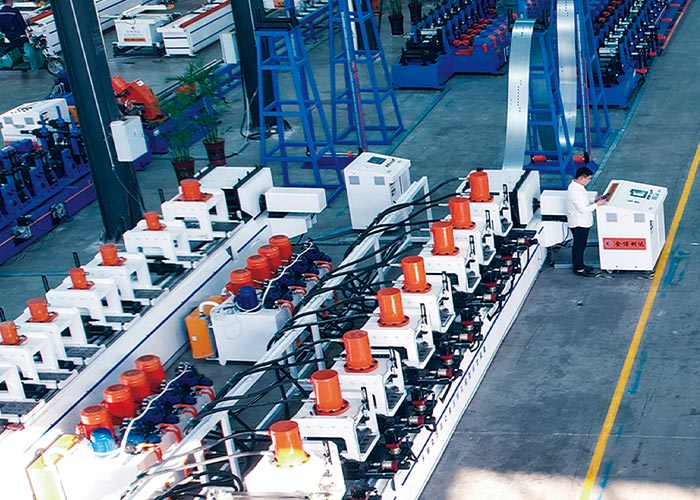
- SME Whitepaper 2022: Highlighted 15% material savings and 30% efficiency gain when integrating CNC and laser systems in mid-sized manufacturing plants.
- Laser Institute of America (LIA) Report 2023: Confirmed laser cutting reduces burr formation by 90%, decreasing finishing costs.
- Industry News 2024: Major OEMs report that smart CNC-laser integration allows for smaller batch production with the same cost efficiency as mass production.
Future Trends
- Automation and AI Integration: Predictive maintenance, smart toolpath optimization, and autonomous production lines.
- Hybrid Manufacturing: Combining additive (3D printing) with subtractive CNC/laser processes for complex geometries.
- Sustainability Focus: Low-energy lasers, recyclable tooling, and reduced waste align with global ESG targets.
Conclusion
CNC and laser machines have become indispensable in precision manufacturing. Their combination delivers unmatched accuracy, efficiency, and adaptability across industries. By integrating these technologies, manufacturers achieve cost savings, improved quality, and sustainable production. From aerospace to furniture, leveraging CNC and laser machines ensures competitive advantage in today’s demanding industrial landscape.
Investing in CNC and laser technology today is a strategic move to future-proof precision manufacturing.
FAQ
Q: Can CNC and laser machines work simultaneously?
A: Yes. CNC handles shaping and drilling, while lasers perform fast cutting and engraving, optimizing overall workflow.
Q: Are lasers suitable for thick metals?
A: High-power lasers (20–30 KW) can cut metals up to several centimeters thick.
Q: What maintenance is required?
A: Regular calibration, lens cleaning for lasers, and tool replacement for CNC every 3–6 months based on workload.
Q: Can these systems integrate with CAD/CAM software?
A: Yes. Most modern systems support full digital integration.
Q: How do CNC and lasers reduce costs?
A: They minimize rework, scrap, and energy usage while improving production speed and consistency.
If you enjoyed this article on Jinbolida’s smart manufacturing and digital factory expertise, follow us for more insights and updates:
- 📘 Facebook: Stay tuned for our latest smart production line projects → Facebook
- 📱 WhatsApp: Contact us anytime for custom production solutions → Chat Now
- ▶️ YouTube: Watch our automated line demos and real-world applications → YouTube
Let’s keep innovating and shaping the future of smart manufacturing — together!
 English
  Arabic
  Russian
  Spanish
  French