
How to Optimize Your Structural Steel Fabrication Process for Maximum Efficiency
/ How to Optimize Your Structural Steel Fabrication Process for Maximum Efficiency
Table of Contents
Introduction
What Is Structural Steel Fabrication?
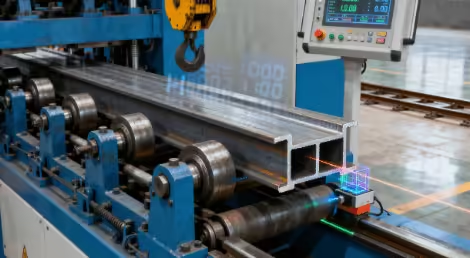
Structural steel fabrication is the process of designing, cutting, forming, and assembling steel components for buildings, industrial facilities, and infrastructure projects. It produces elements such as walls, roofs, door frames, beams, and modular structural parts. Precision, strength, and repeatability are critical in B2B operations.
Why Modern Fabrication Lines Are Essential
Automated steel fabrication lines reduce manual labor, increase throughput, and ensure consistent quality. Companies benefit from lower operational costs, faster delivery, and higher ROI while maintaining compliance with industrial standards.
Core Equipment in a Steel Forming Production Line
U-Shaped Panel Forming Machines

These machines produce high-strength U-shaped panels for walls, roofs, and baseplates. They are precise, rust-resistant, and suitable for large-scale construction projects.
Technical Highlights:
- Applied range: 100–400 mm
- Efficiency: 15 m/min
- Machinery power: 45 kW
- R-angle: ≤0.5°
- Length accuracy: ≤0.5 mm
- Machinery weight: 55t
The U-Panel machine integrates 30-group cold bending units, hydraulic cutting, a 10T uncoiler, and flush butt-welding system with CNC control, ensuring high accuracy and continuous production.
Horizontal Rib Forming Machines

Used to create ribbed steel panels that enhance load-bearing capacity. These machines perform cold bending, punching, and notching of longitudinal bars for structural applications.
Technical Highlights:
- Applied range: 100–400 mm
- Efficiency: 20 m/min
- Machinery power: 45 kW
- Notch accuracy: ≤0.2 mm
- Length accuracy: ≤0.2 mm
- Machinery weight: 26t
Equipped with longitudinal bar cold bending, hydraulic shearing, a 5T uncoiler, flush butt-welding machine, and CNC control, the system delivers high-precision ribbed panels.
Edge Folding Machines

Edge folding machines seal and shape panel edges for improved safety and aesthetics, essential for door frames, window frames, and modular steel components.
Corrugated Sheet Machines

Corrugated sheet machines produce high-rigidity steel panels for roofing, walls, industrial facilities, and agricultural storage structures.
Structural Steel Production Workflow
Material Procurement and Preparation
The production process starts with sourcing high-quality steel coils, sheets, or plates. Every batch undergoes rigorous inspection for thickness, surface quality, straightness, and chemical composition.
Proper preparation ensures that raw materials are free from defects, corrosion, or warping, which is critical for achieving high-precision panel forming. Pre-cutting and straightening steel before forming also minimizes scrap, improves machine efficiency, and guarantees consistent dimensional accuracy across large production runs.
Additionally, optimized material storage and handling prevent damage and reduce waste, which is particularly important for B2B operations managing high-volume fabrication projects.
Cold Bending and Panel Forming
Forming machines transform prepared steel into specific shapes required for structural applications.
- U-Shaped Panel Forming Machines produce channel-shaped panels used for walls, roofs, and baseplates. These panels provide structural support and simplify modular assembly.
- Horizontal Rib Forming Machines add longitudinal ribs to flat panels, enhancing load-bearing capacity and structural rigidity without adding extra material weight.
- Corrugated Sheet Machines form repeating corrugation patterns, which increase panel strength and stability for roofing, wall cladding, and industrial structures.
CNC-controlled automation ensures repeatable, high-precision output, even in high-volume production environments. Operators can customize panel profiles, rib spacing, and corrugation depth to meet project-specific requirements. This step is essential for maintaining tight tolerances and consistent performance.
Punching, Notching, and Edge Folding
After forming, panels undergo secondary operations to prepare them for assembly and integration into construction modules:
- Punching and Notching create holes and cutouts for bolts, fasteners, or integration with other components.
- Edge Folding seals and shapes panel edges, ensuring structural integrity, safety, and clean aesthetics.
These processes allow panels to be ready for immediate installation on-site, reducing labor costs and assembly time.
Welding and Assembly
For large or modular components, welding and assembly are critical:
- Flush Butt Welding Machines join steel elements with high precision to form beams, trusses, and other structural modules.
- Automated welding ensures consistent seam quality, reduces human error, and increases production efficiency, especially in multi-shift operations.
Pre-assembled modules can be transported directly to construction sites, significantly shortening project timelines.
Quality Control
Quality assurance is integrated at every stage of production:
- Dimensional inspection ensures panels and modules meet design tolerances.
- Surface and weld inspections prevent defects that could compromise structural integrity.
- Real-time monitoring systems allow operators to track production accuracy, detect deviations, and implement corrective actions quickly.
Effective quality control not only reduces material waste but also improves B2B customer trust by delivering consistent, reliable products.
Surface Treatment and Packaging
To enhance durability and aesthetics, finished steel panels may undergo:
- Galvanization for corrosion resistance.
- Powder coating for long-lasting surface protection and color customization.
- Polyurethane or other industrial coatings for specialized environments.
Panels are then carefully packaged and labeled to protect against surface damage during transportation. Modular packaging ensures easy handling on-site and prevents deformation of panels or structural components.
Real-World Process Case Study
A European prefabricated housing manufacturer integrated a complete structural steel fabrication workflow:
- Material Procurement: High-quality steel coils were sourced and inspected.
- Panel Forming: U-shaped panels, ribbed sheets, and corrugated sheets were produced using CNC-controlled forming machines.
- Punching & Welding: Pre-drilled holes, notches, and welded modules were prepared for on-site assembly.
- Surface Treatment: Panels were galvanized and powder-coated for corrosion resistance.
- Packaging & Dispatch: Panels were labeled and packaged for delivery.
Results:
- 30% faster production due to integrated workflow automation.
- 20% reduction in material waste through precise forming and pre-cutting processes.
- Consistent panel quality, allowing rapid assembly and reducing on-site labor costs.
- Improved scalability and flexibility for handling multiple building projects simultaneously.
This case demonstrates how a fully integrated structural steel production workflow combines precision machinery, automation, and effective process management to deliver high-quality, reliable products for industrial and commercial applications.
Parameterized Equipment Comparison
| Equipment | Applied Range (mm) | Efficiency (m/min) | Power (kW) | Accuracy (mm) | Weight (t) | Key Features |
|---|---|---|---|---|---|---|
| U-Panel Forming Machine | 100–400 | 15 | 45 | ≤0.5 | 55 | Cold bending, hydraulic cutting, 10T uncoiler, CNC |
| Horizontal Rib Forming Machine | 100–400 | 20 | 45 | ≤0.2 | 26 | Cold bending, hydraulic shearing, 5T uncoiler, CNC |
| Edge Folding Machine | N/A | 10 | 15 | ≤0.3 | 12 | High-precision edge sealing for panels |
| Corrugated Sheet Machine | 80–350 | 18 | 30 | ≤0.5 | 20 | Customizable corrugation, high-speed forming |
Applications and Real-World Case Studies
Industrial and Commercial Buildings
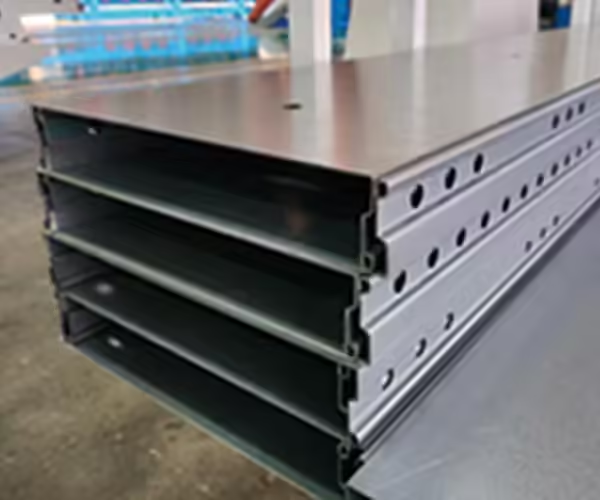
Structural steel fabrication lines are widely used to produce walls, roofs, beams, trusses, and door frames with high precision and repeatability. These fabrication lines allow manufacturers to:
- Produce modular panels and beams that fit exact specifications, reducing on-site cutting and adjustments.
- Ensure structural reliability in high-rise buildings, commercial complexes, and industrial facilities by using automated U-shaped panel forming and ribbed sheet machines.
- Maintain consistent quality for load-bearing elements, complying with standards such as ASTM A36/A992 for structural steel.
For instance, a commercial office complex in Germany implemented a complete structural steel fabrication workflow, including U-panel, ribbed sheet, and corrugated panel forming. The adoption of CNC-controlled forming and edge-folding machines resulted in precise panel dimensions and uniform surface quality, reducing rework by over 20%.
Warehouse and Logistics Facilities
Warehouses and distribution centers benefit significantly from modern structural steel fabrication lines due to the demand for wide-span roof structures, load-bearing walls, and modular framing systems.
A European warehouse project integrated U-panel and ribbed sheet machines into their production line:
- Throughput increased by 30%, allowing faster assembly of large-span structures.
- Material waste decreased by 15%, thanks to pre-cutting, precision punching, and automated forming processes.
- Panel dimensions were consistent across multiple production batches, enabling predictable on-site assembly and reduced installation time.
According to industry research (Steel Construction Institute, 2021), automated fabrication lines reduce labor-intensive tasks by up to 40% and improve structural accuracy, which aligns with the observed outcomes in this project.
Prefabricated Housing
The prefabricated housing sector relies heavily on structural steel fabrication to deliver modular components for walls, roofs, and floor systems.
- Integration of U-panel forming machines and corrugated sheet machines enables production of lightweight, high-strength panels that meet strict dimensional tolerances.
- Labor costs for assembly are reduced by 25%, as panels arrive pre-formed, pre-punched, and ready for on-site installation.
- Structural consistency ensures that prefabricated homes maintain architectural integrity and compliance with Eurocode 3 standards for steel structures.
A case study from a Scandinavian modular housing manufacturer demonstrated that combining ribbed sheet machines with flush butt-welding systems allowed the production of roof panels and wall frames in continuous runs, achieving high-volume throughput without sacrificing quality.
Specialized Industrial Applications
Beyond buildings and housing, structural steel fabrication lines are applied in:
- Industrial plant frameworks: For supporting heavy equipment and machinery, where precision and strength are critical.
- Infrastructure projects: Bridges, pedestrian overpasses, and storage silos benefit from pre-fabricated steel modules.
- Cold storage warehouses: Steel panels for walls and roofing produced with U-panel and ribbed sheet machines provide excellent thermal stability and ease of assembly.
Published studies (Journal of Constructional Steel Research, 2020) show that automated fabrication lines reduce structural tolerances by up to 50% compared with manual methods, confirming the efficiency and reliability of modern structural steel fabrication workflows.
Key Takeaways for B2B Decision Makers
- Investing in integrated structural steel fabrication lines ensures high-quality, repeatable output, crucial for commercial and industrial construction projects.
- Automation reduces labor costs, material waste, and production time while increasing throughput.
- Selecting the right combination of forming machines (U-panel, ribbed sheet, corrugated panels, edge folding) enables flexible production for multiple applications.
- Adhering to international standards like ASTM, Eurocode, and ISO 9001 ensures that fabricated components are reliable and compliant for high-demand applications.nes reduced labor costs by 25% and achieved tight dimensional tolerances for walls and roofs.
Technical Advantages of Modern Steel Fabrication Lines
Automation and CNC Integration
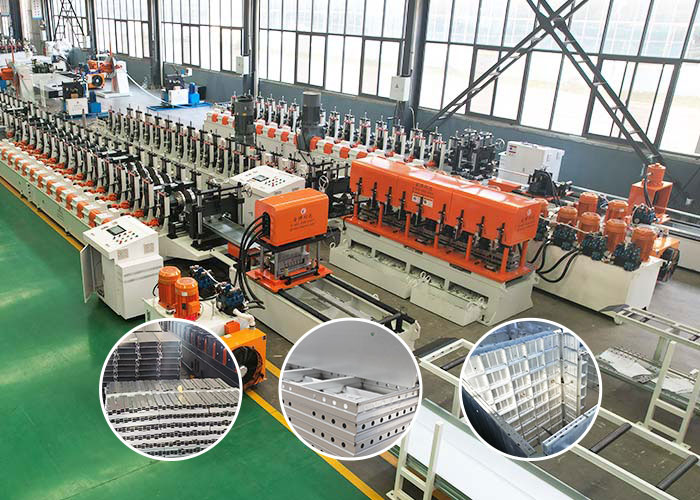
CNC-controlled machines reduce human error and enable continuous high-precision production.
Multi-Function Lines
Lines combining U-panel, ribbed sheet, edge folding, and corrugated machines produce multiple components efficiently.
Energy Efficiency and Reliability
Optimized motors, hydraulic drives, and hardened rollers reduce power consumption and extend machine lifespan.
Maintenance and Longevity
Routine Checks
Inspect rollers, blades, and hydraulic systems regularly to maintain panel accuracy.
Predictive Maintenance
Vibration monitoring and CNC diagnostics anticipate wear, reducing downtime.
Material Handling
Proper coil storage prevents warping, ensuring high-quality final products.
Choosing the Right Structural Steel Fabrication Equipment

Standard vs High-Precision Lines
- Standard: General panels, moderate volume.
- High-Precision: Modular construction, architectural projects, tight tolerances.
Equipment Selection Considerations
Production volume, panel type, material thickness, automation level, ROI, and factory space.
Material and Process Comparisons
Cold-rolled vs galvanized steel, coated vs uncoated, workflow optimization to reduce scrap and costs.
Conclusion
Modern structural steel fabrication lines combine automation, precision, and multi-function capability to produce high-quality components efficiently. From walls and roofs to beams and door frames, optimized equipment ensures higher throughput, lower operational costs, and consistent product quality.
FAQ
What is structural steel fabrication used for?
Producing walls, roofs, beams, trusses, and modular components for buildings, bridges, and industrial facilities.
How to select forming machines?
Consider panel type, thickness, production volume, and precision requirements. Multi-function lines can produce U-shaped, ribbed, and corrugated panels.
Can one line produce multiple components?
Yes, integrated lines allow walls, roofs, beams, and door frames to be produced efficiently.
Maintenance frequency?
Weekly inspections and predictive diagnostics prevent downtime and extend equipment life.
Difference between U-shaped and ribbed sheets?
U-shaped panels form channels for walls/baseplates; ribbed sheets add ribs for extra load-bearing strength.
How long does it take to set up a structural steel fabrication line?
Depending on the complexity and number of machines, a typical setup takes 2–6 weeks. Planning includes machine installation, CNC programming, and workflow testing to ensure smooth operation.
Can structural steel fabrication lines handle custom panel designs?
Yes, modern CNC-controlled forming lines allow for custom U-shaped, ribbed, and corrugated panels with adjustable dimensions, profiles, and thickness to meet project-specific requirements.
What’s the difference between manual and automated structural steel fabrication?
Manual fabrication relies heavily on labor and is slower, while automated lines provide high precision, faster throughput, and consistent quality, which is ideal for large-scale B2B projects.
How do I ensure quality across multiple production batches?
Using real-time CNC monitoring, precision forming machines, and inline quality checks ensures every panel meets dimensional tolerances and structural standards consistently.
Are structural steel fabrication lines energy-efficient?
Modern lines integrate high-efficiency motors, hydraulic systems, and optimized CNC programs, reducing power consumption and operational costs for high-volume industrial production.
How easy is it to switch between different component types on one fabrication line?
Integrated multi-function lines allow quick changeovers between U-panels, ribbed sheets, corrugated panels, and modular beams, minimizing downtime and maximizing productivity.
What maintenance practices maximize the lifespan of a structural steel fabrication line?
Regular roller lubrication, hydraulic system checks, CNC diagnostics, and blade inspections help maintain precision, reduce wear, and extend the operational life of the line.
Can one fabrication line support multiple construction projects at the same time?
Yes, high-capacity structural steel fabrication lines with modular production workflows can simultaneously produce panels and components for multiple projects, improving ROI for B2B operators.
Need specific equipment selection advice? Contact our engineers for a customized solution tailored to your production requirements.
If you enjoyed this article on Jinbolida’s smart manufacturing and digital factory expertise, follow us for more insights and updates:
- 📘 Facebook: Stay tuned for our latest smart production line projects → Facebook
- 📱 WhatsApp: Contact us anytime for custom production solutions → Chat Now
- ▶️ YouTube: Watch our automated line demos and real-world applications → YouTube
Let’s keep innovating and shaping the future of smart manufacturing — together! 🚀
 English
  Arabic
  Russian
  Spanish
  French