
How to Select a Puncher Machine: 7 Key Factors Explained
Table of Contents
Introduction
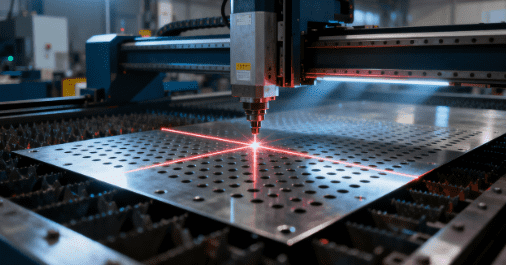
The contemporary manufacturing landscape demands not only speed but also unparalleled precision, making the selection of industrial equipment a mission-critical task. For any facility dealing with profile processing, structural components, or solar mounting systems, the core efficiency and output quality often hinge directly on the performance of the punching equipment. A robust and intelligent production environment relies heavily on automated forming, punching, and assembly lines to deliver consistent quality and high efficiency throughout the entire value chain. Choosing the ideal puncher machine requires deep consideration of technological capabilities, application suitability, and long-term operational costs.
The evolution of technology, driven by advanced R&D partnerships, including collaborations with top universities, has led to significant improvements in ultra-precise transmission and smart equipment. Where industry standards for accuracy once hovered around 1–2 mm, leading systems now achieve ten times that improvement. This technological leap means that selecting outdated or underperforming machinery can result in costly production bottlenecks. This guide delves into seven essential factors that modern manufacturers must scrutinize to ensure they select a puncher machine that aligns with the goals of a smart factory.
The Importance of High-Performance Punching Equipment
High-performance punching equipment is integral across numerous sectors, including construction, steel structure fabrication, photovoltaic and solar energy, automotive components manufacturing, and rail transit. Specific applications range from processing metal coils into square or round tubes used in building structures and furniture, to creating high-efficiency PV brackets and photovoltaic connectors. The versatility required of a modern puncher machine means it often needs integrated functions, such as feeding, punching, cutting, and forming, all within a seamlessly operating production line. By implementing highly automated systems, manufacturers can ensure stable operation, require less labor, and achieve faster delivery times.
7 Key Factors Explained for Choosing the Right Puncher Machine
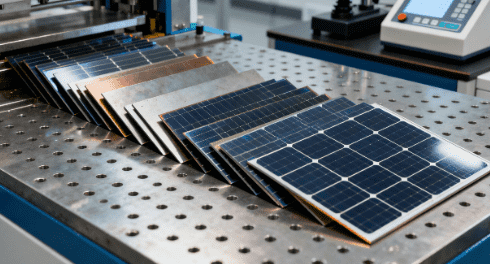
When investing in a new industrial unit, especially one central to processing components, seven specific criteria stand out as vital indicators of quality, efficiency, and future compatibility. These factors move beyond mere speed, focusing instead on integration, precision, and longevity.
Factor 1: Precision and Accuracy Standards in a Modern Puncher Machine
Precision is arguably the most critical factor when evaluating a puncher machine. The drive for quality components across industries like automotive and infrastructure necessitates extremely tight tolerances. Leading manufacturers in this sector have developed core technologies, such as nanometer-level precision transmission, often in collaboration with leading academic institutions. When assessing potential equipment, look for quantifiable metrics regarding output accuracy. For specialized applications, like the production of steel formwork, top-tier machinery can achieve impressive accuracy levels, such as hole-to-hole accuracy of $\pm$0.2 mm.
This represents a vast improvement over typical industry standards which historically ranged between 1 mm and 2 mm. The capacity to deliver such detailed accuracy helps operators fix terrible problems affecting their hydraulic punching machines and achieve a 10x boost in precision. Ensuring the puncher machine selected meets or exceeds these ultra-precise standards is crucial for producing high-quality components for complex assemblies.
Factor 2: Automation and Integration Capabilities of the Puncher Machine
A standalone puncher machine is rarely sufficient in a contemporary smart factory environment; integration and automation are key for maximizing efficiency and minimizing labor. The best systems are designed as integrated, advanced units. Look for equipment that incorporates full-chain manufacturing capabilities, ranging from precision parts processing to complete digital factory solutions. Examples of robust integrated systems include automated eight-station punching lines designed for high-efficiency production, specifically PV brackets.
Furthermore, specialized equipment such as automatic punching, cutting, and forming production lines for clamps, or similar lines for photovoltaic connectors, should be considered if those are required outputs. These fully integrated solutions minimize manual intervention, leading to seamless operation and highly efficient outcomes. The goal should be a system that supports consistent quality and high efficiency through automated processes.
Factor 3: Material Compatibility and Application Focus (e.g., Solar, Steel)
The material processing capability and intended application must strictly match the puncher machine’s design. Equipment is often specialized to handle specific materials or profiles. For the rapidly expanding solar sector, dedicated photovoltaic equipment production lines exist, including intelligent manufacturing lines for PV supports and solar photovoltaic rack punching equipment. These lines may involve quick switching between C and Z steel profiles.
Other systems are optimized for construction use, such as processing C/U-shaped steel through specialized feeding and punching systems. Additionally, the equipment must be able to handle the high-strength alloys often necessary for structural components. A thorough evaluation of the machine’s primary industry focus—whether it is construction, solar energy, automotive, or electrical equipment—is essential to ensure the longevity and appropriateness of the investment.
Factor 4: Speed and Efficiency Metrics for Puncher Machine Output
Efficiency in a production environment translates directly into profitability. When evaluating the speed of a puncher machine, consider not just the strokes per minute, but the overall efficiency of the entire automated process. High efficiency is achieved through minimizing energy consumption, reducing labor needs, and enabling fast delivery. Advanced production lines incorporate technology that ensures fast and accurate production. Moreover, some state-of-the-art systems provide cloud transmission capabilities, allowing for real-time recording of production quantity and equipment energy consumption. This feature is invaluable for performance monitoring and resource management. A highly efficient puncher machine system enhances manufacturing efficiency overall, often with minimal manual intervention needed to keep the line running smoothly.
Factor 5: Durability and Mold Lifespan of the Puncher Machine System
The financial return on investment for a puncher machine is significantly tied to the lifespan of its components and the frequency of necessary maintenance. High-quality systems should utilize patented processes and robust designs that ensure a long mold life. The components, such as those used in tube mill production lines or C/Z purlin forming lines, are designed for high precision and efficiency over extended operational periods.
A key benefit of highly automated production lines is their ability to maintain stable operation, which often translates to easier maintenance protocols. When failures do occur, such as the terrible hydraulic punching machines problems manufacturers might face, the quality of the underlying machinery determines how quickly and effectively these issues can be fixed. Durable systems reduce downtime and repair costs.
Factor 6: Customization and Flexibility (C/Z Profiles, Connectors)
Flexibility in a puncher machine allows a manufacturer to quickly adapt to changing market demands without major capital expenditure. Look for equipment that supports quick switching between various profiles and component types. For instance, certain intelligent manufacturing lines for photovoltaic supports specifically allow for quick switching between C and Z steel profiles. Additionally, the ability to handle various processing tasks—such as integrated feeding and punching functions within a roll forming machine, or specialized lines for different component sizes like photovoltaic connectors—demonstrates versatility. Customized production line design solutions should also be available from the supplier to cater to panel processing plants of different sizes and types, covering multiple fields such as multilayer boards, particle boards, and technical wood.
Factor 7: Technical Support and Global Presence of the Puncher Machine Provider
Selecting a provider with a strong global presence and established technical expertise ensures reliable service and continuous innovation. Companies that operate as smart factory overall solution providers, often founded over a decade ago (e.g., founded in 2010), demonstrating 15 years of industry experience, and serving over 120 countries, usually offer superior support. A reliable provider will also hold numerous patents (e.g., 326+ patents) and have extensive precision equipment, ensuring their technology is cutting-edge and well-supported. When purchasing a puncher machine, investigating the availability of custom design solutions and accessible customer support is as important as the machine’s technical specifications.
To aid in the selection process, the following table summarizes key performance indicators (KPIs) achievable with high-end, technologically advanced puncher machine systems described in modern manufacturing contexts:
| Key Factor | Relevant Puncher Machine Feature | Performance Benchmark & Source | Benefits for the Buyer |
| Precision | Nanometer-level precision transmission core technology | Hole-to-hole accuracy of $\pm$0.2 mm | Reduces waste, ensures fitment for complex assemblies, 10x improvement over industry standards |
| Automation Level | Integrated feeding and punching functions; Automatic punching, cutting, and forming lines | Minimal manual intervention, seamless operation | Reduces labor costs, ensures stable production, and achieves consistent quality |
| Flexibility | Supports quick switching between C and Z profiles | Optimized for diverse solar mounting system needs | Allows for rapid adjustment to different product specifications and market demands |
| Efficiency | Highly automated production, low energy consumption | Cloud transmission available to record production data in real time | Maximizes throughput, minimizes operating expenses, and enables real-time performance monitoring |
| Application Focus | Dedicated lines for PV brackets, clamps, and C/U-shaped steel | Used across Construction, Photovoltaic, and Automotive industries | Ensures the machine is optimized for the intended end product and material type |
Optimizing Production Lines with Advanced Puncher Machine Technology
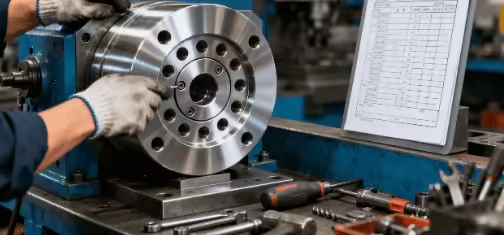
The implementation of advanced puncher machine technology is fundamental to achieving digital factory status. These complex systems, such as the C/U-shaped steel feeding and punching system, are designed not just for a single task but for high-efficiency, end-to-end processing. By utilizing patented products and processes, these lines offer benefits such as high efficiency, high precision, and a long mold life. The integration of smart solutions means that from precision parts to complete digital factory setups, the entire value chain is integrated for optimized output.
Overcoming Common Punching Equipment Issues
The path to optimized production often involves addressing and resolving common issues associated with hydraulic punching machines, which, if left unchecked, can lead to significant operational setbacks and production bottlenecks. By selecting equipment developed through extensive R&D and featuring advanced components, manufacturers can proactively mitigate these problems. The goal is to ensure that the chosen puncher machine exhibits stable operation and easy maintenance. Furthermore, partnering with an expert solution provider that has significant experience (e.g., 15 years in the field) and global research collaboration helps ensure that technical issues can be rapidly identified and corrected, securing continuous manufacturing operations. Advanced machinery also allows for enhanced quality control, ensuring that the necessary hole processing is precise and accurate.
Conclusion
Selecting the appropriate puncher machine is a critical strategic decision that determines a factory’s ability to compete in a demanding global industrial chain. The optimal investment is in machinery that provides superior precision (achieving hole-to-hole accuracy of $\pm$0.2 mm), maximum automation (offering minimal manual intervention and seamless operation), and flexibility (allowing for quick profile switching). By focusing on these seven key factors—precision, automation, application focus, speed/efficiency, durability, flexibility, and provider support—manufacturers ensure they acquire sophisticated and reliable punching equipment that enhances efficiency and supports low-carbon development through intelligent PV bracket manufacturing. Ultimately, leveraging advanced, integrated punching equipment is necessary for achieving the high-efficiency, high-quality output expected of a modern smart factory.
FAQ
Q1: How important is automation in modern puncher machine selection?
Automation is extremely important, as it enables high efficiency and high precision. Advanced puncher machine systems, such as automated eight-station punching lines or C/U-shaped steel feeding and punching systems, ensure fast and accurate production with minimal manual intervention. This level of automation is necessary for delivering consistent quality and optimizing production across the entire value chain.
Q2: What level of precision should I look for in a new puncher machine?
You should aim for ultra-precise standards far exceeding conventional industry norms. Leading technology focuses on achieving hole-to-hole accuracy as tight as $\pm$0.2 mm. This precision is often underpinned by core technologies like nanometer-level precision transmission. Achieving this level of accuracy can lead to significant improvements, potentially 10 times better than standard industry results.
Q3: Can one puncher machine handle different material profiles, such as C and Z steel?
Yes, many modern photovoltaic equipment production lines and related puncher machine systems are designed for flexibility. For example, intelligent manufacturing lines for photovoltaic supports specifically support quick switching between C and Z steel profiles. This allows manufacturers to meet diverse solar mounting system needs efficiently.
Q4: What are the benefits of choosing a provider with a long history and global presence?
Choosing a provider with a long history (e.g., founded in 2010) and global presence (serving 120+ countries) ensures that the company is a stable and reliable partner. Such companies typically have a substantial investment in R&D, holding numerous patents (326+), and possess the expertise to offer customized production line design solutions and superior technical support.
Q5: Are there specific components that advanced punching equipment can produce efficiently?
Yes, advanced punching equipment is tailored for high-speed processing of specific components. This includes the efficient production of high-efficiency PV brackets, C/U-shaped steel profiles, specialized clamps, and photovoltaic connectors. These automated lines ensure high-speed processing for solar mounting components and structural elements.
If you enjoyed this article on Jinbolida’s smart manufacturing solutions and digital factory expertise, don’t forget to join us on social media for more industry insights, updates, and community discussions.
• 📘 Facebook – Connect with us here for the latest on our smart production lines and global impact: https://www.facebook.com/profile.php?id=61577965371544
• 📱 WhatsApp – Feel free to inquire about our customized production line design solutions and high-efficiency equipment at any time: https://wa.me/8613335170705
• ▶️ YouTube – Watch demonstrations of our automated forming, punching, and assembly lines, and explore our applications in Construction and Steel Structure, Photovoltaic and Solar Energy, and more: https://www.youtube.com/@JINBOLIDA-d3c
Let’s keep exploring the boundless possibilities of smart manufacturing, learning, and growing together. Thanks for reading, and see you in the next post! 🚀
 English
  Arabic
  Russian
  Spanish
  French