
Laser Cutting Machine for Metal Upgrade: Smart Strategies for Higher Efficiency
/ Laser Cutting Machine for Metal Upgrade: Smart Strategies for Higher Efficiency
- Discover how upgrading a laser cutting machine for metal can increase productivity by 30–200%
- Learn how modern laser systems reduce operating costs and improve precision
- Compare upgrade vs replacement decisions based on ROI and lifecycle data
- Understand key parameters like power, accuracy, automation, and gas selection
- Explore real industrial cases, standards, and smart factory integration
- Get answers to real buyer-style questions for better decision-making
In today’s global manufacturing competition, efficiency is everything. A factory using an outdated laser cutting machine for metal may face slow production, inconsistent quality, and rising costs. Meanwhile, companies adopting upgraded laser systems are achieving faster throughput, cleaner cuts, and fully automated workflows.
According to industry white papers on smart manufacturing, upgrading laser cutting equipment can improve production efficiency by up to 50% and reduce material waste by over 20%. This is why more manufacturers are shifting toward intelligent, high-power, and digitally integrated laser solutions.
Leading manufacturers like Jinbolida Precision Machinery Co., Ltd. are driving this transformation by combining nanometer-level precision engineering with digital factory systems, delivering advanced solutions to over 120 countries worldwide.
Table of Contents
Understanding Laser Cutting Machine for Metal Upgrade
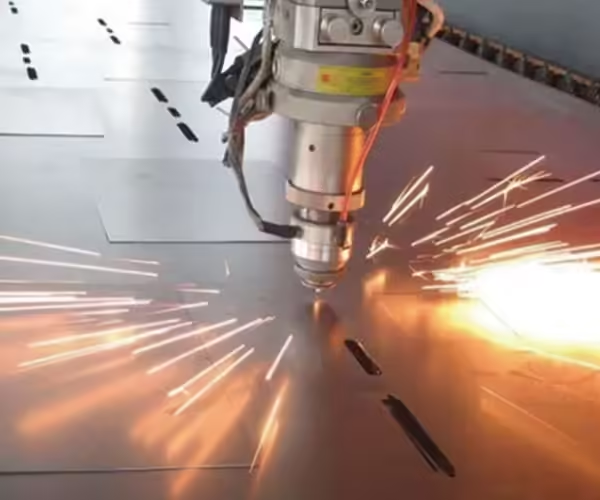
What Is a Laser Cutting Machine for Metal Upgrade?
A laser cutting machine for metal upgrade refers to improving existing equipment by replacing or enhancing core components such as the laser source, motion system, or CNC control unit. This approach allows manufacturers to extend machine lifespan while achieving near-new performance levels.
Why Upgrading Is a Strategic Decision
Upgrading is not just about improving speed—it is about staying competitive. It enables better product quality, reduced downtime, and compatibility with modern digital manufacturing systems.
Core Technologies Behind Modern Laser Cutting Machine for Metal
Fiber Laser Technology
High Energy Density
Fiber lasers deliver concentrated energy for precise cutting. This enables clean edges and minimal thermal distortion.
Low Maintenance Requirements
Compared to CO₂ lasers, fiber lasers require fewer consumables. This reduces long-term maintenance costs.
CNC Control Systems
Intelligent Path Optimization
Modern CNC systems optimize cutting paths automatically. This improves efficiency and reduces material waste.
Real-Time Monitoring
Operators can track machine performance in real time. This supports predictive maintenance and reduces downtime.
Motion and Drive Systems
Linear Motor Technology
High-speed linear motors improve cutting speed and positioning accuracy. This is critical for high-volume production.
Servo Control Precision
Servo systems ensure smooth motion and consistent results. This enhances overall cutting quality.
Key Upgrade Components for Laser Cutting Machine for Metal

Laser Power Enhancement
Power Range Selection
Modern machines support 1KW to 30KW power levels. Higher power allows cutting thicker materials at faster speeds.
Energy Efficiency Gains
New laser sources can reduce energy consumption by up to 30%. This lowers operational costs significantly.
Precision and Accuracy Improvement
Micron-Level Accuracy
Advanced systems achieve ±0.05mm precision. This ensures consistent quality across complex designs.
Repeatability Optimization
Repeat accuracy of ±0.03mm supports mass production with minimal variation.
Automation and Smart Integration
Automatic Loading Systems
Automation reduces manual handling and improves productivity. It also enhances safety.
MES/ERP Integration
Machines can connect to factory systems for data tracking and workflow optimization.
Types of Laser Cutting Machine for Metal Upgrades
Steel Plate Laser Cutting Machine Upgrade
Large-Scale Processing Capability
Supports cutting plates up to 24 meters in length. Ideal for heavy industrial applications.
Multi-Industry Application
Widely used in automotive, construction, and sheet metal industries. Upgrades improve versatility.
Pipe Laser Cutting Machine Upgrade
Complex Shape Processing
Handles round, square, and special-shaped tubes. Supports chamfering, drilling, and engraving.
High-Speed Performance
Cutting speeds can reach up to 80m/min. This significantly boosts production efficiency.
Detailed Comparison: Upgrade vs Replacement
| Factor | Upgrade Existing Machine | Replace with New Machine |
|---|---|---|
| Initial Investment | Low–Medium | High |
| Downtime | Minimal | Moderate–High |
| Performance Improvement | 40–80% | 100% |
| Lifespan Extension | 3–5 years | 8–10 years |
| ROI Period | Short | Medium |
Auxiliary Gas Selection for Metal Cutting

Oxygen Cutting
Faster Cutting Speed
Oxygen supports combustion, increasing cutting speed. Suitable for thick carbon steel.
Lower Cost
Oxygen is cheaper than nitrogen, reducing operating expenses.
Nitrogen Cutting
High-Quality Edges
Nitrogen prevents oxidation, producing clean edges. Ideal for stainless steel and aluminum.
No Secondary Processing
Cuts are smooth and ready for finishing without additional work.
Air Cutting
Cost Efficiency
Compressed air is economical and widely available. Suitable for general applications.
Balanced Performance
Provides moderate cutting quality and speed.
Industry Applications After Upgrade
Automotive Manufacturing
Laser cutting is used for precision components and body parts. Upgrades improve speed and consistency.
Construction and Heavy Industry
High-power machines handle thick steel plates and structural components efficiently.
Furniture and Equipment Production
Pipe laser machines enable customized designs and flexible production.
Real-World Case Study
Case: Sheet Metal Factory Upgrade
A mid-sized manufacturing company upgraded its laser cutting machine for metal from 3KW to 12KW.
Before Upgrade:
- Slow production speed
- High scrap rate
- Frequent maintenance
After Upgrade:
- Cutting speed increased by 2.5 times
- Material waste reduced by 18%
- Maintenance costs decreased significantly
Industry Standards and Certifications
ISO 9001 Quality Management
Ensures consistent production quality and process control.
CE Certification
Required for equipment sold in European markets, ensuring safety compliance.
Environmental Standards
Modern machines meet green manufacturing requirements, reducing emissions and waste.
Cost Analysis and ROI
Operational Cost Breakdown
| Cost Factor | Traditional Machine | Upgraded Machine |
|---|---|---|
| Energy Consumption | High | Lower |
| Maintenance Cost | High | Reduced |
| Labor Cost | Medium | Lower |
| Production Output | Low | High |
ROI Insights
Upgrading can reduce total production cost by 15–25% while increasing output significantly. Payback periods are often within 1–2 years.
Maintenance Strategy for Laser Cutting Machine for Metal

Daily Maintenance
Optics Cleaning
Lens contamination reduces cutting efficiency. Regular cleaning ensures optimal performance.
Gas System Check
Stable gas pressure is essential for consistent cutting quality.
Preventive Maintenance
Laser Source Inspection
Periodic checks extend the lifespan of the laser generator.
Motion System Calibration
Calibration ensures accuracy and prevents mechanical wear.
Smart Manufacturing Trends
Digital Factory Integration
Laser machines now operate as part of a connected production system. Data analytics improves decision-making.
AI and Automation
Artificial intelligence optimizes cutting paths and reduces waste.
Sustainability Focus
Energy-efficient systems and reduced emissions align with global environmental goals.
Common Mistakes in Laser Cutting Machine for Metal Upgrade
Over-Specifying Power
Excessive power increases cost without proportional benefits. Proper matching is essential.
Ignoring Software Capabilities
Software upgrades are as important as hardware improvements.
Lack of Training
Untrained operators cannot fully utilize advanced systems.
Practical Upgrade Checklist
Before Upgrade
- Assess current machine performance
- Identify production bottlenecks
- Define upgrade goals
During Upgrade
- Select compatible components
- Test system integration
- Verify performance metrics
After Upgrade
- Train staff
- Monitor efficiency improvements
- Schedule regular maintenance
FAQ
Is upgrading a laser cutting machine for metal better than buying new?
In many cases, upgrading is more cost-effective and provides significant performance improvements without full replacement costs.
What power level should I choose?
It depends on material thickness and production requirements. Higher power is suitable for heavy-duty applications.
How long does an upgrade take?
Most upgrades can be completed within a few days to a few weeks depending on complexity.
Can I upgrade automation features?
Yes, many systems allow integration of automation modules such as loading systems and smart controls.
What industries benefit most from upgrades?
Automotive, construction, sheet metal, and equipment manufacturing industries benefit significantly.
Conclusion
Upgrading a laser cutting machine for metal is a powerful way to enhance productivity, improve quality, and reduce costs. With advancements in fiber laser technology, automation, and digital integration, modern upgrades transform traditional machines into high-performance production systems.
By understanding technical options, evaluating ROI, and following best practices, manufacturers can make informed decisions and stay competitive in the evolving industrial landscape.
If you enjoyed this article on Jinbolida’s smart manufacturing and digital factory expertise, follow us for more insights and updates:
- 📘 Facebook: Stay tuned for our latest smart production line projects → Facebook
- 📱 WhatsApp: Contact us anytime for custom production solutions → Chat Now
- ▶️ YouTube: Watch our automated line demos and real-world applications → YouTube
Let’s keep innovating and shaping the future of smart manufacturing — together!
 English
  Arabic
  Russian
  Spanish
  French