
Machine Punch Press Basics: A Beginner’s Guide to Modern Punching Systems
Key Takeaways of This Guide
- Understand the fundamentals of a machine punch press and its industrial applications
- Explore various punch press types: hydraulic, mechanical, and CNC
- Compare punch press systems with other metal fabrication machines
- Examine real-world applications, such as photovoltaic bracket manufacturing
- Learn essential technical parameters, performance metrics, and operational tips
- Discover best practices for machine maintenance and longevity
- Get insights into safety protocols and automation integration
- FAQs addressing common user queries about punch press operation and selection
Table of Contents
Introduction
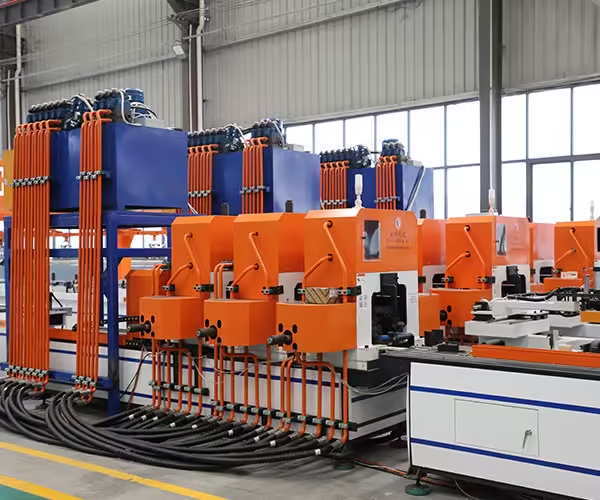
In today’s competitive manufacturing industry, efficiency, precision, and cost-effectiveness are critical. A machine punch press plays a pivotal role in producing high-quality sheet metal components rapidly. Whether in automotive, electrical cabinet, construction hardware, or solar panel mounting bracket production, punch presses help factories meet high-volume demands with minimal labor.
Modern punch presses offer more than just punching—they integrate automation, CNC programming, sensor-based positioning, and real-time monitoring. For instance, advanced multi-station hydraulic machines for photovoltaic bracket production can process a single component in 3–5 seconds, with positioning accuracy up to ±0.5mm, demonstrating how technological innovation drives productivity.
Core Concepts of Machine Punch Press
Punch and Die Mechanism
The punch and die are the heart of any punch press. The punch is a tool that applies force to the metal sheet, cutting or shaping it against the die. Proper clearance between the punch and die is critical: too narrow may cause tool damage; too wide reduces precision.
Key Concept: Die hardness and punch material affect both life span and hole quality. High-strength steel punches and heat-treated dies are industry standards for longevity.
Power Transmission System
Power systems in punch presses differ by type:
- Mechanical: Uses flywheels and crankshafts for high-speed operations.
- Hydraulic: Provides smooth, adjustable punching force suitable for thicker materials.
- Servo-driven CNC: Integrates computer control for precise speed and position management.
Consistent force application ensures consistent punching quality, crucial in high-volume production.
Material Feeding and Positioning
Modern machines often feature automated feeding systems using servo motors or linear guide rails. Precision feeding ensures alignment and reduces scrap rates.
Tip: Misalignment of even 0.5mm in feeding can increase cumulative errors, especially in multi-station operations like nine-station C-shaped steel punches.
Types of Machine Punch Press Systems

Hydraulic Punch Press
Hydraulic systems use fluid pressure to drive the punch. Advantages include:
- Smooth punching action for minimal vibration
- Adjustable punching force for various material thicknesses
- Capability to punch up to 25mm thick steel in some industrial models
Use Case: Multi-station hydraulic presses for photovoltaic brackets allow simultaneous punching and forming, improving throughput by over 20% compared to single-station machines.
Mechanical Punch Press
Mechanical presses rely on mechanical linkages. Advantages include:
- High-speed punching (up to 100 cycles per minute)
- Suitable for repetitive, mass-production operations
- Lower operational complexity than hydraulic systems
Limitation: Less adaptable to thickness variations and complex material shapes.
CNC Machine Punch Press
CNC-controlled punch presses integrate computer programming for precise, automated operations. Advantages:
- Multi-pattern punching without manual reconfiguration
- Positioning accuracy within ±0.5mm
- Quick mold and tool changes using software adjustments
Example: Solar photovoltaic connector punching machines allow one operator to process components every 3–5 seconds, reducing labor and increasing accuracy.
Key Components Explained
Frame Structure
- Cast steel or welded frames provide stability.
- Heat-treated frames resist deformation from repeated punching forces.
- Large frames accommodate multi-station operations and long workpieces (up to 8.5m).
Drive System
- Hydraulic: Smooth, energy-efficient, adjustable for force control.
- Mechanical: High-speed, flywheel-driven, cost-effective for mass production.
- Servo: High precision, integrates with CNC systems for smart manufacturing.
Control System
- PLC or CNC interface for programming sequences
- Optional IoT-enabled monitoring for real-time production data
- Integrated alarm and safety systems to prevent machine overload
Tooling
- Punches and dies are made of high-strength steel or carbide for durability
- Tool holders ensure consistent alignment and reduce vibration
- Quick-change tooling minimizes downtime for new production runs
Technical Parameters to Consider
| Parameter | Typical Range | Industrial Implications |
|---|---|---|
| Processing Speed | 12–18 m/min | Determines throughput efficiency |
| Punching Frequency | 70–100 times/min | High cycle rate reduces production time |
| Positioning Accuracy | ±0.5 mm | Critical for precision components |
| Max Material Thickness | 5–25 mm | Material selection must match machine capacity |
| Feed Speed | Up to 120 m/min | Impacts total production speed |
| Motor Power | 14–20 kW | Energy consumption and output capacity |
| Machine Weight | 2–15 tons | Stability and vibration control |
| Floor Space | 6–10 m length × 2–3 m width | Planning for industrial facility layout |
Insight: Optimizing these parameters ensures maximum output with minimal scrap and downtime.
Advantages of Machine Punch Press
High Productivity
Modern machines can punch thousands of holes per hour. Multi-station hydraulic machines reduce cycle time significantly.
Precision
With CNC or servo control, hole locations are repeatable within ±0.5mm, essential for high-quality assembly.
Labor Savings
Automated operation reduces manpower needs. Some solar bracket lines operate 24/7 with only one operator per machine.
Continuous Operation
Industrial punch presses are designed for long cycles with minimal operator intervention, supporting large-scale industrial needs.
Industrial Applications
Photovoltaic Bracket Production
- C-shaped and U-shaped steel components
- Multi-station machines reduce labor cost and cycle time
- Positioning accuracy ensures reliable solar installation
Automotive Components
- Sheet metal panels, chassis components, brackets
- High-volume, repetitive production benefits from mechanical punch presses
Electrical Cabinet Manufacturing
- Precision holes for cable entry, mounting, and assembly
- CNC punch presses allow flexible configurations for different cabinet sizes
Comparison with Other Metal Fabrication Machines
| Machine Type | Purpose | Pros | Cons |
|---|---|---|---|
| Punch Press | Punching holes & shapes | Fast, low-cost, energy-efficient | Limited to sheet metal |
| Laser Cutter | Precision cutting | Complex shapes possible | Expensive, slower for thick sheets |
| CNC Milling | Solid part machining | High accuracy, versatile | Slow for sheet metal, more expensive |
| Plasma Cutter | Cutting thick metal | Handles heavy plates | Rough edges, slower for fine details |
Decision Tip: For sheet metal processing, punch presses often offer the best combination of speed, precision, and cost-efficiency.
Advanced Features in Modern Punch Press Systems
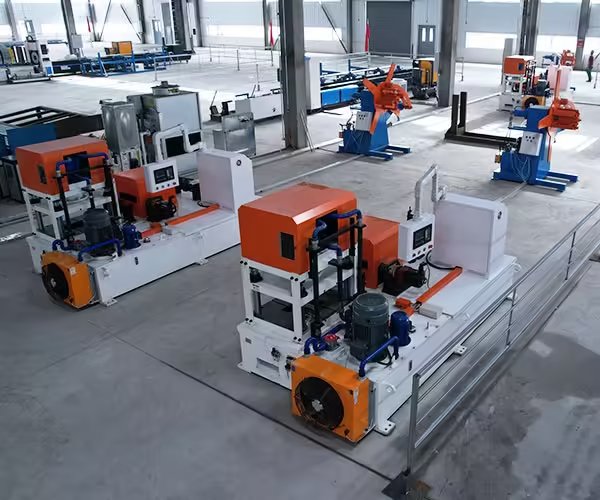
Modern machine punch presses have evolved far beyond simple punching operations. Today’s systems integrate multiple advanced technologies that improve productivity, reduce downtime, enhance safety, and optimize energy consumption. Below we explore the most significant features in detail.
Automation
Modern punch presses incorporate sophisticated automation technologies, which streamline operations and minimize human error.
- Servo Feeding Systems: Servo motors precisely control material movement, ensuring accurate positioning for multi-station operations. For example, a nine-station C-shaped steel punch can achieve ±0.5mm positioning accuracy with automated servo feeding, significantly reducing scrap rates.
- CNC Programming: Computer Numerical Control allows operators to set up multiple patterns quickly, store standard programs, and switch between product designs without manual adjustments. This feature supports rapid tooling changes and high-mix production environments.
- Automatic Lubrication: Continuous lubrication of moving parts reduces friction, wear, and heat generation, extending the service life of punches and dies by up to 20–30%.
Case Insight: A photovoltaic bracket manufacturer integrated CNC and servo automation in its three-station hydraulic punch press, reducing labor requirements from three operators per machine to just one, while increasing throughput by 35%.
Real-Time Production Monitoring
Modern punch presses increasingly feature cloud-connected systems that allow operators and managers to track production in real-time:
- IoT-enabled Monitoring: Sensors capture machine parameters such as cycle counts, vibration, temperature, and hydraulic pressure.
- Data-Driven Analytics: Operators can analyze trends to optimize machine settings, reduce downtime, and predict maintenance needs.
- Remote Accessibility: Managers can receive production alerts and review performance dashboards from anywhere, enabling faster decisions and improved workflow planning.
Industry Example: In a factory producing electrical cabinet panels, real-time monitoring reduced misaligned hole defects by 18%, as deviations were flagged immediately during operations.
Energy Efficiency
Energy optimization is critical for industrial operations, as punch presses are high-power-consuming machines. Modern features include:
- Load-Sensing Hydraulic Pumps: These pumps adjust hydraulic flow and pressure based on real-time load requirements, avoiding wasted energy. For instance, reducing idle pump energy consumption by up to 15–20%.
- Servo-Controlled Motors: Unlike traditional motors that run at full speed regardless of load, servo motors regulate speed dynamically, matching material resistance and reducing power spikes.
Tip for Operators: Periodically calibrate servo systems and check pump efficiency to maintain energy savings and reduce overheating risks.
Smart Factory Integration
Punch presses today can be fully integrated into smart manufacturing ecosystems:
- IoT Sensors for Vibration and Temperature: Early detection of mechanical abnormalities prevents catastrophic failures.
- Cycle Count Tracking: Machine wear can be estimated accurately based on total cycles, improving replacement scheduling.
- Predictive Maintenance: Using collected data, predictive algorithms suggest maintenance before failures occur, reducing emergency repairs by up to 40%.
Operational Benefit: Factories implementing predictive maintenance saw an average 15% increase in uptime and 10% reduction in spare parts costs.
Multi-Function Operations
Advanced punch presses now integrate multiple sheet metal operations:
- Punching, Cutting, and Forming: Eliminates the need for separate machines for bending, punching, and trimming.
- Compact Footprint: Multi-function presses require less factory floor space while handling high-volume production.
- Customizable Programs: Operators can configure machine cycles to include sequential operations on a single workpiece.
Industry Insight: A solar photovoltaic bracket factory replaced three separate machines (punch, shear, and forming) with a single multi-function hydraulic punch press, cutting cycle time per piece from 12 seconds to 4 seconds, a 66% reduction.
Maintenance Best Practices

Proper maintenance is essential to maximize productivity, ensure worker safety, and extend machine life. Modern punch presses require multi-layered maintenance strategies.
Routine Checks
- Hydraulic Lines and Gaskets: Check weekly for leaks or cracks. Even minor hydraulic leaks can escalate into major failures.
- Electrical Connections: Inspect wiring, terminals, and insulation; loose or corroded connections may cause downtime.
- Alignment Checks: Ensure punches, dies, and guides are properly aligned. Misalignment can reduce hole precision by up to 0.3–0.5mm per cycle, impacting multi-station operations.
- Moving Parts Lubrication: Regular lubrication prevents premature wear, reduces friction, and stabilizes machine movement.
Pro Tip: Maintain a digital log for each machine, recording maintenance activities, anomalies, and replacements. This supports predictive maintenance and long-term asset management.
Seasonal Maintenance
- Cold Weather Adjustments: Switch to lower-viscosity hydraulic oil in winter to maintain smooth operation.
- Dust and Ventilation Systems: Ensure that filters, ducts, and extraction units are clean to prevent contamination and overheating.
- Load Testing: Test hydraulic presses and servo motors at full operational loads before peak seasons to verify stability and capacity.
Case Study: A Chinese factory performing seasonal load tests reduced unexpected downtime by 25%, as minor alignment and pressure issues were detected early.
Predictive Maintenance
- Sensor-Based Monitoring: Use accelerometers, pressure gauges, and temperature sensors to collect real-time equipment data.
- Analytics for Wear Prediction: Machine learning algorithms can estimate punch and die wear cycles, suggesting proactive replacement.
- Emergency Repair Reduction: Predictive maintenance can lower emergency repair frequency by up to 40%, reducing lost production hours and costs.
Operator Recommendation: Combine predictive maintenance data with scheduled overhauls every 12–18 months to maximize uptime and minimize long-term costs.
Future Trends in Punch Press Technology
- AI-Assisted Predictive Maintenance: AI models predict maintenance needs based on historical and real-time sensor data.
- Remote Monitoring & Cloud Analytics: Supervisors can track multiple machines across different factory locations.
- Energy-Efficient Hydraulic Systems: New designs reduce power consumption without sacrificing force output.
- Flexible Multi-Pattern CNC Programming: Machines can switch rapidly between custom orders, supporting low-volume, high-mix production.
- Integration with Robotic Material Handling: Punch presses may soon work seamlessly with automated loading and unloading robots, further reducing labor costs and cycle times.
Insight: Factories investing in these technologies can achieve up to 50% labor savings, improve precision by ±0.2mm, and reduce energy costs by 15–20%, positioning them for smart, sustainable manufacturing.
FAQ
What is the main purpose of a machine punch press?
Punches holes or forms sheet metal components in manufacturing.
Can it process thick materials?
Hydraulic systems can handle materials up to 25mm thick depending on the model.
How accurate are CNC punch presses?
Typically within ±0.5mm, suitable for high-precision applications.
Is it better to choose hydraulic or mechanical?
Hydraulic: more flexible and controllable.
Mechanical: faster for high-volume production.
Which industries benefit most?
Solar mounting systems, automotive parts, electrical cabinets, construction hardware.
How often should maintenance be performed?
Weekly for routine checks; major servicing every 3–6 months.
If you enjoyed this article on Jinbolida’s smart manufacturing and digital factory expertise, follow us for more insights and updates:
- 📘 Facebook: Stay tuned for our latest smart production line projects → Facebook
- 📱 WhatsApp: Contact us anytime for custom production solutions → Chat Now
- ▶️ YouTube: Watch our automated line demos and real-world applications → YouTube
Let’s keep innovating and shaping the future of smart manufacturing — together!
 English
  Arabic
  Russian
  Spanish
  French