
PV Bracket Factory Solutions: Advanced Manufacturing Systems for Solar Mounting Structures
/ PV Bracket Factory Solutions: Advanced Manufacturing Systems for Solar Mounting Structures
Key Points
- Understand how modern pv bracket factory systems support global solar expansion
- Learn full production workflow from steel coil to finished solar mounting structure
- Explore industrial standards used in photovoltaic bracket manufacturing
- Compare automation levels, precision systems, and production efficiency
- Review real engineering parameters from roll forming and punching equipment
- Analyze cost structure and ROI of automated PV bracket production lines
- Study real project application cases in utility-scale solar farms
- Understand global industry trends including AI manufacturing and carbon neutrality goals
Introduction
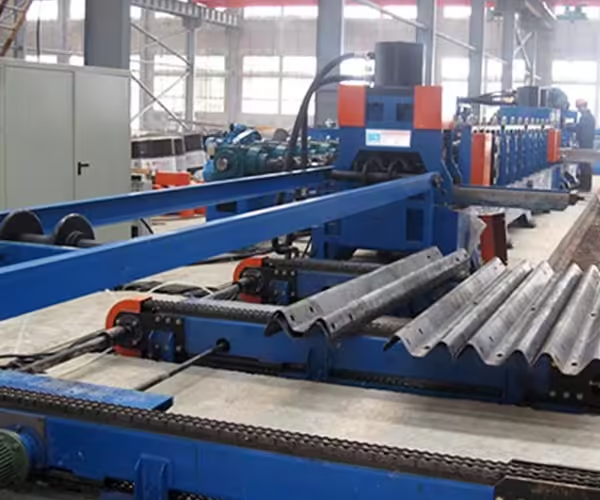
The global solar photovoltaic market has entered a phase of unprecedented expansion. According to international energy reports such as IEA Photovoltaic Power Systems Program (PVPS), global solar capacity continues to grow at double-digit annual rates, driven by energy transition policies, carbon neutrality targets, and declining PV module costs.
However, behind every successful solar installation lies a critical but often overlooked component: the mounting structure system.
This is where the modern pv bracket factory becomes essential.
A pv bracket factory is not just a metal processing facility. It is a highly engineered industrial system designed to ensure:
- Structural safety under extreme weather conditions
- Long-term corrosion resistance
- Fast and accurate installation on-site
- High-volume standardized production
- Compatibility with global solar project standards
In large-scale solar farms, even a 1–2 mm deviation in bracket alignment can affect module installation efficiency, structural load distribution, and long-term reliability.
Therefore, modern pv bracket factory solutions integrate:
- High-speed roll forming systems
- Intelligent CNC punching machines
- Servo-controlled cutting units
- Cloud manufacturing platforms
- Automated mold switching systems
This article provides a deep industrial-level analysis of how these systems work, how they are structured, and how buyers evaluate them in real procurement scenarios.
Table of Contents
PV Bracket Factory Solutions Manufacturing Workflow
End-to-End Production Flow
A typical pv bracket factory follows a standardized industrial workflow:
Step 1: Steel Coil Preparation
Raw galvanized steel coils are selected based on tensile strength and corrosion resistance.
Step 2: Roll Forming Process
Steel is gradually shaped into C-channel or U-channel profiles using multi-stage rollers.
Step 3: CNC Punching
Connector holes and installation slots are precisely punched.
Step 4: Servo Tracking Cutting
Profiles are cut to exact lengths with ±1mm accuracy.
Step 5: Surface Inspection & Packaging
Final products are quality-checked and prepared for shipment.
Industrial Concept: Continuous Manufacturing Stability
Continuous production ensures:
- Lower energy consumption per unit
- Reduced downtime
- Higher consistency in structural profiles
This is a core advantage of modern pv bracket factory systems compared with batch processing methods.
PV Bracket Factory Solutions in Advanced Roll Forming Technology
C-Channel Steel Production Line Deep Analysis
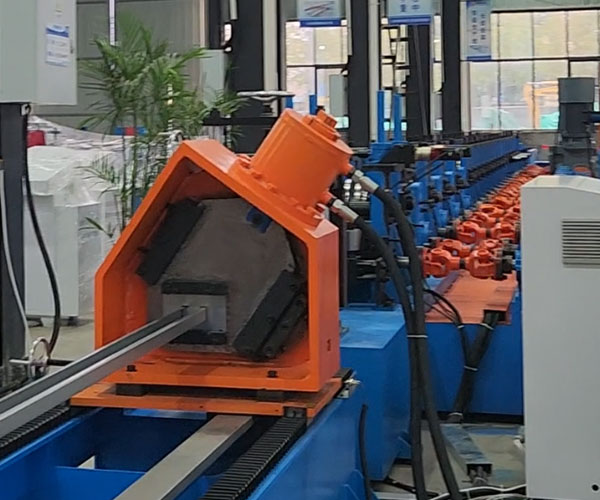
Modern C-channel forming systems represent the backbone of structural PV mounting production.
Technical Performance Reference
| Parameter | Specification |
|---|---|
| Production Speed | ≤45 m/min |
| Precision | ±1 mm |
| Power Consumption | ~40 KW |
| Floor Space | 35m × 5m |
| Control System | PLC + Servo Tracking |
Engineering Principle: Multi-Stage Deformation Control
Roll forming uses progressive deformation:
- Each roller stage applies controlled pressure
- Material stress is distributed evenly
- Final geometry maintains structural integrity
This ensures high-strength output without material cracking.
U-Channel Structural System
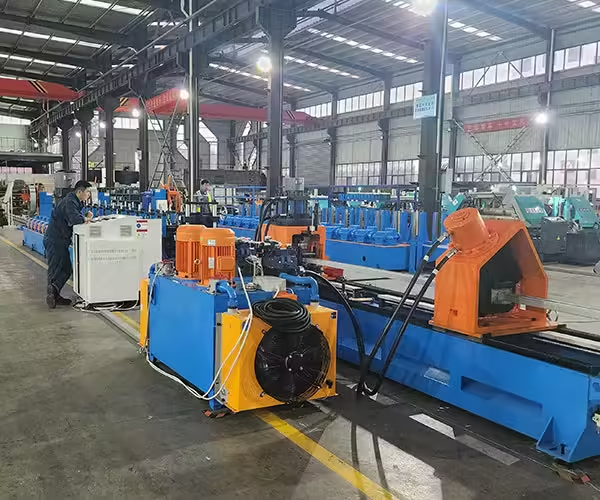
U-channel systems are widely used in:
- Rooftop solar installations
- Small commercial PV systems
- Adjustable tilt mounting systems
Structural Advantage
U-channel profiles provide:
- Higher flexibility in assembly
- Reduced installation weight
- Easier field adjustment
PV Bracket Factory Connector Punching Technology Deep Dive
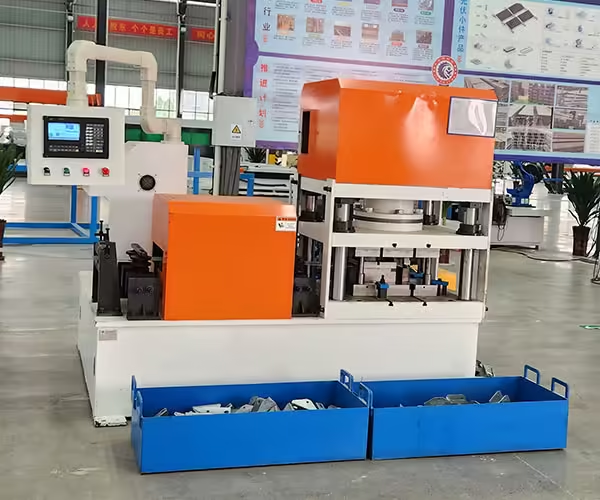
High-Speed Punching System Overview
Connector punching machines are critical for modular solar assembly systems.
Core Data Performance
| Parameter | Value |
| Processing Time | 3–5 seconds/piece |
| Accuracy | ±0.5 mm |
| Material Thickness | ≤5 mm |
| Power | 20 KW |
Industrial Concept: Zero-Error Punching
Modern systems eliminate manual error through:
- CNC coordinate positioning
- Servo motor control
- Laser calibration systems
This ensures mass production consistency across thousands of components.
PV Bracket Factory Automation & Smart Manufacturing Systems
Industry 4.0 Integration in PV Manufacturing
Modern pv bracket factory systems increasingly adopt Industry 4.0 principles.
Key Technologies
- Industrial IoT (IIoT) sensors
- Cloud data analytics platforms
- AI-based production optimization
- Digital twin simulation systems
Cloud Manufacturing Dashboard Functions
Factories can monitor in real time:
- Output volume per hour
- Energy consumption per production batch
- Machine vibration and fault detection
- Material utilization efficiency
Shutdown Memory System
This advanced function ensures:
- Automatic recovery after power loss
- No recalibration required
- Reduced scrap rate during restart
PV Bracket Factory Industry Standards & Compliance Framework
International Standards Used in Solar Bracket Manufacturing
ISO 9001 Quality Management System
Ensures consistent production quality and traceability.
ISO 14001 Environmental Management
Focuses on reducing environmental impact during manufacturing.
IEC Solar Structural Standards
Ensures mechanical load capacity for wind, snow, and seismic conditions.
ASTM Structural Steel Standards
Defines material strength and corrosion resistance requirements.
Wind Load Engineering Requirements
In many international solar projects:
- Wind resistance requirement: up to 60 m/s
- Snow load resistance: up to 2.4 kN/m²
- Service life requirement: 25+ years
A pv bracket factory must ensure compliance with these conditions.
PV Bracket Factory Solutions vs Traditional Fabrication
Technical Comparison Table
| Feature | Traditional Workshop | PV Bracket Factory System |
| Precision | ±3–5 mm | ±1 mm |
| Production Speed | Low | Up to 45 m/min |
| Labor Requirement | High | Low |
| Automation Level | Minimal | Full PLC + CNC |
| Scrap Rate | High | Very Low |
| Scalability | Limited | Industrial Scale |
Key Concept: Cost Efficiency vs Lifecycle Value
Although automated systems require higher initial investment, they significantly reduce:
- Labor costs
- Material waste
- Maintenance downtime
Over a 3–5 year lifecycle, ROI becomes significantly higher.
Global Market Trends in PV Bracket Factory Solutions
Trend 1: Carbon Neutral Manufacturing
Factories are adopting:
- Energy-efficient motors
- Low-carbon steel materials
- Renewable-powered production lines
Trend 2: Ultra-Fast Delivery Supply Chains
Global solar projects require:
- Just-in-time production
- Modular bracket systems
- Standardized component compatibility
Trend 3: AI-Based Predictive Maintenance
AI systems predict:
- Roller wear
- Motor overheating
- Cutting deviation
This reduces unexpected downtime.
Trend 4: Standardization of Global PV Mounting Systems
Industry is moving toward:
- Universal bracket compatibility
- Reduced custom fabrication
- Modular structural design
Real-World Application Case Study
Utility-Scale Solar Farm Project (100MW+)
A large-scale PV project required:
- 50,000+ tons of mounting structures
- ±1 mm precision requirement
- 6-month delivery timeline
Solution Applied
A fully automated pv bracket factory system was deployed:
- Multiple C-channel production lines
- Integrated punching systems
- Cloud-controlled scheduling
Project Outcome
- 35% reduction in production time
- 20% reduction in material waste
- Improved installation efficiency by 28%
PV Bracket Factory Solutions Cost Structure Analysis
Main Cost Components
- Raw materials (steel coils)
- Energy consumption
- Machine depreciation
- Labor cost
- Maintenance cost
Optimization Strategy
Factories reduce cost through:
- High-speed continuous production
- Reduced manual intervention
- Smart energy monitoring systems
How to Select a PV Bracket Factory Solution
Key Evaluation Criteria
Production Capacity
Must match project scale requirements.
Precision Level
Minimum ±1 mm industry standard.
Automation Level
Higher automation improves long-term ROI.
After-Sales Support
Critical for global solar EPC projects.
Procurement Decision Model
Buyers should evaluate:
- Cost per ton output
- Delivery speed
- System stability
- Spare parts availability
Conclusion
The evolution of the pv bracket factory represents a major transformation in the solar manufacturing industry. From traditional metal fabrication to intelligent automated production systems, the industry is moving toward higher precision, faster output, and fully digitalized manufacturing ecosystems.
As global solar demand continues to expand, companies that invest in automated PV bracket factory solutions will gain a strong competitive advantage in cost efficiency, delivery speed, and product consistency.
In the future, PV bracket production will increasingly rely on:
- AI-driven manufacturing optimization
- Fully automated production lines
- Cloud-based global factory networks
- Sustainable low-carbon materials
This shift is not only a technological upgrade—it is a fundamental restructuring of how solar infrastructure is produced worldwide.
FAQ
What is a pv bracket factory used for?
It is used to produce photovoltaic mounting structures for solar panels including C-channel, U-channel, and connector systems.
What is the production speed of modern PV bracket systems?
Advanced roll forming systems can reach up to 45 meters per minute.
What is the accuracy requirement for PV bracket production?
Industry-standard precision is typically ±1 mm or better.
Are automated PV bracket factories cost-effective?
Yes. Although initial investment is higher, long-term operational cost is significantly lower.
What standards are required for PV bracket systems?
Common standards include ISO 9001, IEC structural standards, and ASTM steel standards.
If you enjoyed this article on Jinbolida’s smart manufacturing and digital factory expertise, follow us for more insights and updates:
- 📘 Facebook: Stay tuned for our latest smart production line projects → Facebook
- 📱 WhatsApp: Contact us anytime for custom production solutions → Chat Now
- ▶️ YouTube: Watch our automated line demos and real-world applications → YouTube
Let’s keep innovating and shaping the future of smart manufacturing — together!
 English
  Arabic
  Russian
  Spanish
  French