
PV Bracket Safety Standards 2026: Ensuring Secure Solar Installations
Key Takeaways
- Why PV bracket safety is critical in modern solar projects
- 2026 international safety standards and regulations (IEC, UL, CE)
- Material choices, coatings, and corrosion resistance
- Wind, snow, and seismic load ratings and calculations
- Roof vs ground-mounted PV bracket comparison
- Installation best practices, torque & anchor selection
- Maintenance, inspection tips, and smart monitoring
- Case studies and white paper insights
- Innovations: modular and adjustable designs, energy efficiency
- How to select PV brackets for compliance, durability, and cost-efficiency
Introduction
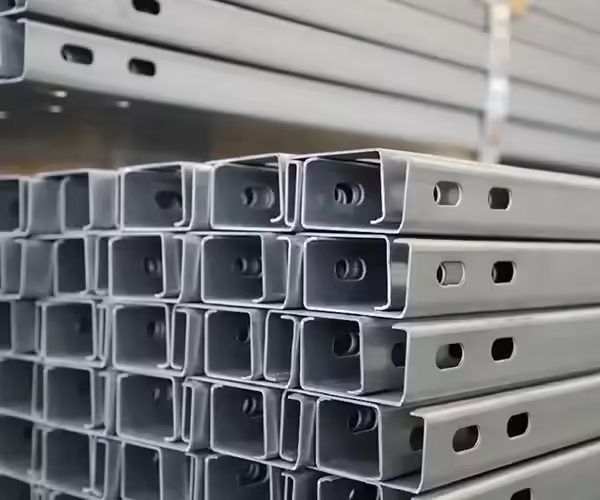
PV brackets are not just mechanical supports—they are structural lifelines for solar panels. In 2026, the evolution of PV bracket standards ensures solar installations remain resilient against extreme weather, environmental degradation, and operational stresses.
According to Solar Energy Research Institute, 2025, improper bracket installation or non-compliance with standards leads to 12–15% panel failures in high-wind regions. For large-scale solar farms, this can translate to hundreds of thousands of dollars in losses, highlighting the importance of selecting compliant, durable brackets.
PV bracket safety impacts:
- Structural integrity: Prevents panel detachment under wind, snow, or seismic loads.
- Operational reliability: Ensures consistent electricity generation without maintenance downtime.
- Long-term cost savings: Reduces frequent replacements and labor costs.
Table of Contents
PV Bracket Safety Standards 2026: Detailed Overview
International IEC Standards

- IEC 62548: Covers the mechanical and structural requirements for PV systems. Defines load capacities for wind, snow, and seismic activity.
- IEC 61215: Durability testing for PV modules and supporting brackets.
- IEC 61730: Electrical and fire safety considerations for PV systems.
Key Update for 2026: Wind load testing now simulates Category 5 hurricane conditions for exposed areas.
UL 2703 Standards (North America)

- Mechanical load and grounding certification for PV mounting systems.
- Emphasis on corrosion testing under accelerated environmental conditions.
- Introduces testing for extreme temperature cycles (-40°C to 85°C) to ensure bracket resilience.
CE Marking (Europe)

- Ensures compliance with EU mechanical safety directives.
- Focuses on:
- Load-bearing capacity
- Corrosion protection
- Compatibility with renewable energy sustainability directives
PV Bracket Materials, Coatings, and Durability
Material Selection
| Material | Advantages | Common Applications | Notes |
|---|---|---|---|
| Aluminum Alloys | Lightweight, corrosion-resistant | Roof-mounted | Can include anodized finishes |
| Galvanized Steel | High strength, cost-effective | Ground-mounted | Requires anti-corrosion coatings |
| Stainless Steel | Extreme durability, marine use | Coastal/Industrial | Higher cost, long-term performance |
2026 Trends: Eco-friendly coatings and recycled metal brackets are increasingly recommended in North America and Europe.
Corrosion Resistance Testing
- Salt spray testing (ASTM B117): 1000+ hours simulates coastal exposure.
- UV and moisture cycle testing: Ensures coating longevity in tropical climates.
PV Bracket Design Types and Safety Considerations

Roof-Mounted Brackets
- Handle wind uplift, roof penetration, and snow accumulation.
- Must distribute load across roof trusses.
- Tilt angles are often adjustable from 10–30° to optimize solar capture without compromising stability.
Ground-Mounted Brackets
- Must handle soil movement, seismic loads, and open-field wind exposure.
- Foundation design critical: concrete footings vs driven piles.
- Ground brackets often allow single-axis or dual-axis tracking, adding mechanical complexity.
Adjustable and Modular Brackets
- Enable scalable PV array installation.
- Enhance safety by allowing uniform load distribution.
- Facilitate easier replacement of individual panels or modules.
Load Calculations: Wind, Snow, and Seismic
PV brackets must meet structural engineering requirements based on local codes.
Wind Load Formula (Simplified):Fw=0.5⋅ρ⋅V2⋅Cd⋅A
Where:
- Fw = wind force on bracket (N)
- ρ = air density (1.225 kg/m³)
- V = wind speed (m/s)
- Cd = drag coefficient
- A = projected panel area
Snow Load Calculation:
- Local building codes define snow pressure in kPa.
- Roof-mounted brackets require additional safety factor (typically 1.5×).
Seismic Load Consideration:
- Ground-mounted PV arrays in seismic zones must factor lateral forces per Eurocode 8 or local seismic standards.
Comparative Table: Roof vs Ground PV Brackets
| Feature | Roof-Mounted | Ground-Mounted | Notes |
|---|---|---|---|
| Wind Resistance | 120–160 km/h | 160–200 km/h | Ground units more exposed |
| Snow Load Capacity | 1.5–2.0 kPa | 2.0–3.0 kPa | Depends on tilt & material |
| Material | Aluminum | Galvanized/Stainless Steel | Corrosion protection critical |
| Installation Complexity | Medium | High | Ground units require foundations |
| Maintenance | Moderate | Easy | Roof units need safety precautions |
| Lifespan | 20–25 years | 25–30 years | Material-dependent |
| Certification | IEC/UL/CE | IEC/UL/CE | Both must meet 2026 standards |
Installation Best Practices
Proper installation of PV brackets is critical to ensure long-term system reliability and compliance with the PV bracket safety standards 2026. Even the most advanced bracket can fail if installation practices are subpar.
Anchoring and Fastening
- Torque-Controlled Bolts: Use calibrated torque wrenches to apply the recommended torque values specified by the bracket manufacturer. This prevents over-tightening, which can deform bracket frames, or under-tightening, which may allow panels to loosen over time.
- Anchor Selection: Choose anchors suitable for your substrate type—concrete, steel, or wood. For high-wind zones, chemical anchors or expansion bolts rated for 2–3× the expected wind load are recommended.
- Anti-Corrosion Measures: Apply anti-corrosion lubricants or coatings where metal contacts metal, especially in coastal or high-humidity environments. Galvanic corrosion between dissimilar metals can significantly reduce bracket lifespan.
- Redundant Fastening: For critical installations, consider secondary locking mechanisms, such as lock washers, Nylock nuts, or adhesive thread lockers, to ensure long-term security.
Spacing and Load Distribution
- Manufacturer Guidelines: Always follow the spacing and load distribution recommendations in the product datasheet. Typical spacing varies by panel size and bracket type:
- Roof-mounted: 1.2–2.0 m between brackets
- Ground-mounted: 1.5–2.5 m depending on wind load
- Even Distribution of Loads: Proper spacing ensures wind uplift, snow, and seismic loads are evenly transmitted to the structure. Uneven spacing can lead to excessive stress points, reducing both panel and bracket lifespan.
- Wind Tunnel Testing References: Recent studies (Solar Tech Journal, 2024) show that improper spacing in roof-mounted arrays can increase wind-induced panel stress by up to 35%, highlighting the importance of precise installation.
Inspection Tips
- Scheduled Inspections: Conduct inspections every 6–12 months, or more frequently in high-wind, coastal, or snowy regions.
- Checklist for Inspection:
- Loose or missing bolts
- Signs of corrosion or metal fatigue
- Panel misalignment or tilt deviation
- Foundation integrity (for ground-mounted systems)
- Advanced Inspection Techniques:
- Drone-assisted inspections allow high-resolution imaging of roof-mounted arrays without exposing personnel to fall risks.
- Thermal imaging can detect hotspots caused by micro-movements in the panel, which may indicate bracket loosening or stress points.
- Documentation: Record all inspection data in a centralized monitoring system. This aligns with predictive maintenance protocols and enhances compliance reporting.
Innovations in PV Bracket Safety


The PV mounting industry has evolved with new technologies that improve both safety and operational efficiency.
Smart PV Brackets
- Stress Sensors and Tilt Monitors: Sensors embedded in brackets measure real-time mechanical loads and panel tilt angles. These devices alert maintenance teams to potential issues before failures occur.
- Integration with IoT Systems: Sensor data can be transmitted to cloud platforms for predictive maintenance, reducing operational downtime by up to 20% according to recent utility-scale studies.
Modular Designs
- Scalable Arrays: Modular PV brackets allow sections of the array to be removed, replaced, or reoriented without impacting the rest of the installation.
- Reduced Labor Intensity: Modular installation reduces worker effort by 15–25%, improving installation speed and minimizing error risk.
- Adaptability: Easily accommodates different panel sizes, tilt angles, and array layouts for both new and retrofit projects.
Eco-Friendly Coatings
- Sustainable Materials: Coatings made from powder-coated or anodized aluminum and zinc-aluminum alloys extend bracket life while reducing environmental impact.
- Corrosion Resistance: Advanced coatings resist both salt spray and UV degradation, essential for installations in harsh environments.
- Lifecycle Benefits: Studies show brackets with eco-friendly coatings maintain structural integrity 10–15% longer than standard coated steel in coastal zones.
Integration with Predictive Maintenance Software
- Automated Alerts: Smart systems can automatically notify operators of loosening bolts, unusual vibration, or abnormal tilt.
- Data Analytics: Historical data allows engineers to identify high-stress zones or environmental factors affecting bracket lifespan.
- Cost Optimization: Predictive maintenance can reduce long-term repair and replacement costs by up to 25% in large-scale installations.
Case Studies and White Paper References
Residential PV System – Germany (2024)
- System Details: 10 kW roof-mounted PV array using aluminum PV brackets.
- Testing: Simulated wind load of 150 km/h and snow load of 1.5 kPa.
- Results: After 5 years, zero structural failures or panel misalignment.
- Lessons Learned: Proper torque application and periodic inspections prevented corrosion and stress accumulation in roof brackets.
Utility-Scale PV – Arizona (2025)
- System Details: 50 MW ground-mounted PV array using stainless steel brackets with tilt tracking.
- Performance Gains: Energy yield increased by 7% due to optimized panel orientation.
- Maintenance Impact: Modular brackets reduced maintenance time by 20%, and integrated sensors detected stress points early.
- Additional Benefits: Eco-friendly coatings ensured minimal corrosion in desert sandstorms.
White Paper: “Advancements in PV Mounting Systems 2025” – Solar Engineering Journal
- Scope: Load testing, environmental simulations, sensor integration, and predictive maintenance strategies.
- Key Findings:
- Stress monitoring brackets reduce failure risk by 30%.
- Modular designs improve labor efficiency and safety.
- Predictive maintenance reduces downtime and lifecycle costs.
Case Comparison Table
| Project | Type | Material | Innovation | Outcome |
|---|---|---|---|---|
| Germany Residential | Roof-mounted | Aluminum | Torque-controlled & monitoring | 0 failures in 5 years |
| Arizona Utility | Ground-mounted | Stainless Steel | Modular & tilt tracking | +7% energy yield, 20% less maintenance |
| Coastal Solar Farm | Roof-mounted | Zinc-aluminum alloy | Smart sensors & eco coatings | Extended lifespan by 15%, reduced corrosion |
FAQ
Q1: Why follow 2026 PV bracket standards?
Ensures structural integrity, operational reliability, and safety compliance.
Q2: Are all PV brackets compliant?
No, only certified brackets meeting IEC, UL, or CE standards.
Q3: Roof vs ground brackets – can they be interchanged?
Generally no, due to load and environmental differences.
Q4: How often should brackets be inspected?
Every 6–12 months, quarterly in high-risk zones.
Q5: Any new materials in 2026 standards?
Yes, high-strength alloys, stainless steel, eco-friendly coatings.
Conclusion
Selecting PV brackets according to PV bracket safety standards 2026 ensures:
- Long-term durability
- Compliance with global codes
- Reduced operational risk
- Optimized energy yield
Need Professional Advice?
For guidance on pv bracket selection, installation, or sourcing certified equipment, contact us today for expert consultation.
If you enjoyed this article on Jinbolida’s smart manufacturing and digital factory expertise, follow us for more insights and updates:
- 📘 Facebook: Stay tuned for our latest smart production line projects → Facebook
- 📱 WhatsApp: Contact us anytime for custom production solutions → Chat Now
- ▶️ YouTube: Watch our automated line demos and real-world applications → YouTube
Let’s keep innovating and shaping the future of smart manufacturing — together!
 English
  Arabic
  Russian
  Spanish
  French