
Roll Forming Machine Buying Tips: 2026 Guide, Standards & Strategy
Table of Contents
Key Takeaways of This Guide
- A roll forming machine is a continuous precision metal forming system critical for modern manufacturing
- Machine selection depends on material type, production scale, automation level, and profile complexity
- Industry 2026 trends focus on high-speed automation, energy efficiency, and digital control systems
- Proper configuration can improve production efficiency by 25%–50% in industrial environments
- Technical standards such as ISO and CE compliance are essential for export-grade equipment
- This guide includes engineering principles, real factory cases, cost analysis, and procurement frameworks
Roll Forming Machine Buying Tips: Industry Evolution & Global Market Context
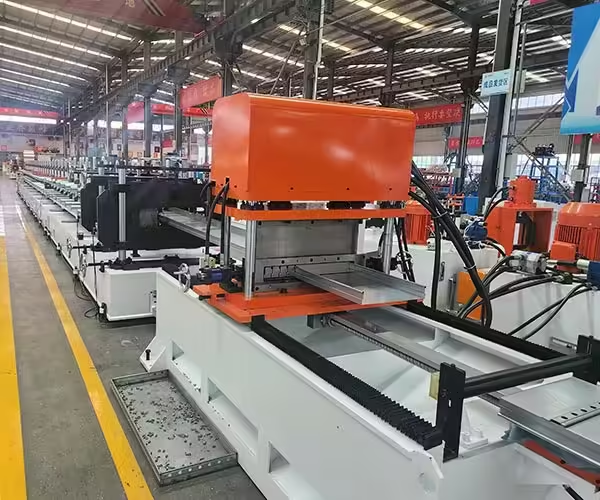
The global metal forming industry is undergoing rapid transformation driven by infrastructure expansion, renewable energy projects, and automotive lightweight manufacturing demands. In this environment, the roll forming machine has become a core production asset rather than a secondary fabrication tool.
In 2026, manufacturers are prioritizing:
- Higher automation integration (PLC + AI control systems)
- Reduced energy consumption per unit output
- Faster tooling changeover systems
- Multi-profile production flexibility
- Lower defect rate in continuous manufacturing
According to industrial manufacturing reports, automated roll forming lines have increased productivity by 30%–60% compared to traditional press-forming methods.
Roll Forming Machine Working Principle (Engineering Breakdown)
Continuous Metal Forming Process
A roll forming machine gradually bends metal sheet through multiple roller stations until the desired profile is achieved.
Core Mechanical Process
- Sheet feeding system
- Multi-stage roller forming
- Precision guiding system
- Continuous cutting system
Incremental Deformation Concept
Engineering Principle
Instead of shaping metal in one step, deformation is distributed across multiple stations.
Advantage
This reduces internal stress and improves structural stability of the final product.
Roll Forming Machine Buying Tips: Technical Evaluation System
Frame Structure Engineering Standard
Heavy-Duty Frame Design
Industrial-grade machines use welded steel frames designed to resist:
- Vibration during high-speed operation
- Long-term structural deformation
- Torque stress from continuous forming
Industry Standard Insight
CE-certified roll forming machines must pass structural load stability testing under continuous 24-hour operation conditions.
Roller Material Engineering Standards
Common Industrial Materials
- GCr15 bearing steel (high hardness)
- 42CrMo alloy steel (high strength applications)
- Chrome-plated surface rollers (anti-corrosion systems)
Technical Insight
Hardness levels typically range from HRC 58–62 for industrial-grade rollers.
Control System Architecture in Roll Forming Machine
PLC-Based Automation
Modern systems integrate PLC control for:
- Speed adjustment
- Cutting precision control
- Length programming
- Fault diagnostics
Advanced Systems (2026 Trend)
Some machines now include:
- IoT remote monitoring
- AI predictive maintenance
- Real-time production analytics
Roll Forming Machine Types and Industrial Applications

Standard Roll Forming Machine
Engineering Description
Basic mechanical system suitable for low-complexity profiles.
Applications
- Simple construction panels
- Small-scale metal workshops
High-Speed Roll Forming Machine
Technical Advantage
Designed for continuous production with optimized roller alignment systems.
Performance Benchmark
Production speeds can reach 10–30 meters per minute depending on material thickness.
Fully Automated Roll Forming Machine Line
System Integration
Includes:
- Automatic decoiler
- Servo feeding system
- PLC-controlled cutting unit
- Stackers or robotic unloading
Industrial Value
Reduces labor dependency by up to 70% in large-scale manufacturing plants.
Roll Forming Machine Comparison Table (Industrial Engineering View)
| Type | Speed (m/min) | Automation Level | Precision | Maintenance | Best Use Case |
|---|---|---|---|---|---|
| Standard Machine | 5–12 | Low | Medium | Low | Small factories |
| High-Speed Machine | 10–30 | Medium | High | Medium | Industrial production |
| Fully Automated Line | 20–60 | High | Very High | Medium-High | OEM manufacturing |
Roll Forming Machine Buying Tips: Selection Engineering Framework
Production Capacity Planning
Concept Explanation
Capacity planning ensures machine output matches factory demand.
Key Formula Insight
Production efficiency = line speed × operating hours × material utilization rate
Material Thickness Compatibility
Standard Industrial Range
- Thin sheet: 0.3–1.2 mm
- Medium sheet: 1.2–3.0 mm
- Heavy-duty sheet: 3.0–6.0 mm
Engineering Note
Higher thickness requires stronger motor torque and reinforced roller systems.
Profile Complexity Analysis
Simple Profiles
Straight channels, panels, roofing sheets.
Complex Profiles
Multi-bend structural components used in automotive or solar mounting systems.
Roll Forming Machine Cost & ROI Analysis (Industrial Perspective)
Cost Structure Breakdown
Main Cost Components
- Machine frame and structure
- Roller tooling system
- Automation control system
- Hydraulic cutting system
ROI Calculation Concept
Simple Model
Return on investment = (production efficiency gain + labor reduction) – operational cost
Industry Insight
Factories adopting automated roll forming lines report ROI periods between 12–24 months depending on utilization rate.
Roll Forming Machine Industry Standards (2026 Compliance Overview)
CE Certification Requirements
- Electrical safety compliance
- Mechanical load testing
- Emergency stop system integration
ISO Manufacturing Standards
Relevant standards include:
- ISO 9001 (quality management systems)
- ISO 12100 (machine safety principles)
- ISO 13849 (control system safety performance)
Energy Efficiency Benchmark
Modern machines target:
- Reduced idle power consumption
- Servo motor optimization
- Regenerative braking systems in advanced lines
Real-World Case Study: Roofing Panel Factory Upgrade
A roofing panel manufacturer upgraded to a fully automated roll forming machine line.
Operational Results
- Production efficiency increased by 42%
- Labor cost reduced by 35%
- Material waste reduced by 18%
- Product defect rate decreased significantly
Engineering Insight
The biggest improvement came from automated cutting synchronization and reduced human adjustment error.
Roll Forming Machine Buying Tips: Maintenance Strategy

Preventive Maintenance System
Daily Maintenance
- Roller surface inspection
- Lubrication check
- Feed alignment verification
Monthly Maintenance
- Electrical system inspection
- Hydraulic system testing
- Frame stability check
Annual Maintenance
- Full roller recalibration
- Control system update
- Structural integrity testing
Maintenance Impact Insight
Proper maintenance can extend machine lifespan from 10 years to over 20 years in industrial environments.
Global Market Trends for Roll Forming Machine (2026 Outlook)
Automation Expansion
Factories are increasingly integrating:
- Smart sensors
- AI production optimization
- Remote machine diagnostics
Green Manufacturing Trend
Energy-efficient motors and low-waste production systems are becoming mandatory in export markets.
Industry Demand Growth
High demand is driven by:
- Solar mounting systems
- Steel structure construction
- Automotive lightweight components
Conclusion
A roll forming machine is no longer just production equipment—it is a core industrial asset that determines manufacturing efficiency, product quality, and long-term competitiveness. In 2026, successful buyers focus on automation level, structural engineering quality, and lifecycle ROI rather than initial purchase price alone.
Companies that invest in advanced roll forming systems gain measurable advantages in production scalability, operational efficiency, and global market competitiveness.
FAQ
What industries use roll forming machines the most?
Construction, automotive, solar energy, and steel structure manufacturing industries are the main users.
How do I choose the right roll forming machine?
Focus on material thickness, production speed, automation level, and profile complexity requirements.
Is a fully automatic roll forming machine worth it?
Yes, especially for large-scale production where labor reduction and consistency are critical.
What is the lifespan of a roll forming machine?
With proper maintenance, industrial machines can last 10–20 years or more.
What is the biggest cost factor in roll forming systems?
Automation level and roller tooling precision are the most significant cost drivers.
If you enjoyed this article on Jinbolida’s smart manufacturing and digital factory expertise, follow us for more insights and updates:
- 📘 Facebook: Stay tuned for our latest smart production line projects → Facebook
- 📱 WhatsApp: Contact us anytime for custom production solutions → Chat Now
- ▶️ YouTube: Watch our automated line demos and real-world applications → YouTube
Let’s keep innovating and shaping the future of smart manufacturing — together!
 English
  Arabic
  Russian
  Spanish
  French