
Solar Photovoltaic Bracket Cost
Key Points of This Guide
- Understand the main factors that influence Solar Photovoltaic Bracket cost.
- Learn how materials, structural design, production methods, and surface treatment affect pricing.
- Compare different types of photovoltaic brackets and their application costs.
- Discover how manufacturers reduce production costs through automated manufacturing technology.
- Learn why solar bracket roll forming machines are becoming essential equipment for photovoltaic bracket production.
- Understand how to choose suitable forming equipment for large-scale solar mounting structure manufacturing.
- Find answers to common questions about photovoltaic bracket prices, production, and equipment investment.
With the rapid growth of renewable energy projects worldwide, solar photovoltaic systems have become one of the most important solutions for clean energy development. Behind every efficient solar power station, a reliable mounting structure is required to support solar panels and ensure long-term stability.
The Solar Photovoltaic Bracket is a key component of solar mounting systems. It provides structural support, maintains the correct installation angle, and protects solar modules from environmental impacts such as strong winds, rain, and temperature changes.
For solar project developers, installers, and manufacturers, understanding photovoltaic bracket cost is essential. The final price is not only determined by raw materials but also influenced by structural design, production technology, manufacturing efficiency, and equipment investment.
For companies producing photovoltaic mounting systems, adopting advanced manufacturing equipment such as solar bracket roll forming machines can significantly improve production efficiency, reduce labor costs, and ensure consistent product quality.
This guide explains the cost factors of photovoltaic brackets and explores how manufacturing equipment affects overall production economics.
Table of Contents
Understanding Solar Photovoltaic Bracket Cost
What Is a Solar Photovoltaic Bracket?
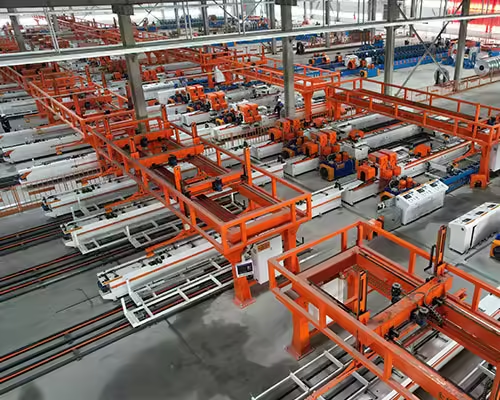
A solar photovoltaic bracket is a structural support system designed to install and secure solar panels on different surfaces.
It connects solar modules with rooftops, foundations, or ground structures, ensuring that solar panels remain stable during long-term outdoor operation.
Common application scenarios include:
- Residential rooftop solar systems.
- Commercial and industrial solar projects.
- Large-scale photovoltaic power plants.
- Agricultural solar installations.
- Ground-mounted solar farms.
A high-quality bracket system needs to provide excellent mechanical strength while maintaining corrosion resistance and installation convenience.
Why Does Solar Photovoltaic Bracket Cost Matter?
The mounting structure directly affects both the initial investment and long-term operation costs of a solar project.
Although solar panels usually receive more attention, the support system plays an important role in project reliability.
A reasonable bracket cost strategy helps companies achieve:
Lower Project Investment
Choosing suitable materials and manufacturing methods can reduce unnecessary expenses without affecting performance.
Better Installation Efficiency
Well-designed brackets can simplify installation procedures and reduce labor requirements.
Longer Service Life
High-quality materials and precise manufacturing processes improve durability under outdoor conditions.
Therefore, photovoltaic bracket pricing should be evaluated based on total value rather than only the initial purchase price.
Main Factors Affecting Solar Photovoltaic Bracket Cost
Material Selection and Raw Material Price
The material used in photovoltaic mounting structures is one of the most important factors influencing production costs.
Different materials provide different levels of strength, corrosion resistance, and manufacturing difficulty.
Steel Solar Photovoltaic Brackets
Galvanized steel is one of the most widely used materials for photovoltaic support structures.
Advantages include:
- High load-bearing capacity.
- Strong structural stability.
- Good corrosion resistance after galvanization.
- Competitive manufacturing cost.
Because of its excellent balance between performance and price, galvanized steel is commonly used in large solar farms and commercial projects.
Aluminum Solar Mounting Brackets
Aluminum alloy brackets are another popular option, especially for rooftop solar applications.
Main advantages include:
- Lightweight structure.
- Excellent corrosion resistance.
- Easier transportation and installation.
However, aluminum materials usually have a higher raw material cost compared with galvanized steel.
Steel vs Aluminum Solar Brackets: Cost Comparison
| Comparison Factor | Galvanized Steel Bracket | Aluminum Bracket |
|---|---|---|
| Material Cost | Lower | Higher |
| Structural Strength | Excellent | Good |
| Weight | Heavier | Lightweight |
| Corrosion Resistance | Good after treatment | Excellent |
| Installation Difficulty | Moderate | Easier |
| Common Application | Solar farms, industrial projects | Rooftop solar systems |
For large-scale photovoltaic projects that require strong structures and cost control, steel brackets are often preferred. For projects requiring lightweight installation, aluminum solutions may provide advantages.
Different Types of Solar Photovoltaic Brackets and Their Costs
Rooftop Solar Photovoltaic Brackets
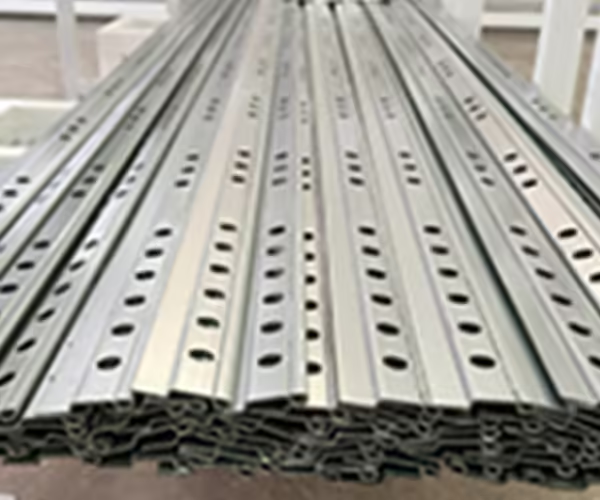
Rooftop brackets are designed for installing solar panels on residential, commercial, and industrial buildings.
They usually require lightweight designs because the roof structure has limited load capacity.
Features of Rooftop Mounting Systems
Rooftop solutions typically focus on:
- Simple installation.
- Reduced material usage.
- Flexible mounting methods.
- Lower transportation costs.
Because of their smaller scale and simpler structure, rooftop systems often have lower total material requirements.
Ground Mounted Solar Photovoltaic Brackets
Ground-mounted brackets are widely used in utility-scale solar farms.
Compared with rooftop systems, they require stronger structures because they must withstand:
- Higher wind loads.
- Larger panel arrangements.
- More complex environmental conditions.
Why Ground Mounting Systems Cost More
Ground systems generally require:
- More steel materials.
- Stronger foundations.
- Larger structural components.
- More installation work.
However, they provide better scalability for large photovoltaic projects.
Fixed and Adjustable Solar Photovoltaic Bracket Comparison
Different projects may require different mounting structures.
Fixed Solar Brackets
Fixed brackets maintain a constant installation angle after installation.
Advantages:
- Simple structure.
- Lower manufacturing cost.
- Easier installation.
- Lower maintenance requirements.
They are suitable for standard solar projects with stable environmental conditions.
Adjustable Solar Brackets
Adjustable systems allow users to change panel angles according to sunlight conditions.
Advantages:
- Better solar energy optimization.
- Flexible installation.
- Improved adaptability.
However, adjustable systems usually have higher costs because of their more complex structure.
| Feature | Fixed Bracket | Adjustable Bracket |
|---|---|---|
| Initial Cost | Lower | Higher |
| Structure Complexity | Simple | More Complex |
| Installation | Faster | Requires Adjustment |
| Energy Optimization | Standard | Better |
| Suitable Projects | Large standard projects | Special applications |
Solar Photovoltaic Bracket Manufacturing Process
From Steel Coil to Finished Product
The manufacturing process directly affects product quality and production cost.
A professional photovoltaic bracket production line usually includes:
- Material preparation.
- Roll forming.
- Punching and cutting.
- Surface treatment.
- Quality inspection.
Each step influences the final performance of the finished bracket.
Roll Forming Process for Photovoltaic Brackets
Roll forming is one of the most efficient methods for producing metal support structures.
During this process, steel coils pass through multiple forming rollers and gradually become the required bracket profile.
Advantages of Roll Forming Technology
Roll forming provides:
- Continuous production.
- High dimensional accuracy.
- Reduced material waste.
- Stable product quality.
For manufacturers producing large quantities of solar mounting structures, roll forming technology significantly improves competitiveness.
Why Solar Bracket Roll Forming Machines Reduce Manufacturing Costs

What Is a Solar Bracket Roll Forming Machine?
A solar bracket roll forming machine is specialized equipment designed to manufacture photovoltaic mounting structures automatically.
The machine converts metal coils into customized bracket profiles through continuous forming processes.
It is widely used by manufacturers producing:
- Solar panel mounting rails.
- Ground mounting brackets.
- Roof support structures.
- C-shaped and U-shaped steel profiles.
Advantages of Using Solar Bracket Forming Equipment
Higher Production Efficiency
Compared with manual production methods, automated forming equipment can complete multiple processes in one production line.
It can integrate:
- Coil feeding.
- Leveling.
- Roll forming.
- Punching.
- Cutting.
This improves production speed and reduces processing time.
Lower Labor Costs
Automation reduces dependence on manual operations.
Manufacturers can produce more photovoltaic brackets with fewer workers while maintaining stable quality.
Better Product Consistency
Precision forming equipment ensures that every bracket maintains consistent:
- Dimensions.
- Hole positions.
- Structural shape.
- Surface quality.
This helps reduce installation problems during solar project construction.
Manual Manufacturing vs Solar Bracket Roll Forming Machine Production
| Comparison Factor | Traditional Production | Roll Forming Production |
|---|---|---|
| Production Speed | Slow | High |
| Labor Requirement | High | Lower |
| Product Accuracy | Depends on operators | Highly Consistent |
| Large Orders | Difficult | Suitable |
| Material Utilization | Lower | Higher |
| Long-Term Cost | Higher | Lower |
For photovoltaic bracket manufacturers, investing in a professional forming machine can significantly improve production capacity and profitability.
How to Choose a Solar Photovoltaic Bracket Forming Machine
Understanding Photovoltaic Bracket Manufacturing Equipment Requirements
For companies producing solar mounting structures, selecting the right production equipment is as important as choosing suitable raw materials.
A professional Solar Photovoltaic Bracket production line directly affects manufacturing efficiency, product quality, and long-term operating costs.
Before purchasing equipment, manufacturers should consider:
- Production capacity requirements.
- Bracket design specifications.
- Material thickness and width.
- Automation level.
- Future business expansion plans.
The right forming machine helps manufacturers achieve stable production while reducing unnecessary costs.
Key Factors When Selecting a Solar Bracket Roll Forming Machine
Production Capacity and Speed
Production efficiency is one of the most important considerations for photovoltaic bracket manufacturers.
Different projects require different output levels. Large solar farms may require thousands of meters of mounting structures, meaning manufacturers need equipment capable of continuous high-speed production.
Important parameters include:
- Production speed.
- Working hours per day.
- Output capacity.
- Coil processing efficiency.
A high-performance forming machine allows factories to complete large orders faster and improve delivery capability.
Material Compatibility
A reliable solar bracket forming machine should process different metal materials according to customer requirements.
Common materials include:
- Galvanized steel.
- Stainless steel.
- Aluminum alloy.
The equipment should support different material thicknesses and profiles to provide greater production flexibility.
Product Profile Flexibility
Different solar projects require different bracket designs.
A flexible production line can manufacture various profiles, including:
- C-shaped steel channels.
- U-shaped brackets.
- Solar mounting rails.
- Customized support structures.
This flexibility allows manufacturers to serve more customers and different application markets.
Complete Solar Photovoltaic Bracket Production Line
Main Components of a Solar Bracket Roll Forming Production Line
A complete photovoltaic bracket manufacturing line usually consists of multiple sections working together.
| Equipment Section | Main Function |
|---|---|
| Decoiler | Feeds steel coils into the production line |
| Leveling System | Removes material deformation |
| Roll Forming Machine | Creates the required bracket profile |
| Punching Unit | Produces mounting holes |
| Cutting System | Cuts products into required lengths |
| Control System | Manages automatic operation |
Each component plays an important role in maintaining production efficiency and product accuracy.
Automatic Decoiler System
The decoiler is responsible for supplying raw materials continuously.
Benefits of Automatic Feeding
Automatic feeding improves:
- Production continuity.
- Material handling efficiency.
- Worker safety.
It reduces manual intervention during the manufacturing process.
Roll Forming Unit
The roll forming section is the core component of the production line.
Multiple roller stations gradually shape flat metal strips into precise photovoltaic bracket profiles.
Advantages of Advanced Roll Forming Systems
Modern forming units provide:
- Stable operation.
- High forming accuracy.
- Reduced material deformation.
- Consistent product dimensions.
Punching and Cutting System
Solar brackets require accurate holes for installation and connection.
Automated punching systems ensure:
- Correct hole positions.
- Faster processing.
- Reduced manual errors.
The cutting system provides accurate product lengths according to project requirements.
Solar Photovoltaic Bracket Cost: Equipment Investment Analysis

Initial Equipment Investment
Purchasing a solar bracket roll forming machine requires an initial investment.
The cost depends on:
- Machine configuration.
- Automation level.
- Production capacity.
- Customization requirements.
- Additional processing functions.
A basic production line may meet standard requirements, while advanced systems provide higher efficiency and flexibility.
Long-Term Production Benefits
Although equipment investment is an important consideration, manufacturers should evaluate long-term returns.
Advanced forming equipment can provide:
Reduced Manufacturing Costs
Automation reduces:
- Labor expenses.
- Material waste.
- Production downtime.
Increased Production Capacity
Higher production speed allows manufacturers to accept more orders.
Improved Product Quality
Stable manufacturing processes reduce defective products and improve customer satisfaction.
Equipment Investment vs Manual Production Cost Comparison
| Cost Factor | Manual Production | Automated Forming Line |
|---|---|---|
| Labor Cost | High | Lower |
| Production Efficiency | Limited | High |
| Quality Stability | Variable | Consistent |
| Large Order Capability | Difficult | Excellent |
| Long-Term Profitability | Lower | Higher |
For companies planning long-term photovoltaic bracket manufacturing, investing in automated equipment often provides better economic value.
Why Manufacturers Prefer Solar Bracket Roll Forming Machines
Higher Manufacturing Efficiency
The solar industry continues to expand globally, increasing demand for photovoltaic mounting structures.
Manufacturers need equipment that can support:
- Large-volume orders.
- Fast delivery schedules.
- Stable production quality.
Roll forming machines provide an efficient solution for meeting these requirements.
Reduced Material Waste
Traditional cutting and welding methods may create more material waste.
Roll forming technology uses continuous forming processes, helping manufacturers improve material utilization.
This is especially important because steel costs represent a major part of photovoltaic bracket production expenses.
Improved Product Standardization
Large solar projects require thousands of identical components.
Automated forming equipment ensures every bracket maintains consistent specifications.
This improves:
- Installation efficiency.
- Project reliability.
- Customer satisfaction.
OEM Solar Photovoltaic Bracket Manufacturing Opportunities
Supporting Global Solar Project Demand
As solar energy adoption increases, many companies are looking for reliable photovoltaic bracket suppliers.
Manufacturers with advanced production equipment can provide:
- Customized profiles.
- Large-scale production.
- Competitive pricing.
- Stable delivery.
Custom Solar Bracket Production
Different markets may require different bracket specifications.
A professional manufacturer can customize:
- Profile dimensions.
- Material thickness.
- Hole patterns.
- Surface treatment.
- Packaging methods.
This allows suppliers to serve residential, commercial, and utility-scale solar projects.
Future Trends in Solar Photovoltaic Bracket Manufacturing
More Automated Production Lines
Automation will continue to influence photovoltaic manufacturing.
Future production systems will focus on:
- Higher efficiency.
- Smart control systems.
- Reduced labor dependence.
- Real-time production monitoring.
More Customized Solar Mounting Solutions
Solar projects are becoming more diverse.
Manufacturers will need flexible equipment capable of producing customized bracket designs for different environments.
Sustainable Manufacturing Development
Energy-efficient manufacturing processes are becoming increasingly important.
Modern solar bracket production equipment helps reduce:
- Material waste.
- Energy consumption.
- Production emissions.
This supports the overall sustainability goals of the renewable energy industry.
Conclusion
The cost of a Solar Photovoltaic Bracket is influenced by many factors, including materials, design, manufacturing methods, and production efficiency.
For solar project developers, selecting the right bracket system helps balance investment cost and long-term reliability.
For manufacturers, the key to reducing production costs is not only controlling raw material expenses but also improving manufacturing efficiency through advanced equipment.
A professional solar bracket roll forming machine provides an effective solution by increasing production speed, improving product consistency, reducing labor costs, and supporting customized photovoltaic mounting structures.
As global demand for solar energy continues to grow, companies equipped with efficient photovoltaic bracket production technology will have stronger competitiveness in the renewable energy market.
FAQ
How Much Does a Solar Photovoltaic Bracket Cost?
The cost depends on several factors, including:
- Material type.
- Bracket design.
- Project size.
- Surface treatment.
- Manufacturing process.
Steel brackets are generally more cost-effective for large projects, while aluminum systems may have higher material costs but provide lightweight advantages.
Why Are Solar Bracket Prices Different Between Suppliers?
Different suppliers may offer different prices because of:
- Material quality.
- Production technology.
- Manufacturing efficiency.
- Order quantity.
- Customization requirements.
A lower price does not always mean better value. Product quality and long-term reliability should also be considered.
What Machine Is Used to Make Solar Photovoltaic Brackets?
Solar photovoltaic brackets are usually manufactured using a solar bracket roll forming machine.
This equipment can automatically complete:
- Material feeding.
- Profile forming.
- Punching.
- Cutting.
It is the preferred solution for large-scale photovoltaic bracket production.
Is Investing in a Solar Bracket Forming Machine Worth It?
For companies producing photovoltaic mounting structures, investing in forming equipment can provide long-term benefits.
Advantages include:
- Higher production capacity.
- Lower labor costs.
- Better quality control.
- Stronger market competitiveness.
Companies with stable orders can usually achieve better returns through automated manufacturing.
How Do I Choose the Right Solar Bracket Manufacturing Equipment?
Before purchasing equipment, manufacturers should consider:
- Required production capacity.
- Target bracket profiles.
- Material specifications.
- Automation requirements.
- Supplier technical support.
Choosing equipment based on actual production needs helps avoid unnecessary investment.
If you enjoyed this article on Jinbolida’s smart manufacturing and digital factory expertise, follow us for more insights and updates:
- 📘 Facebook: Stay tuned for our latest smart production line projects → Facebook
- 📱 WhatsApp: Contact us anytime for custom production solutions → Chat Now
- ▶️ YouTube: Watch our automated line demos and real-world applications → YouTube
Let’s keep innovating and shaping the future of smart manufacturing — together!
 English
  Arabic
  Russian
  Spanish
  French