
Steel Plate Laser Cutting Machine — High-Precision Solutions for Modern Manufacturing
/ Steel Plate Laser Cutting Machine — High-Precision Solutions for Modern Manufacturing
Steel plate laser cutting machines are essential CNC equipment widely used in metal fabrication, automotive production, and industrial applications. They utilize high-energy laser beams to achieve precise cutting, engraving, and punching of steel and other materials. This article provides a comprehensive overview of the technology, applications, advantages, and selection tips for these machines.
Table of Contents
Understanding Steel Plate Laser Cutting Machines
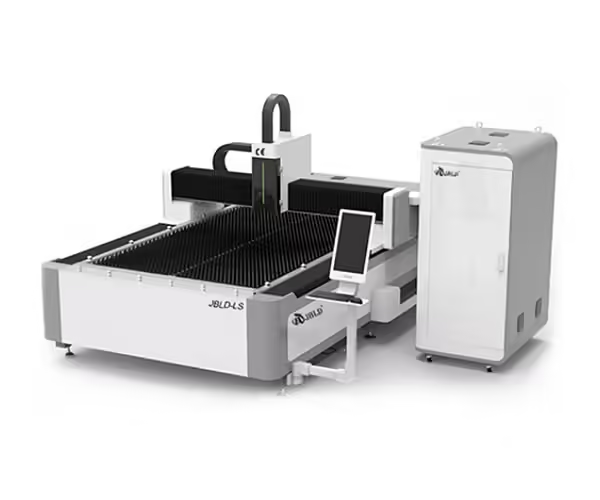
What is a Steel Plate Laser Cutting Machine?
A steel plate laser cutting machine is a computer-controlled device that uses a concentrated laser beam to cut or engrave steel and other materials. Unlike conventional mechanical methods, it delivers higher accuracy, smoother edges, and faster processing. These machines are essential in modern manufacturing environments where precision and efficiency are critical.
How Does Laser Cutting Work?
The machine generates a high-energy laser beam focused on the material surface. The laser energy melts, vaporizes, or burns the steel, while an assist gas such as oxygen, nitrogen, or air removes the molten material from the cutting path. This method allows for high-precision cuts with minimal heat-affected zones.
Types of Lasers Used
- Fiber Laser: Highly efficient for metal cutting, provides fast speeds, low maintenance, and excellent edge quality.
- CO2 Laser: Versatile for cutting non-metals and thin metals; slightly slower but effective for decorative applications.
- YAG Laser: Specialized use for certain industrial applications, less common in large-scale steel cutting.
Key Features and Technical Parameters

Cutting Range and Accuracy
Steel plate laser cutting machines support large-format plates, with lengths up to 24 meters and widths up to 2.5 meters. Cutting precision typically reaches ±0.05mm, with repeatability around ±0.03mm, ensuring consistent quality for both small and large projects.
Power Options and Gas Assistance
Laser power ranges from 1.5KW to 20KW, depending on the material type and thickness. Assistance gases such as air, oxygen, or nitrogen enhance cutting efficiency and edge quality.
Structural Configurations
Machines come in different structural types to suit varying production requirements: fixed bed for heavy-duty plates, moving bed for flexible handling, and gantry style for long plate cutting with high precision.
Comparative Parameters Table
| Feature | Fiber Laser Cutting Machine | CO2 Laser Cutting Machine | YAG Laser Cutting Machine |
|---|---|---|---|
| Cutting Thickness | Up to 25mm (steel) | Up to 15mm (steel) | Up to 10mm (metal) |
| Speed | High | Moderate | Low to Moderate |
| Material Compatibility | Metals | Metals + Non-Metals | Limited Metals |
| Maintenance | Low | Medium | Medium-High |
| Precision | ±0.03-0.05mm | ±0.05-0.08mm | ±0.05-0.07mm |
| Ideal Applications | Automotive, Heavy Industry | Advertising, Decorative Panels | Specialized Industrial Parts |
This table helps manufacturers compare laser types at a glance and choose the right machine for their material and production needs.
Advantages of Steel Plate Laser Cutting Machines

High Precision and Productivity
Steel plate laser cutting machines can produce micron-level precision cuts with smooth edges. They are especially suitable for complex geometries, repeated production, and high-volume orders.
Broad Material Compatibility and Lower Costs
These machines can handle both metal and non-metal sheets without the need for changing molds. They reduce material waste and lower long-term operational costs, making them cost-effective for small-batch or customized production.
Intelligent Automation and Eco-Friendly Production
Modern machines integrate digital design tools and automated workflows. Cutting without physical contact reduces contamination and aligns with environmentally conscious manufacturing practices.
Safety, Reliability, and Ease of Maintenance
Safety features such as protective enclosures, emergency stop functions, and controlled laser paths ensure operator safety. Routine maintenance is straightforward, increasing machine longevity and minimizing downtime.
Real-World Applications and Case Studies
Automotive Manufacturing
A mid-sized automotive parts manufacturer implemented a fiber laser cutting machine to produce chassis components. The result was a 40% increase in production speed and a significant reduction in rework due to precise cuts and minimal heat-affected zones.
Industrial and Machinery Fabrication
A metal enclosure manufacturer upgraded to a gantry-style laser cutting machine. The improved bed size and precision allowed them to produce larger enclosures with better edge quality, enabling them to secure new industrial clients.
Advertising and Decorative Industries
A signage company switched from CO2 laser cutters to fiber laser machines. They were able to cut intricate metal letters and decorative panels faster while maintaining high edge quality, resulting in increased output and client satisfaction.
Aerospace and Electronics
Aircraft component manufacturers rely on high-precision laser cutting to produce structural steel plates. The controlled heat-affected zones prevent deformation, ensuring safety and performance compliance.
CO2 Laser Cutting Machine — Versatility for Metal and Non-Metal Applications

What is a CO2 Laser Cutting Machine
A CO2 Laser Cutting Machine uses a gas mixture primarily composed of carbon dioxide, nitrogen, and helium to generate laser energy. This technology has been widely adopted in industries such as advertising, woodworking, and light metal processing due to its stable performance and ability to cut both metallic and non-metallic materials.
Core Features of CO2 Laser Cutting Machines
Unlike the Steel Plate Laser Cutting Machine, which focuses mainly on heavy-duty steel processing, CO2 laser systems offer a more versatile range of material compatibility. They are especially suitable for cutting thinner plates, acrylic, wood, and other non-metal sheets. The cutting surface is smooth and precise, ideal for decorative and artistic manufacturing applications.
Working Principle
The CO2 laser beam is generated within a sealed gas-filled resonator and guided by mirrors toward the cutting head. The focused beam heats and vaporizes the target area, while assist gases like oxygen or air remove molten residues, leaving clean and polished edges.
Advantages of CO2 Laser Cutting Machines
1. Broad Material Range: CO2 lasers can efficiently cut non-metals such as wood, leather, acrylic, and plastics, in addition to light metals.
2. Excellent Edge Quality: The smooth, burr-free edges produced make CO2 lasers suitable for decorative applications and signage production.
3. Cost-Effective for Non-Metal Industries: For companies dealing with mixed materials or lower cutting thickness, CO2 laser systems offer an economical and reliable solution.
CO2 vs Steel Plate Laser Cutting Machine — A Comparative Overview
| Feature | CO2 Laser Cutting Machine | Steel Plate Laser Cutting Machine (Fiber) |
|---|---|---|
| Laser Source | Gas Laser (CO2, N2, He) | Solid-State Fiber Laser |
| Material Capability | Non-Metal + Thin Metal | Medium to Thick Metals |
| Cutting Speed | Moderate | Very High |
| Maintenance | Moderate | Low |
| Edge Finish | Smooth, Polished | Sharp, Metallic |
| Ideal Applications | Advertising, Decorative Panels, Light Fabrication | Automotive, Heavy Steel Structures, Machinery Components |
When to Choose a CO2 Laser Cutting Machine
A CO2 Laser Cutting Machine is ideal if your business primarily handles non-metallic materials or light metal sheets. It’s particularly beneficial for manufacturers in the advertising, decorative arts, or furniture industries where design flexibility and edge aesthetics are key priorities.
Integration with Modern Production
Modern CO2 systems now integrate with CNC control software, automatic focusing systems, and digital design tools, improving precision and workflow automation. When combined with a Steel Plate Laser Cutting Machine, manufacturers can achieve full coverage from lightweight materials to heavy steel plates within a single production line.
Example Use Case — Advertising Sign Fabrication
A signage manufacturer producing acrylic and stainless-steel letters upgraded to a CO2 laser cutting system. They achieved smoother cuts on acrylic and plastic materials while maintaining clean metallic edges using a combination of CO2 and fiber cutting solutions. This integration reduced production time by 30% and enhanced the visual quality of finished signs.
Choosing the Right Steel Plate Laser Cutting Machine
Consider Laser Type and Material
Fiber lasers are ideal for metal-heavy industries requiring high-speed, high-precision cutting. CO2 lasers suit decorative and mixed-material applications. YAG lasers are reserved for specialized industrial needs.
Select Structural Configuration
Fixed bed machines provide stability for heavy sheets. Moving bed configurations are flexible for varied sheet sizes. Gantry machines allow extended cutting lengths and high precision for large projects.
Evaluate Production Volume and Accuracy Needs
Assess daily production volume, tolerance requirements, and material thickness to determine the optimal combination of laser type, power, and structure.
Factor in Costs and Support Services
Long-term operational costs, maintenance requirements, and after-sales support, such as warranties and technical assistance, should be considered for maximum ROI.
Operating and Maintaining Your Machine

Basic Operation Guidelines
Secure the plate, configure the laser parameters based on material and thickness, and monitor the cutting process to ensure accuracy and safety.
Maintenance Best Practices
Regular lens and mirror cleaning, gas line inspections, and software calibration are essential to maintain cutting quality and machine longevity.
Troubleshooting Common Issues
Uneven cuts may indicate alignment problems. Slower cutting may be caused by worn optics or improper power settings. Following manufacturer guidelines ensures proper adjustments and optimal performance.
Conclusion
Steel plate laser cutting machines offer high-precision, efficient, and flexible solutions for a wide range of manufacturing industries. Understanding the types, features, applications, and real-world performance helps manufacturers choose the right machine for their production needs. Incorporating automated workflows, digital design, and eco-friendly processes ensures optimal efficiency and reduced waste.
FAQ
How thick of a steel plate can these machines cut?
Most machines can cut steel plates up to 20–25mm, depending on laser power. High-power fiber lasers can handle even thicker materials.
What is the difference between fiber lasers and CO2 lasers?
Fiber lasers are fast, efficient, and best for metal cutting. CO2 lasers are versatile, handling non-metals and decorative panels, but they are slower.
Will laser cutting steel cause deformation?
With proper fixturing and optimized parameters, heat-affected zones are minimized, preventing warping or deformation.
How can I maintain my laser cutting machine efficiently?
Routine lens cleaning, calibration, gas checks, and software updates are essential for consistent performance.
Are laser cutting machines affordable for small manufacturers?
Yes, entry-level models with lower power are available, supporting small-batch and customizable production without excessive upfront costs.
Can small manufacturers afford a Steel Plate Laser Cutting Machine?
Yes, there are entry-level machines suitable for small-batch and customized production, offering good precision without excessive upfront cost.
What materials can a Steel Plate Laser Cutting Machine handle?
Most machines can process a wide range of materials, including carbon steel, stainless steel, aluminum, and non-metal sheets like acrylic or plastic, making them versatile for different applications.
How does a Steel Plate Laser Cutting Machine compare to traditional CNC cutting methods?
Laser cutting provides higher precision, smoother edges, and faster production speed compared to mechanical methods. It also reduces material waste and requires less manual labor.
Is it possible to integrate a Steel Plate Laser Cutting Machine into an automated production line?
Yes, modern machines support digital design files and automated handling systems, allowing integration with robotic arms and CNC workflows for fully automated production.
How long does a typical Steel Plate Laser Cutting Machine last?
With proper maintenance and regular servicing, most machines can reliably operate for 10–15 years, especially with high-quality components and manufacturer support.
Need specific guidance for choosing the right machine? Contact our engineers today to discuss your requirements and receive a customized solution.
If you enjoyed this article on Jinbolida’s smart manufacturing and digital factory expertise, follow us for more insights and updates:
- 📘 Facebook: Stay tuned for our latest smart production line projects → Facebook
- 📱 WhatsApp: Contact us anytime for custom production solutions → Chat Now
- ▶️ YouTube: Watch our automated line demos and real-world applications → YouTube
Let’s keep innovating and shaping the future of smart manufacturing — together! 🚀
 English
  Arabic
  Russian
  Spanish
  French