
Steel Sheet Processing Equipment Cost
Introduction
In today’s highly competitive manufacturing landscape, cost control is no longer just a financial function—it is a strategic advantage. As industries such as construction, automotive, renewable energy, and infrastructure continue to scale, demand for efficient and precise steel sheet processing solutions is rising sharply. However, many buyers focus only on upfront pricing, overlooking hidden costs related to energy consumption, maintenance, labor, and long-term productivity.
In 2026, the most successful manufacturers are those who adopt a data-driven approach to evaluating steel sheet processing equipment cost, combining performance metrics, lifecycle analysis, and smart factory integration. This guide provides a comprehensive and practical framework to help decision-makers understand real costs, compare technologies, and maximize return on investment.
Key Takeaways
- Steel sheet processing equipment cost includes purchase, operation, maintenance, and lifecycle expenses
- Automation and digital factory integration significantly reduce long-term costs
- High-precision machines improve material utilization and reduce waste
- Total cost of ownership (TCO) is the most important evaluation metric
- Equipment selection must align with production scale and application scenarios
- Advanced manufacturers offer higher ROI through innovation and global support
Table of Contents
What Is Steel Sheet Processing Equipment Cost?

Steel sheet processing equipment cost refers to the total financial investment required to acquire and operate machinery used in sheet metal fabrication processes such as cutting, forming, bending, and profiling.
Definition of Steel Sheet Processing Cost
Steel sheet processing cost includes direct costs like equipment purchase and indirect costs such as installation, training, and downtime.
It also incorporates ongoing expenses like energy usage, consumables, and maintenance.
Why Cost Analysis Matters in Steel Sheet Processing
Accurate cost evaluation helps companies avoid underestimating long-term expenses.
It ensures better budgeting, improved efficiency, and stronger competitiveness in global markets.
Global Market Insights for Steel Sheet Processing Equipment
Market Size and Growth
According to recent industrial research, the global sheet metal processing equipment market is expected to exceed $300 billion by 2030, with a CAGR of approximately 6%.
Steel sheet processing equipment represents a major segment due to its widespread industrial use.
Industry Demand Drivers
- Rapid growth in renewable energy (solar mounting systems)
- Expansion of automotive lightweight structures
- Increasing demand for prefabricated construction materials
Regional Trends
- Asia-Pacific dominates manufacturing capacity and exports
- Europe leads in high-precision and automated systems
- North America focuses on digital transformation and smart factories
Core Types of Steel Sheet Processing Equipment
Roll Forming Machines in Steel Sheet Processing
Roll forming machines gradually shape metal coils into continuous profiles using multiple rollers.
They are ideal for high-speed production with consistent quality and minimal material waste.
Laser Cutting Machines in Steel Sheet Processing
Laser cutting machines use high-energy beams for precision cutting and engraving.
They are suitable for complex geometries and high-accuracy applications.
Multi-Profile Forming Machines
Advanced machines can produce multiple shapes such as C, U, Z, W, and L profiles.
They provide flexibility and reduce the need for multiple equipment investments.
Detailed Cost Breakdown of Steel Sheet Processing Equipment
Initial Investment Cost
The purchase price typically ranges from $50,000 to $600,000+, depending on automation level and specifications.
High-end CNC systems with digital integration can exceed $1 million.
Installation and Setup Cost
Installation includes foundation work, electrical systems, and calibration.
This can account for 5–15% of total equipment cost.
Operating Cost
Energy consumption varies by machine type:
- Roll forming: relatively low energy usage
- Laser cutting: 10–40 kW/hour
Labor costs also depend on automation level.
Maintenance Cost
Maintenance typically represents 20–40% of lifecycle cost.
Predictive maintenance systems can reduce downtime by 20–30%.
Equipment Cost Comparison in Steel Sheet Processing
| Equipment Type | Cost Range (USD) | Precision | Production Speed | Best Application |
|---|---|---|---|---|
| Roll Forming Machine | 80,000–300,000 | ±0.5mm | Up to 55 m/min | Continuous profile production |
| Laser Cutting Machine | 100,000–600,000+ | ±0.05mm | High-speed CNC | Complex precision cutting |
| Multi-Profile Machine | 120,000–400,000 | ±0.1mm | ≤45 m/min | Flexible structural components |
Case-Based Cost Analysis in Steel Sheet Processing
L-Shaped Roll Forming Machine
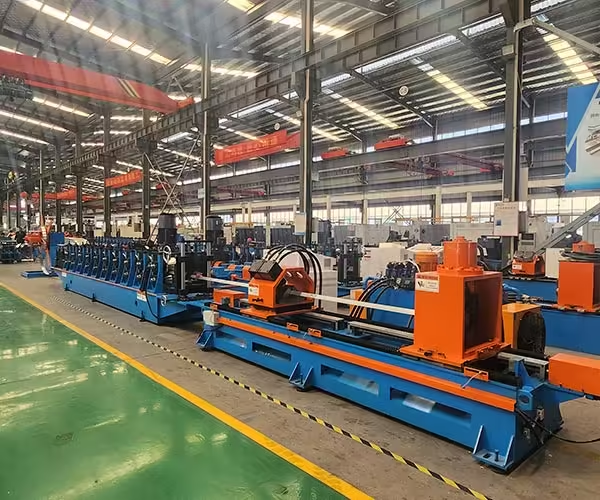
Processes materials from 0.5mm to 6mm thickness with speeds up to 55 m/min.
Its high efficiency and low labor requirements significantly reduce per-unit cost.
W-Shaped and Z-Shaped Machines


Support multiple profiles with accuracy up to ±0.1mm and energy consumption around 40KW.
Material utilization can reach 98%, reducing waste and improving profitability.
Steel Plate Laser Cutting Machine

Offers precision up to ±0.05mm with repeatability of ±0.03mm.
Despite higher initial cost, it eliminates tooling expenses and enables flexible production.
Steel Sheet Processing Equipment Cost vs Performance
High-End Equipment Benefits
High-end machines provide superior precision, automation, and durability.
They reduce operational risks and improve long-term ROI.
Low-End Equipment Limitations
Lower-cost machines often lack automation and efficiency.
They may lead to higher labor and maintenance costs over time.
Technology Trends Impacting Steel Sheet Processing Cost
Automation in Steel Sheet Processing
Automated systems reduce labor dependency and increase throughput.
They enable consistent quality and faster production cycles.
Smart Factory Integration
Modern equipment integrates with digital factory systems for real-time monitoring.
Cloud-based data tracking improves decision-making and efficiency.
Energy-Efficient Design
Advanced machines are designed to minimize energy consumption.
This reduces operational costs and supports sustainability goals.
Industry Standards and Compliance

Key Standards
- ISO 9001 for quality management
- ISO 14001 for environmental management
- CE certification for equipment safety
Importance of Compliance
Compliance ensures product quality, safety, and global market access.
It also reduces legal risks and enhances brand credibility.
Supplier Capability and Value Evaluation
Importance of Advanced Manufacturing
Leading manufacturers invest heavily in R&D and digital solutions.
They provide high-precision equipment and reliable performance.
Example of High-Tech Manufacturing Strength
Some companies deliver nanometer-level precision and operate global research centers.
With thousands of employees and exports to over 120 countries, they ensure consistent quality and innovation.
Steel Sheet Processing Equipment Buyer Checklist
- Define production requirements and material specifications
- Evaluate machine precision and speed
- Analyze total cost of ownership (TCO)
- Check energy consumption and efficiency
- Assess supplier reputation and after-sales service
- Plan for scalability and future upgrades
Cost Optimization Strategies in Steel Sheet Processing
Improve Material Utilization
Precision equipment can achieve up to 98% utilization, reducing waste.
This directly lowers raw material costs.
Reduce Labor Costs
Automation minimizes manual intervention.
Fewer operators are needed, improving cost efficiency.
Enhance Energy Efficiency
Energy-efficient machines reduce electricity consumption.
Monitoring systems help identify inefficiencies.
Steel Sheet Processing Equipment vs Traditional Methods
| Factor | Modern Equipment | Traditional Methods |
|---|---|---|
| Precision | ±0.05–0.1mm | Moderate |
| Efficiency | High | Low |
| Labor Requirement | Low | High |
| Cost Efficiency | Better long-term | Higher long-term cost |
Real-World Case Studies
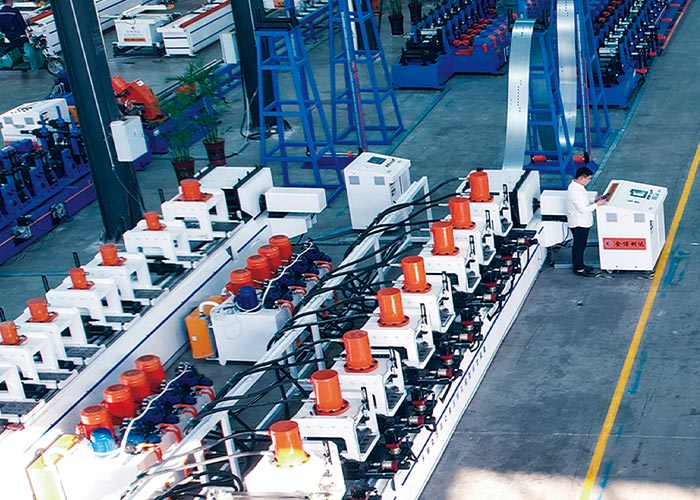
Construction Industry Application
A steel structure manufacturer adopted automated roll forming machines.
Production efficiency increased by 25%, while labor costs decreased by 30%.
Automotive Industry Application
A parts supplier implemented laser cutting systems.
Precision improved significantly, reducing defect rates by 40%.
Solar Energy Industry Application
A solar mounting manufacturer used multi-profile forming machines.
Material waste was reduced by 20%, improving profitability.
White Paper Insights and Industry Data
Recent industry white papers highlight:
- Automation can increase productivity by 15–30%
- Digital monitoring reduces maintenance costs by 10–20%
- Energy-efficient equipment lowers operating costs by 15%
These findings emphasize the importance of investing in advanced steel sheet processing equipment.
Emerging Innovations in Steel Sheet Processing
AI-Driven Optimization
Artificial intelligence improves production efficiency and predictive maintenance.
It enables smarter decision-making and cost control.
Cloud-Based Monitoring
Cloud systems track production data and energy consumption in real time.
This enhances transparency and operational efficiency.
Modular Equipment Design
Modular systems allow easy upgrades and maintenance.
They reduce downtime and improve flexibility.
FAQ
How much does steel sheet processing equipment cost?
Costs typically range from $50,000 to over $600,000, depending on machine type and automation level.
Advanced systems may exceed this range.
What factors influence steel sheet processing cost?
Machine type, precision, automation level, and energy consumption are key factors.
Supplier quality and after-sales service also impact cost.
Is expensive equipment always better?
Not always, but high-end equipment often provides better long-term ROI.
It improves efficiency, precision, and reliability.
How can I reduce steel sheet processing costs?
Invest in energy-efficient machines, improve material utilization, and adopt automation.
Choosing reliable suppliers also reduces long-term expenses.
Which equipment is best for my business?
It depends on production scale and application needs.
Roll forming suits mass production, while laser cutting is ideal for precision work.
Conclusion
Steel sheet processing equipment cost is a multifaceted factor that directly impacts manufacturing efficiency, profitability, and competitiveness. In 2026, businesses must go beyond initial pricing and focus on total cost of ownership, performance, and technological capabilities.
By leveraging advanced equipment, automation, and data-driven strategies, manufacturers can significantly reduce costs while improving quality and output. Investing in the right steel sheet processing solutions is not just a cost decision—it is a strategic move toward sustainable growth and long-term success.
If you enjoyed this article on Jinbolida’s smart manufacturing and digital factory expertise, follow us for more insights and updates:
- 📘 Facebook: Stay tuned for our latest smart production line projects → Facebook
- 📱 WhatsApp: Contact us anytime for custom production solutions → Chat Now
- ▶️ YouTube: Watch our automated line demos and real-world applications → YouTube
Let’s keep innovating and shaping the future of smart manufacturing — together!
 English
  Arabic
  Russian
  Spanish
  French