
Top 4 Metal Punching Machines in 2026
Table of Contents
Introduction
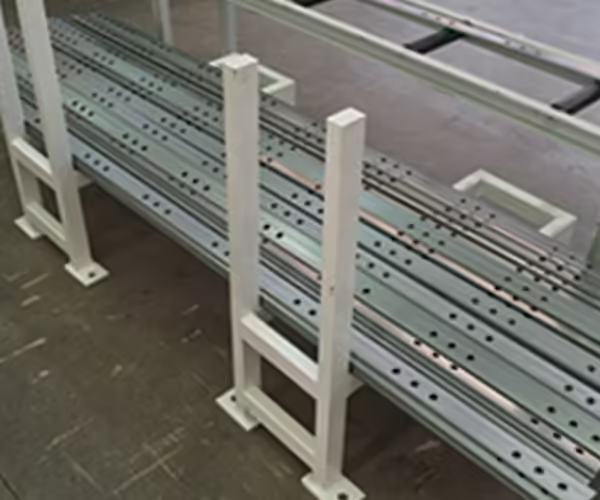
In 2026, the metal fabrication industry is evolving rapidly. From solar panel brackets to automotive frames, the demand for precision and efficiency in punching operations has never been higher. Selecting the right metal punching machine ensures faster production, minimal material waste, and consistent product quality. In this guide, we explore the top 4 machines, their specifications, applications, and which tasks they excel at, helping manufacturers make informed decisions.
Key Takeaways:
- Overview of top-performing metal punching machines in 2026
- Practical applications for each machine
- Comparison table for speed, precision, and productivity
- Conceptual understanding of punching technologies
- Tips for selecting the right machine based on production needs
- FAQ section addressing common questions from buyers
Understanding Metal Punching Machines
What is a Metal Punching Machine?
A metal punching machine is industrial equipment designed to create holes, slots, or shapes in metal sheets or profiles. Unlike manual drilling, punching machines deliver consistent accuracy, higher speed, and reduced material waste. They are widely used across industries such as construction, solar energy, automotive, and electronics.
Types of Metal Punching Machines and Their Typical Applications
- Hydraulic Punching Machines: High-pressure hydraulic systems for thick metals; ideal for photovoltaic brackets, structural components, and heavy-duty frames.
- Mechanical Punching Machines: High-speed repetitive punching; suitable for mass production of thin metal parts.
- Servo-Driven Punching Machines: Programmable and precise; used for custom profiles, multi-hole sequences, and automated lines.
Top 4 Metal Punching Machines in 2026 and Their Applications
Three-Station Hydraulic Punching Machine

Overview:
This machine is optimized for producing photovoltaic brackets, specifically C-shaped and U-shaped steel. It delivers high precision and speed for small- to medium-scale production.
Applications:
- Solar panel mounting brackets: Its three-station design ensures accurate hole placement for bracket assembly.
- Light construction frameworks: Suitable for medium-duty profiles where precision and speed are required.
Expert Tip:
“If your primary production involves photovoltaic brackets or C/U steel profiles under 6 meters, a three-station hydraulic punching machine offers the best combination of cost, precision, and efficiency.” – Dr. Li Wen, Shanghai Industrial Research Institute
Six-Station Hydraulic Punching Machine
Overview:
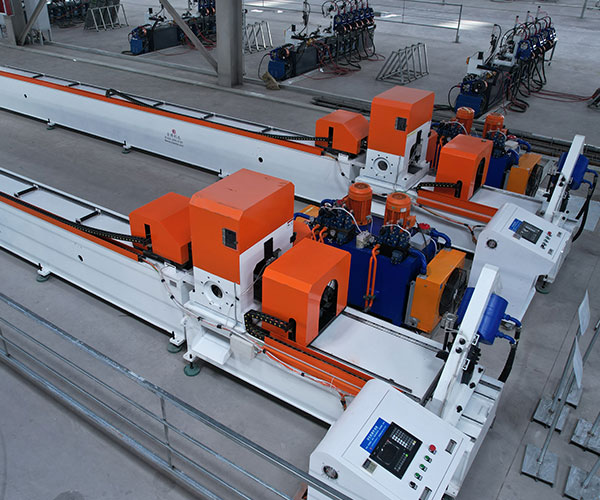
Capable of punching three sides of C-shaped steel up to 8.5 meters with two hole types per side, this machine balances speed, accuracy, and multi-hole functionality.
Applications:
- Solar bracket assembly lines: Multi-hole punching in a single pass reduces setup time.
- Medium-scale steel frame production: Handles longer profiles efficiently.
- Customized industrial components: Two different hole types per side allow flexibility for various designs.
Specifications Table:
| Parameter | Details |
|---|---|
| Processing Efficiency | 12 – 18 meters/minute |
| Material Range | Q235, Q550 steel |
| Max Feeding Speed | 120 meters/minute |
| Power | 14 kW |
| Punching Accuracy | ±0.5 mm |
| Key Features | Taiwan AirTAC cylinders, Omron sensors |
| Control | CNC human-machine interface, USB/Manual |
Why it fits these applications:
The six-station machine’s ability to punch multiple sides and hole types makes it ideal for longer C-shaped steel profiles in solar and industrial applications, reducing manual handling and improving production speed.
Nine-Station Punch Machine
Overview:
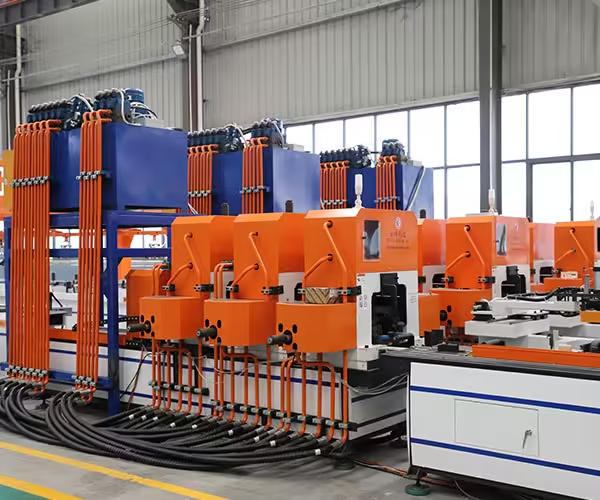
Designed for high-volume punching, this machine handles three sides of C-shaped steel with three hole types per side, supporting production lengths up to 8.5 meters.
Applications:
- Mass production of metal frames: Automotive and construction components benefit from automated, multi-hole sequences.
- High-precision industrial parts: Three hole types per side allow for complex part designs.
- Automated assembly integration: CNC programming ensures minimal manual intervention.
Expert Insight:
“Nine-station hydraulic machines are perfect for factories producing long steel profiles with multiple hole patterns. They save time and ensure repeatable accuracy for every piece.”– Zhang Hao, Beijing Automation Solutions
Heavy-Duty Stamping Presses

Overview:
Heavy-duty stamping presses use mechanical or hydraulic force with molds to perform punching, bending, and forming operations on metal sheets. They are widely used in automotive, electronics, and hardware industries.
Applications:
- Automotive body panels: Ultra-high precision allows large-scale production with minimal errors.
- Electronics chassis and frames: Punching, bending, and forming in a single operation.
- High-volume manufacturing: One machine can perform multiple forming operations efficiently.
Specifications Table:
| Parameter | Details |
|---|---|
| Material Types | Cold/Hot Rolled Steel, Stainless, Aluminum |
| Pressure Range | 63 – 800 tons |
| Production Speed | ≤35 meters/minute |
| Precision | ±0.01 mm |
| Power | 5 – 100 kW |
| Max Speed | 80 m/min |
| Chuck Rotation | 100 r/min |
| Footprint | Varies by model |
Why it fits these applications:
For industries requiring mass production with ultra-high precision and multiple forming steps, heavy-duty stamping presses outperform other machines, especially in automotive and electronics manufacturing.
Conceptual Insights for Application Selection
Punching vs. Stamping
Punching removes material to create holes, while stamping may include bending and forming. Choosing between them depends on whether your production requires simple perforation or complex component shaping.
Hydraulic vs. Mechanical Punching
- Hydraulic: Ideal for thick metals and precision-intensive applications like solar brackets and structural profiles.
- Mechanical: Best for high-speed, thin sheet production.
Feeding Mechanisms for Applications
- Continuous feeding: Suitable for long profiles like C-shaped steel in solar bracket production.
- Segmented feeding: Offers precision for complex, multi-hole designs in automotive or industrial components.
Automation Considerations
Machines with CNC and HMI allow programmable sequences, reducing errors and enabling integration into automated assembly lines, which is essential for high-volume manufacturers.
Comparison Table: Top Metal Punching Machines by Application
| Feature / Model | Three-Station | Six-Station | Nine-Station | Heavy-Duty Press |
|---|---|---|---|---|
| Best Application | Solar brackets | Long C-steel profiles | Mass-production industrial parts | Automotive, electronics, high-volume manufacturing |
| Max Sheet Length | Medium | 8.5 m | 8.5 m | Variable |
| Hole Types | 1 | 2 | 3 | Multiple |
| Processing Speed | Medium | High | High | Very High |
| Precision | ±0.5 mm | ±0.5 mm | ±0.5 mm | ±0.01 mm |
| Automation Level | Semi-auto | Full-auto | Full-auto | Full-auto |
Conclusion
Understanding your metal punching machine needs requires evaluating production volume, material type, precision, and automation. For solar panel brackets, the three- or six-station hydraulic machines provide precision and speed. For mass production of industrial or automotive components, nine-station machines or heavy-duty stamping presses offer high efficiency and ultra-precise output.
By matching your applications to the appropriate machine type, manufacturers can maximize productivity, reduce waste, and ensure consistent quality in every component.
FAQ
Which machine is best for solar bracket production?
Three- or six-station hydraulic machines are ideal due to their precision, speed, and ability to handle C- and U-shaped steel profiles.
Can I punch multiple hole types at once?
Yes, six- and nine-station machines allow multi-hole punching in a single pass, improving efficiency for complex parts.
What maintenance is required?
Routine lubrication, sensor calibration, hydraulic checks, and general inspection ensure long-term performance.
Are these machines energy-efficient?
Modern hydraulic and servo-driven machines are optimized for low energy consumption and minimal material waste.
Can heavy-duty presses replace multi-station machines?
For mass production of large or complex parts, heavy-duty presses are suitable. However, for small- to medium-scale or multi-hole profiles, multi-station hydraulic machines are more practical.
If you enjoyed this article on Jinbolida’s smart manufacturing and digital factory expertise, follow us for more insights and updates:
- 📘 Facebook: Stay tuned for our latest smart production line projects → Facebook
- 📱 WhatsApp: Contact us anytime for custom production solutions → Chat Now
- ▶️ YouTube: Watch our automated line demos and real-world applications → YouTube
Let’s keep innovating and shaping the future of smart manufacturing — together! 🚀
 English
  Arabic
  Russian
  Spanish
  French