
Top Features of Solar Photovoltaic Rack Punching Equipment
Key takeaways you’ll get from this article:
- Understand the core functions and features of solar photovoltaic rack punching equipment
- Learn how to choose the right punching machine for your solar rack production line
- Compare three-station, six-station, and nine-station punching machines
- Explore technical data and real-world performance metrics
- Get a clear cost-benefit perspective through comparison tables
- See FAQ answers written in natural, search-friendly language
- Learn how automation, quality control, and energy efficiency influence ROI
- Understand the industry standards and safety regulations affecting solar rack production
Table of Contents
Introduction
In the solar energy industry, production efficiency and product quality are no longer optional—they’re decisive factors that determine profit margins and competitiveness. Solar photovoltaic racks require precise holes, consistent shapes, and stable structural strength, and all of this depends on the performance of the punching equipment.
Solar photovoltaic rack punching equipment is not just a machine; it’s the core production center for solar bracket manufacturing. A single mistake in punching accuracy can lead to misaligned panels, unstable installations, and even safety risks.
What Is Solar Photovoltaic Rack Punching Equipment?
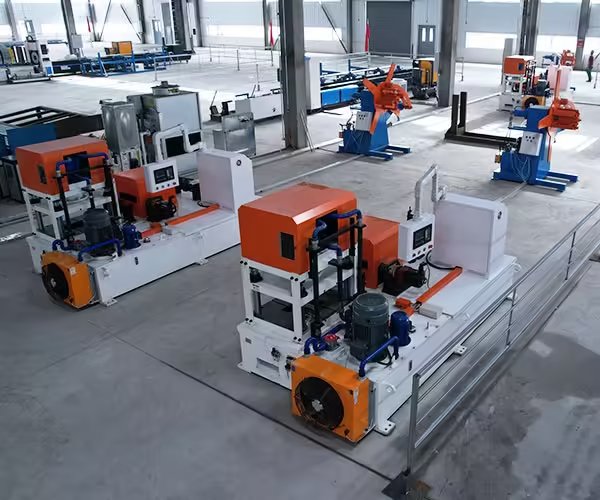
Concept: Punching Equipment Defined
Punching equipment is a type of metal processing machine designed to punch holes, cut, and form steel components used in solar mounting systems.
Concept: Why It Is Crucial in Solar Rack Production
Solar racks are usually made from C-shaped or U-shaped steel. High precision punching ensures the structure can support solar panels safely in different environments.
Core Functional Features of Solar Photovoltaic Rack Punching Equipment
Punching Accuracy and Stability
Punching positioning accuracy is one of the most critical metrics. Modern punching equipment can achieve ±0.5mm accuracy, ensuring consistent hole placement and structural stability.
Why ±0.5mm Matters
- Reduces installation errors
- Improves alignment for panel assembly
- Ensures long-term structural reliability
High Processing Speed
Processing speed determines the production capacity. For large-scale rack manufacturing, speed is essential to meet project timelines.
Speed Metrics
- Processing efficiency: 12–18 meters/minute
- Maximum feeding speed: 120 meters/minute
- Punching speed: 70–90 times/minute
These metrics indicate that modern punching equipment can handle mass production without sacrificing precision.
High Strength and Durability
High-strength materials and hardened jaws ensure the machine performs consistently even under heavy use.
Typical Construction Features
- Heat-treated jaws
- Cast gantry structure
- High-quality hydraulic systems
- Brand-name guide rails (CSK)
Why Precision and Consistency Are Non-Negotiable
Concept: Precision Defines Quality
Punching accuracy affects the entire solar rack assembly line. If holes are misaligned, the rack becomes unstable and increases the risk of structural failure.
Concept: Consistency Defines Efficiency
In large-scale production, consistency means fewer errors, less scrap, and less downtime.
Industry Data on Quality Standards
Most solar rack manufacturers target ≥98% assembly accuracy for panel alignment, and a precision deviation of ≤0.5mm is considered world-class in production.
Core Components of Solar Photovoltaic Rack Punching Equipment
Hydraulic Punching Unit
Hydraulic systems provide stable pressure and force, which is essential for consistent punching and high precision.
Advantages of Hydraulic Systems
- Stable pressure output
- Lower vibration
- Better punching quality
- Longer service life
Servo Feeding Unit
Servo motors control feeding accuracy and speed, ensuring that each punch is precisely positioned.
Why Servo Feeding Is Important
- Improves punching consistency
- Supports high-speed production
- Enables automation
Control System and Human-Machine Interface
Modern equipment uses integrated control systems with USB programming and CNC human-machine interfaces for easy operation.
What This Means for Buyers
- Easy operation for production staff
- Simple adjustment of punching programs
- Faster changeovers between product models
Comparing Three-Station, Six-Station, and Nine-Station Punching Machines


Comparison Concept: Why Station Count Matters
The number of stations affects production speed, flexibility, and the complexity of parts that can be produced.
Comparison Table: Three vs Six vs Nine Station Machines
| Feature | Three-Station | Six-Station | Nine-Station |
|---|---|---|---|
| Best for | Small-scale or basic models | Medium production | High-volume, complex models |
| Processing efficiency | 12–18 m/min | 12–18 m/min | 12–18 m/min |
| Punching accuracy | ±0.5mm | ±0.5mm | ±0.5mm |
| Max feeding speed | 120 m/min | 120 m/min | 120 m/min |
| Complexity | Low | Medium | High |
| Cost | Lower | Medium | Higher |
| Best application | Simple C/U steel | Standard rack production | Large-scale industrial production |
Production Cost Breakdown: How Punching Machines Affect ROI
Concept: Production Costs Are Not Only Machine Price
Many buyers focus only on the equipment price, but the real cost includes:
- labor
- maintenance
- downtime
- scrap rate
- energy consumption
Cost Reduction Benefits of High-Quality Punching Equipment
- Reduced rework costs
- Lower scrap rates
- Higher throughput
- Lower energy consumption per unit
ROI Example
If a factory produces 30,000 meters of solar rack per month, using a high-precision punching machine can reduce scrap rate from 2.5% to 0.8%, saving thousands of dollars monthly in raw materials alone.
Automation and Integration: The Next Step in Solar Rack Production
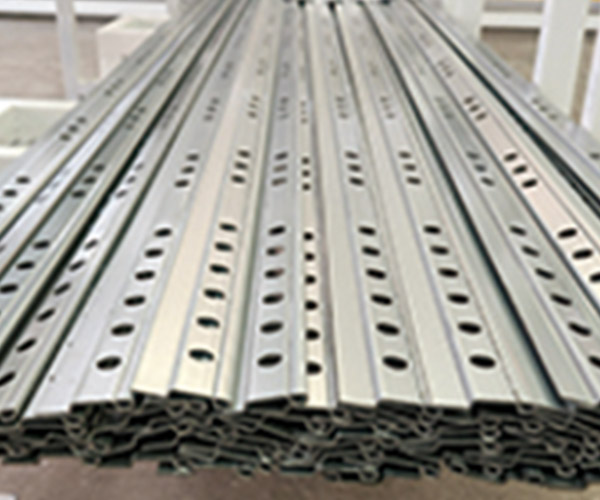
Concept: Automation Improves Production Consistency
Automation is no longer a luxury—it’s a necessity for large-scale production. Integrated systems can run 24/7 with minimal supervision.
What Automation Means for Solar Rack Manufacturing
- Less manual labor
- Higher production uptime
- Better quality control
- Faster delivery times
Automation Components
- Automatic feeding system
- Automatic punching pressure adjustment
- Integrated quality inspection
- Remote monitoring and fault diagnosis
Energy Efficiency and Sustainability in Solar Rack Production
Concept: Energy Cost is a Major Production Factor
In large factories, energy consumption can account for 15–25% of total manufacturing costs.
Energy Efficiency Features
- High-efficiency hydraulic systems
- Low-energy servo motors
- Optimized punching cycles
- Reduced idle time
Sustainability Benefits
- Lower carbon footprint
- Reduced waste
- Higher overall factory efficiency
Quality Control and Inspection Standards
Concept: Quality Control Should Be Built into Production
High-end Solar Photovoltaic Rack Punching Equipment supports real-time inspection and feedback, which is crucial for long-term stability and consistent product quality. Quality control is not only a final inspection step—it must be embedded into the production process.
Industry experts often say: “The earlier you detect deviations, the cheaper it is to fix them.”
In solar rack manufacturing, especially at large volumes, even tiny deviations can accumulate and cause major structural issues or installation failures.
Common Inspection Methods
1. Laser positioning measurement
Used to ensure hole accuracy, hole pitch consistency, and dimensional precision of the profile.
2. Automatic detection of hole alignment
Automatically detects misalignment or out-of-tolerance holes and triggers warnings or stops the machine.
3. Real-time correction of feeding errors
Closed-loop control systems can automatically compensate for feeding errors to maintain consistent positioning accuracy.
4. Data logging for traceability
Recording production data, downtime causes, and deviation values creates a complete traceability chain for quality assurance.
Why This Matters for Buyers
In the solar industry, warranty requirements and long-term reliability are essential. Poor punching quality can lead to:
- Incorrect hole positions → installation misalignment, uneven load distribution, and structural failure
- Deformation or burrs → problems in welding, assembly, and corrosion resistance
- Project delays and rework → customer complaints and compensation risks
- Material waste and rework costs → reduced profit margins
Therefore, the quality control capabilities of Solar Photovoltaic Rack Punching Equipment directly impact project delivery, reliability, and customer satisfaction.
Safety Standards and Regulations
Concept: Safety Is a Compliance Requirement
Solar rack manufacturing must meet workplace safety standards, including:
- Machine safety protection (guards, interlocks, safety doors)
- Emergency stop systems
- Safe operating zones and warning systems
- Electrical safety and grounding
These safety requirements are not optional—they are mandatory for factory compliance.
Why Safety Matters
A safe production environment provides multiple benefits:
- Protects workers from injury
- Reduces downtime caused by accidents
- Ensures legal compliance and avoids fines
- Protects the company reputation
- Prevents costly incidents and production disruption
Real-World Example: Why Buyers Choose High-End Punching Equipment
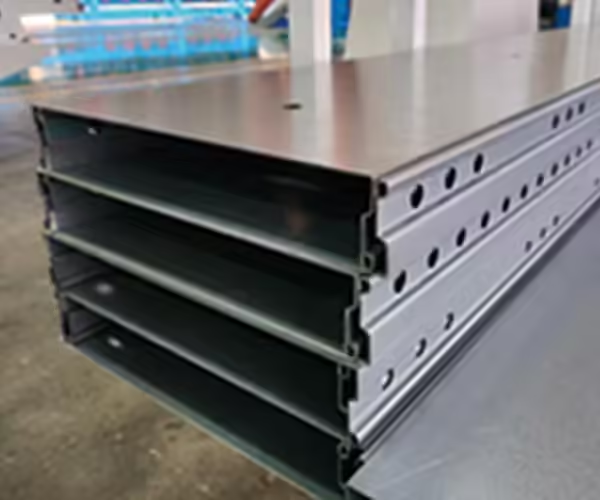
Industry Data: Speed and Accuracy
In modern solar manufacturing, companies often produce thousands of meters of rack per day. In such a scenario, a punching machine with high stability, high accuracy, and high speed can save tens of thousands of dollars in labor and material costs.
For example, a typical high-end Solar Photovoltaic Rack Punching Equipment might achieve:
- Punching positioning accuracy: ±0.5mm
- Production speed: 12–18 meters/minute
- Maximum feeding speed: up to 120 meters/minute
- Efficiency: 70–90 punches/minute
These capabilities make large-scale solar rack production both faster and more reliable.
Expert Opinion
Industry experts often emphasize that “punching accuracy is the foundation of solar rack safety,” and that the cost of a high-quality punching machine is recovered through reduced rework, less scrap, and improved project delivery.
Expanded Section: Why Quality Control and Safety Matter for Large-Scale Solar Rack Production
High-Volume Production Requires High Reliability
When producing at scale, even small error rates can cause large losses:
- 0.5% error rate in a 10,000-meter production run can mean 50 meters of scrap
- Scrap and rework can easily exceed $10,000–$50,000 per month in large factories
Therefore, Solar Photovoltaic Rack Punching Equipment must not only be fast but also stable, precise, and controllable.
Example: Cost Impact of Poor Punching Quality
If a solar rack line produces 5,000 meters per month, and 1% of parts require rework:
- Material waste: 50 meters
- Labor cost for rework: $2,000–$5,000
- Project delay cost: $10,000–$30,000
A high-end punching machine can reduce these costs by 50% or more, making it a key investment for large-scale manufacturers.
Buyer’s Checklist: What to Verify Before Purchasing
Concept: Buying a Machine Is a Long-Term Decision
A solar rack punching machine is a long-term investment. The right choice can bring stability for 10+ years.
Pre-Purchase Checklist
- Check punching accuracy (±0.5mm or better)
- Verify production speed (≥12m/min)
- Confirm material compatibility (Q235, Q550)
- Ask about after-sales support
- Review spare parts availability
- Check automation features
- Evaluate energy efficiency
Conclusion
Solar photovoltaic rack punching equipment is the core production machine for solar rack manufacturing. For buyers, the most important factors are:
- Accuracy
- Processing speed
- Machine stability
- Production automation
- Service and maintenance support
When these factors align, the equipment becomes a true competitive advantage, allowing solar rack manufacturers to produce high-quality products at scale.
FAQ
What is the best punching machine for solar rack mass production?
For large-scale production, six-station and nine-station hydraulic punching machines are generally the best choices because they provide higher flexibility and higher output while maintaining ±0.5mm accuracy.
Can punching equipment handle different steel grades?
Yes. Most modern punching equipment supports common rack steel grades such as Q235 and Q550, ensuring compatibility with different production requirements.
How do I choose between hydraulic and mechanical punching machines?
Hydraulic machines are preferred for high precision and heavy-duty applications, while mechanical machines are usually faster but less flexible. For solar rack production, hydraulic punching is usually the best fit.
What is the most important feature of solar photovoltaic rack punching equipment?
The most important feature is punching accuracy, followed by processing speed and machine stability.
How do I calculate ROI for a punching machine?
ROI depends on production volume, scrap reduction, energy savings, and labor costs. A common ROI metric is cost per meter produced, which improves significantly with better precision and automation.
If you enjoyed this article on Jinbolida’s smart manufacturing and digital factory expertise, follow us for more insights and updates:
- 📘 Facebook: Stay tuned for our latest smart production line projects → Facebook
- 📱 WhatsApp: Contact us anytime for custom production solutions → Chat Now
- ▶️ YouTube: Watch our automated line demos and real-world applications → YouTube
Let’s keep innovating and shaping the future of smart manufacturing — together! 🚀
 English
  Arabic
  Russian
  Spanish
  French