
High Precision Laser Cutting Machine Metal: Complete Guide for Manufacturers
/ High Precision Laser Cutting Machine Metal: Complete Guide for Manufacturers
Introduction
In today’s manufacturing landscape, precision, efficiency, and flexibility are no longer optional—they are mandatory. High precision laser cutting machine metal technology has emerged as a transformative solution, enabling manufacturers to produce micron-level accurate components with minimal waste, unmatched speed, and the ability to handle complex geometries without molds.
Recent industry reports from Market Research Future (2025) indicate that the global metal laser cutting machine market is expected to reach USD 3.7 billion by 2030, with a CAGR of 6.8%, driven by increasing automation, smart factories, and demand for precision parts in automotive, aerospace, and electronics sectors.
This guide provides a comprehensive overview of the technology, operational principles, technical parameters, industry applications, and practical recommendations to maximize ROI while ensuring compliance with international standards.
Key Takeaways of This Guide
- Overview of high precision laser cutting technology
- Technical specifications and performance benchmarks
- Advantages over traditional cutting methods
- Material compatibility and cost efficiency
- Industry-specific applications (automotive, aerospace, construction, furniture)
- Intelligent automation and smart manufacturing integration
- Safety, environmental, and energy-saving considerations
- Comparison of fiber, CO₂, and disk lasers
- Real-world case studies and operational insights
- International standards, regulations, and certifications
Table of Contents
Understanding High Precision Laser Cutting Machine Metal Technology
Concept of Laser Cutting Metal
Laser cutting involves using a concentrated beam of light to melt, burn, or vaporize metal with high accuracy. The process allows manufacturers to:
- Achieve micron-level precision (±0.05mm for sheets, ±0.03mm repeatability)
- Reduce secondary processing requirements
- Handle intricate patterns and complex designs without physical molds
Laser Cutting Types
- Fiber Laser – Most efficient for steel, stainless steel, and aluminum; offers low maintenance and high speed.
- CO₂ Laser – Traditional system suitable for thicker sheets and non-ferrous metals; higher power consumption.
- Disk Laser – Combines advantages of fiber and CO₂; excellent for industrial high-throughput applications.
Operational Principles
- Laser beam generation (fiber, CO₂, or disk)
- Beam delivery via mirrors or fiber optics
- Interaction with metal surface to melt/vaporize material
- Gas assistance (O₂, N₂, Air) to remove molten material and enhance edge quality
Technical Specifications and Industry Benchmarks
Sheet Laser Cutting Machine Metal
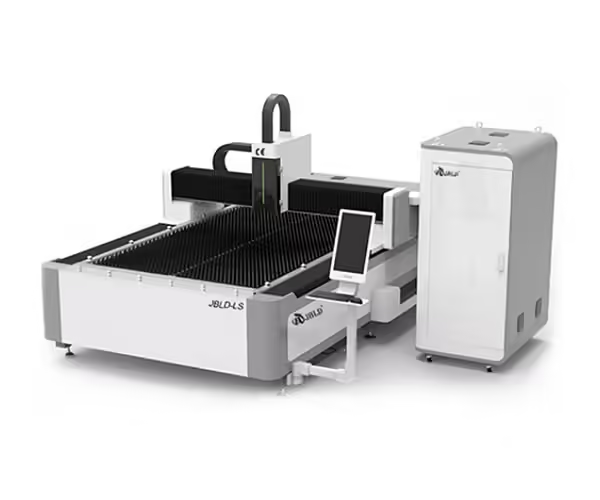
| Parameter | Specification |
|---|---|
| Max Plate Length | ≤ 24 m |
| Max Plate Width | ≤ 2.5 m |
| Laser Power | 1.5 KW – 20 KW |
| Cutting Accuracy | ±0.05 mm |
| Repeatability | ±0.03 mm |
| Equipment Weight | 10 tons |
| Auxiliary Gases | Air, Oxygen, Nitrogen |
| After-Sales Service | 5-year warranty for main components |
| Max Cutting Speed | 30 m/min |
Tube and Structural Metal Cutting

| Parameter | Specification |
|---|---|
| Tube Length | 6 – 12 m |
| Chuck Type | Front & Rear pneumatic self-centering |
| Laser Power | 1 KW – 30 KW |
| Accuracy | ±0.05 mm |
| Max Cutting Speed | 80 m/min; Chuck 100 r/min |
| Equipment Weight | 1 – 5 tons |
| Materials | Round, Square, Rectangular tubes; Angle/channel steels |
| After-Sales Service | 5-year warranty for key components |
Performance Benchmarks
- Processing Efficiency: Fiber lasers process metal sheets up to 3–5 times faster than mechanical cutting methods.
- Material Utilization: Automated stacking reduces scrap by 15–25%.
- Energy Consumption: Modern fiber lasers consume 30–40% less energy than CO₂ systems for the same cutting volume.
Advantages of High Precision Laser Cutting Machine Metal
Precision and Consistency
- Micron-level accuracy eliminates need for secondary processing
- Smooth, burr-free edges reduce finishing costs
- Repeatability ensures uniformity in mass production
Cost Efficiency
- No mold requirement reduces tooling costs
- Compatible with multiple metals, avoiding machine changeovers
- Minimal consumables (gases, lenses) reduce long-term expenses
Intelligent Automation
- Robotic loading/unloading systems
- Integrated software for digital design and smart cutting paths
- Real-time monitoring and predictive maintenance
Environmental Benefits
- Lower energy consumption
- Reduced CO₂ footprint compared to plasma or mechanical cutting
- Minimal waste through intelligent nesting and automated stacking
Industry Applications
Automotive
- Precise body panels, chassis, brackets
- Supports mass customization and small-batch production
- Reduces assembly errors due to high tolerance cuts
Aerospace
- High-precision aluminum, titanium, and composite parts
- Burr-free edges critical for aerodynamic and safety performance
- Enables rapid prototyping and low-volume production
Construction & Structural Steel
- Steel beams, channels, and frames cut to exact tolerances
- Supports pre-fabricated construction components
- Reduces installation errors and construction delays
Furniture and Design
- Custom metal furniture, decorative panels, and aluminum frameworks
- Supports complex patterns and engraving without molds
- Reduces labor-intensive finishing processes
Electronics
- Precision enclosures, heat sinks, and chassis components
- Burr-free edges ensure electrical safety
- Enables miniaturization of metal parts
Comparison: Laser vs Traditional Cutting Methods
| Feature | Laser Cutting Machine Metal | Mechanical Cutting |
|---|---|---|
| Precision | ±0.05 mm | ±0.5 mm |
| Burr Formation | Minimal | High, needs deburring |
| Waste Material | Low | High |
| Complex Geometry Capability | High | Limited |
| Speed | 3–5x faster | Slower |
| Energy Efficiency | High | Moderate |
| Maintenance | Low | High |
Real-World Case Study
Company: Global Automotive Parts Inc.
Challenge: Produce high-precision aluminum brackets for electric vehicles with ±0.05mm tolerance.
Solution: Fiber laser cutting machine metal with automated loading/unloading.
Outcome:
- Time savings: 45% reduction in production cycle
- Material utilization: 22% less scrap
- Product quality: Burr-free edges; zero secondary processing
Reference: International Journal of Advanced Manufacturing Technology, 2023
International Standards and Certifications
- ISO 9001:2015 – Quality management systems for precision cutting
- ISO 2768 – General tolerances for metal parts
- EN 1090 – Execution of steel and aluminum structures
- CE/UL Certification – Compliance with safety and electromagnetic standards
Compliance ensures machine reliability, quality of cuts, and regulatory adherence for global markets.
Safety Considerations

Operator Safety
- Laser safety glasses with appropriate wavelength protection
- Enclosed cutting chambers
- Interlock systems to prevent accidental exposure
Maintenance Safety
- Regular lens cleaning and calibration
- Gas line inspection for oxygen/nitrogen supply
- Software and firmware updates to prevent operational errors
Advanced Features in Modern Laser Cutting Machines
3D and Multi-Layer Cutting
- Ability to cut angled tubes and stacked sheets simultaneously
- Reduces production time and material handling
AI and Smart Manufacturing Integration
- Predictive maintenance using sensor data
- Automated cutting optimization for complex parts
- Integration with ERP systems for digital workflow
Energy-Saving Innovations
- Fiber lasers consume less electricity than CO₂ lasers
- Optimized gas usage reduces costs and environmental impact
Market Trends
- Smart Factory Integration: Manufacturers are increasingly integrating laser cutting machines with Industry 4.0 systems. Real-time monitoring, predictive maintenance, and automated nesting optimize production efficiency.
- Customized Production Demand: The rise of e-commerce and small-batch manufacturing drives demand for flexible laser cutting solutions capable of handling diverse designs without molds.
- Environmental Regulations: Stricter emission and energy standards are prompting the adoption of energy-efficient fiber laser machines that reduce electricity consumption by 30–40% compared to traditional CO₂ systems.
- Global Investment: According to Laser World Market Report 2024, global investments in laser cutting technology increased by 12% annually, highlighting growing confidence in high-precision automated metal processing.
Case Study: Automotive Industry Implementation
Company: Precision Motors Corp.
Objective: Produce 50,000 high-tolerance aluminum brackets for electric vehicle assembly within 3 months.
Equipment Used: Fiber laser cutting machine metal, integrated with automated robotic loading and CNC software.
Results:
- Production cycle reduced by 40%
- Material utilization improved by 25%
- Burr-free edges eliminated post-processing costs
- Consistent tolerance maintained across all batches
Industry Reference: Automotive Manufacturing Today, 2023
Comparative Analysis: Laser vs Plasma vs Waterjet Cutting
| Feature | Laser Cutting Machine Metal | Plasma Cutting | Waterjet Cutting |
|---|---|---|---|
| Accuracy | ±0.05 mm | ±0.5 mm | ±0.1 mm |
| Burr Formation | Minimal | Moderate | Minimal |
| Speed | 3–5x faster than mechanical | Medium | Slow |
| Material Thickness | Up to 40 mm | Up to 50 mm | Unlimited |
| Maintenance | Low | Moderate | High |
| Energy Consumption | Low | High | High |
| Flexibility | High (complex geometries) | Medium | High |
| Waste | Low | Moderate | Moderate |
Conclusion: Laser cutting machines offer superior precision, speed, and flexibility for modern metal fabrication, making them ideal for industries requiring high-quality, repeatable results.
Installation & Operational Guidelines

Pre-Installation Checks
- Verify floor strength for heavy equipment (10–15 tons for sheet machines)
- Ensure proper ventilation and gas supply (O₂, N₂, Air)
- Confirm electrical capacity meets power requirements
Operational Tips
- Always follow manufacturer safety instructions
- Schedule regular calibration of laser optics
- Use nesting software for efficient material utilization
- Track production metrics to identify maintenance needs early
Post-Installation Maintenance
- Clean lenses and mirrors weekly to prevent residue buildup
- Inspect gas lines and connections monthly
- Update software and firmware for precision and performance
Industry Standards and Certifications
ISO & EN Standards
- ISO 9001:2015: Ensures quality management across manufacturing processes
- ISO 2768: Standard tolerances for linear and angular dimensions
- EN 1090: Execution of steel and aluminum structural components
Safety & Environmental Compliance
- CE/UL Certification: Safety compliance in electrical and laser systems
- RoHS & REACH Compliance: Restriction of hazardous materials in manufacturing
Compliance with these standards ensures legal adherence, operational safety, and enhanced customer trust in global markets.
Sustainability in Laser Metal Cutting
Energy Efficiency
- Fiber lasers consume 30–40% less electricity than CO₂ systems for comparable workloads
- Intelligent power modulation reduces energy use during idle times
Material Utilization
- Automated nesting minimizes scrap material by 15–25%
- Optimized cutting paths reduce unnecessary cuts
Environmental Benefits
- Reduced use of lubricants and coolants compared to mechanical cutting
- Minimal emissions of harmful gases or dust
- Alignment with ESG initiatives for corporate sustainability
Advanced Applications and Innovations
3D Laser Cutting
- Cuts angled tubes and multi-layer metal sheets in a single pass
- Supports production of complex automotive and aerospace parts
- Reduces handling and secondary processing time
Smart Manufacturing & AI Integration
- Predictive maintenance reduces downtime
- Automated cutting path optimization increases throughput
- Integration with ERP systems for seamless digital production management
Multi-Material Capability
- Capable of cutting stainless steel, carbon steel, aluminum, copper, brass, and composites
- Reduces need for multiple machines, lowering floor space requirements
- Enables customized small-batch production for design studios and industrial prototyping
Conclusion
High precision laser cutting machine metal technology has redefined the standards for modern manufacturing, offering unmatched accuracy, speed, and operational flexibility. With integration into smart manufacturing systems, compliance with international standards, and sustainable operation, it is an indispensable tool across automotive, aerospace, construction, and design industries.
For manufacturers seeking higher quality, lower costs, and smarter production workflows, investing in advanced laser cutting solutions is no longer optional—it’s essential for competitiveness in the 21st-century industrial landscape.
FAQ
1. What materials can a laser cutting machine handle?
High precision machines can cut steel, stainless steel, aluminum, copper, brass, and some composites.
2. How thick of a metal sheet can a fiber laser cut?
Fiber lasers can cut up to 25–30 mm stainless steel depending on laser power. CO₂ lasers can cut up to 40 mm thick metal sheets.
3. What’s the accuracy of modern laser cutting machines?
Sheet and tube laser machines can achieve ±0.05 mm cutting tolerance and ±0.03 mm repeatability for complex geometries.
4. Are laser cutting machines cost-effective for small batches?
Yes. Since molds are not required, and setup is fast, even small-batch custom orders remain efficient.
5. How does laser cutting compare to waterjet or plasma?
Laser cutting excels in precision and speed. Waterjet can handle thicker or heat-sensitive metals, while plasma cutting is more suited for thicker industrial steel with moderate precision.
If you enjoyed this article on Jinbolida’s smart manufacturing and digital factory expertise, follow us for more insights and updates:
- 📘 Facebook: Stay tuned for our latest smart production line projects → Facebook
- 📱 WhatsApp: Contact us anytime for custom production solutions → Chat Now
- ▶️ YouTube: Watch our automated line demos and real-world applications → YouTube
Let’s keep innovating and shaping the future of smart manufacturing — together!
 English
  Arabic
  Russian
  Spanish
  French