
داخل مصنع الأقواس الكهروضوئية الحديث: المعدات وسير العمل
جدول المحتويات
A modern PV bracket factory converts metal coils and prepared blanks into rails, channels, posts, connectors and other components used in photovoltaic mounting systems. Its performance depends not only on the speed of individual machines but also on the way materials, production data, quality checks and finished products move through the facility.
An efficient factory should coordinate:
- Raw-material receiving and identification
- Coil storage and handling
- Leveling and servo feeding
- Automatic punching
- Continuous roll forming
- قطع الطول
- Connector manufacturing
- In-process inspection
- Automatic receiving and stacking
- Packaging and finished-product storage
- Production traceability
- Maintenance and utility planning
The best factory layout follows the product workflow while keeping raw materials, unapproved parts, accepted products, operators and forklifts under controlled movement. It should also provide enough access for tooling changes, inspection and equipment maintenance.
A PV bracket factory should be planned from the finished product backward. Profile drawings, material specifications, hole patterns, tolerances, batch sizes and output targets determine which machines are required and how the production areas should be connected.
ماذا ينتج مصنع الأقواس الكهروضوئية؟

A photovoltaic mounting structure contains more than one bracket. Depending on the system, a factory may manufacture:
- قضبان القناة C
- يدعم قناة U
- قنوات تبختر مشقوقة
- مدادات على شكل حرف Z
- مشاركات التثبيت الأرضي
- ملامح تركيب السقف
- أعضاء تستعد
- لوحات موصل
- لوحات القاعدة
- المشابك الوحدة
- Triangular connectors
- Solar tracker components
- ملفات تعريف القسم المفتوح المخصصة
Each component creates different production requirements.
Long profiles are commonly produced through continuous roll forming, while short connector parts may require punching, stamping, cutting and forming. Some components may also need welding, surface treatment or assembly.
جينبوليدا آلة تشكيل أقواس الخلايا الشمسية الكهروضوئية range includes equipment for C-channel, U-channel and related photovoltaic profile production.
ابدأ بمصفوفة المنتج والسعة
Before selecting equipment, the factory should create a product matrix.
The matrix should include:
| Product information | Details to define |
|---|---|
| نوع الملف الشخصي | C-channel, U-channel, Z-profile, post or connector |
| المقطع العرضي | Width, height, lips, bends and radii |
| مادة | Grade, strength, thickness and coating |
| نمط الثقب | Diameter, slot size, pitch and edge distance |
| طول المنتج | Minimum, maximum and standard lengths |
| التسامح | Section, holes, length, straightness and twist |
| كمية الدفعة | Typical order and minimum production batch |
| Annual demand | Pieces, meters or tons |
| التحولات | Frequency and product sequence |
| Downstream work | Welding, coating, assembly or packaging |
This document helps determine whether the factory needs:
- Dedicated production lines
- Adjustable roll forming equipment
- اللكم متعدد المحطات
- Separate connector production
- التراص التلقائي
- Additional profile-processing equipment
إنتاج منفصل عالي الحجم ومرن
A factory may use dedicated equipment for stable, high-volume profiles and flexible equipment for smaller customized batches.
This separation can prevent frequent tooling changes on the main production line while still allowing the factory to serve multiple bracket specifications.
المناطق الرئيسية في مصنع الأقواس الكهروضوئية
A practical factory can be divided into several connected areas.
| منطقة المصنع | Main purpose | Important controls |
|---|---|---|
| استلام | Accept coils and purchased materials | Documentation and condition inspection |
| Raw-material storage | Store approved coils and blanks | Identification and safe handling |
| Coil preparation | Load, center and prepare strip | Coil size and material verification |
| اللكم | Produce holes, slots and notches | Position, burr and tooling control |
| تشكيل لفة | Form long structural profiles | Dimensions, straightness and surface |
| Connector production | Produce short bracket parts | Tooling, part count and forming accuracy |
| القطع | Separate profiles to length | Length, squareness and end condition |
| فحص | Verify products | Calibrated instruments and records |
| التراص والتعبئة والتغليف | Protect and identify products | Controlled handling and ventilation |
| Finished storage | Hold accepted batches | Status and shipment identification |
| صيانة | Store tools and repair equipment | Spare parts and controlled access |
The flow between these areas should be clear. Material should not repeatedly cross forklift routes or pass through unrelated work zones.
1. استلام المواد الخام وفحصها
Production quality begins before the coil reaches the forming machine.
When raw material arrives, the factory should verify:
- Supplier documentation
- تحديد الملف
- درجة المواد
- سمك
- عرض الشريط
- Coating specification
- القطر الداخلي للملف
- القطر الخارجي للملف
- وزن الملف
- حالة الحافة
- حالة السطح
- حالة التغليف
المواد المعتمدة والحجر الصحي
Approved material should be physically or digitally separated from material awaiting inspection.
A quarantine area prevents unverified coils from entering production. The status should be visible through labels, location control or an inventory system.
إمكانية تتبع المواد
Each coil should have a unique identification connected with:
- Supplier
- Batch or heat
- شهادة المواد
- طلاء
- أبعاد
- Receiving date
- Inspection result
- Storage location
When a finished-profile issue is discovered, traceability allows the factory to identify which coil was used.
2. تخزين الملفات ومعالجتها
Coils require stable support and controlled movement. Incorrect storage can cause edge damage, telescoping, contamination or safety hazards.
The storage plan should consider:
- الحد الأقصى لوزن الملف
- Number of grades
- Number of thicknesses
- Daily consumption
- قدرة الرافعة أو الرافعة الشوكية
- First-in, first-out use
- تحميل الكلمة
- Coil orientation
- Moisture protection
تخزين الموضع بالقرب من الإنتاج
Coil storage should be near the beginning of the line but outside the operator and maintenance areas.
The material route should allow a coil to move from storage to the coil car or decoiler without crossing finished-product handling.
تحضير الملف التالي
Where production volume justifies it, the next approved coil can be staged before the current coil finishes. This reduces time spent searching, inspecting and transporting material during a coil change.
3. إزالة التربة والتسوية
The decoiler supports and releases the metal strip. The leveler reduces coil curvature before feeding, punching and forming.
A basic entry section may include:
- سيارة لفائف
- مزيل اللفائف الهيدروليكي
- Support arm
- Peeler or threading device
- بكرات التسوية
- أدلة الدخول
- Loop-control sensors
اختيار ديكويلر
The decoiler should match:
- وزن الملف
- عرض الملف
- Inner diameter
- Outer diameter
- سرعة الخط المطلوبة
- طريقة التحميل
- طريقة التوسع
A heavy coil may require a hydraulic mandrel, powered rotation and a coil car.
جودة التسوية
Poor leveling affects:
- Servo-feeding stability
- مواقف الحفرة
- Forming consistency
- الاستقامة
- مظهر السطح
Settings should be documented for each material and thickness. Excessive roller pressure can mark galvanized steel, while insufficient pressure leaves too much coil curvature.
4. التثقيب ومعالجة الثقوب
PV brackets often contain repeated round holes, slots, notches and connector features.
A punching system may operate:
- Inline before roll forming
- Inline after forming
- As a separate production cell
- As part of a connector forming machine
جينبوليدا معدات تثقيب الرفوف الكهروضوئية الشمسية includes three-, six- and nine-station hydraulic punching systems for different bracket requirements.
اللكم المضمنة
Inline punching connects material feeding with the main forming line.
Benefits may include:
- Reduced material transfers
- Lower work-in-process inventory
- Programmed hole spacing
- Easier product tracking
- Coordinated cutting
Its main limitation is line balance. If the punching cycle is slower than the roll former, punching determines total output.
خلايا تثقيب منفصلة
Separate punching supports independent scheduling and may be useful for:
- Varied short batches
- Prepared blanks
- Shared punching capacity
- Existing roll forming lines
- Special connector components
The factory must provide enough space for intermediate storage and batch identification.
تثقيب فحوصات الجودة
يفتش:
- قطر الثقب
- Slot dimensions
- تباعد الثقب
- المسافة من ثقب إلى حافة
- ارتفاع لدغ
- حالة الطلاء
- Part deformation
- إزالة سبيكة
Tool-life records should be connected with burr and dimensional inspection.
5. لفة تشكيل ملفات تعريف كهروضوئية طويلة

Roll forming gradually bends metal strip through multiple roller stations. It is well suited to producing long components with a constant cross-section.
A photovoltaic profile line may produce:
- C-channels
- U-channels
- Lipped strut sections
- Z-purlins
- Ground posts
- Roof rails
- Bracing channels
المقال دليل آلة تشكيل اللفة: من الملف إلى الملف الشخصي المؤهل provides a broader explanation of feeding, progressive forming and cutting. After publication, this anchor should be updated to the final URL assigned to the article.
خط الملف الشخصي المخصص
A dedicated line uses tooling designed for one stable profile or a narrow size range.
It may provide:
- Simplified setup
- Stable production
- Reduced changeover
- Clear quality standards
خط الملف الشخصي المرن
A flexible line may use:
- Movable roller stands
- Spacer adjustment
- Cassette tooling
- Motorized axes
- Servo adjustment
- وصفات المنتج
Flexibility should be defined through an adjustment matrix showing which dimensions can change and which tools must be replaced.
فحوصات جودة الملف الشخصي
يفتش:
- عرض الويب
- ارتفاع شفة
- طول الشفاه
- افتتاح القناة
- زوايا الانحناء
- الاستقامة
- الحدبة
- تطور
- حالة السطح
A profile can meet its cross-sectional dimensions and still be difficult to assemble if it is twisted or bowed.
6. القطع والتحكم في الطول
The completed profile must be cut to the programmed length.
Common methods include:
- توقف للقطع
- قطع الطيران
- قطع المنشار
- قطع القالب الهيدروليكي
- Pre-cutting
توقف للقطع
The line stops before each cut. This arrangement is relatively straightforward but reduces average speed when products are short and cuts occur frequently.
قطع الطيران
A flying cutter moves with the profile. It can support continuous operation but requires accurate synchronization between line speed, tool travel and product position.
فحص القطع
يفحص:
- طول المنتج
- Cut squareness
- تشوه النهاية
- Burrs
- Coating damage
- Final hole-to-end distance
The cutting tool should support the completed profile to prevent crushed or distorted ends.
7. إنتاج الموصلات والأجزاء الصغيرة
A PV bracket factory may also produce shorter connectors, plates and shaped parts.
These components may require:
- Coil or blank feeding
- اللكم متعدد المحطات
- القطع
- النقش
- الانحناء
- تشكيل الجزء
- التفريغ التلقائي
- العد
ال آلة تثقيب موصلات حاملات الطاقة الشمسية الكهروضوئية integrates punching, cutting and forming for C-shaped, U-shaped and triangular photovoltaic connection components.
تدفق منتج طويل وقصير منفصل
Long rails and small connectors have different handling requirements. Producing them in separate but coordinated cells can reduce congestion.
Small parts need:
- Reliable discharge
- Controlled counting
- Bin identification
- Tooling management
- Protection from part mixing
8. اللحام والمعالجة الثانوية
Some bracket systems require welding or other secondary processing.
Possible operations include:
- Spot welding
- MIG or robotic welding
- حفر
- قطع المنشار
- وضع العلامات
- Deburring
- Surface repair
- الجمعية
ال معدات معالجة الملفات الشخصية category can support additional operations required after the main forming process.
تجنب عمليات نقل المواد غير الضرورية
Secondary equipment should be positioned according to product routing. A component that requires welding should not pass through the packaging area and then return to production.
A routing sheet can define the required operations for every product.
9. الاستلام والتكديس
Finished profiles must be removed from the line at least as quickly as they are produced.
Receiving options include:
- Manual run-out table
- Powered conveyor
- التفريغ التلقائي
- Product turning
- التراص التلقائي
- Bundle transfer
الاستلام اليدوي
Manual receiving may be suitable for:
- Moderate output
- Short profiles
- Light components
- Occasional operation
However, long profiles can be difficult to lift and align consistently.
التراص التلقائي
Automatic stacking becomes valuable when:
- Profiles are long
- Output is high
- Several shifts are used
- Manual handling limits speed
- Surface damage occurs during collection
جينبوليدا معدات مساعدة لآلة التشكيل can be considered when unloading and stacking restrict production.
حماية الأسطح المطلية
Galvanized and coated profiles should not be dragged across rough tables or one another.
Receiving surfaces should be clean and free from:
- Metal chips
- Burr fragments
- Exposed fasteners
- Damaged rollers
- Grinding dust
10. مجال مراقبة الجودة
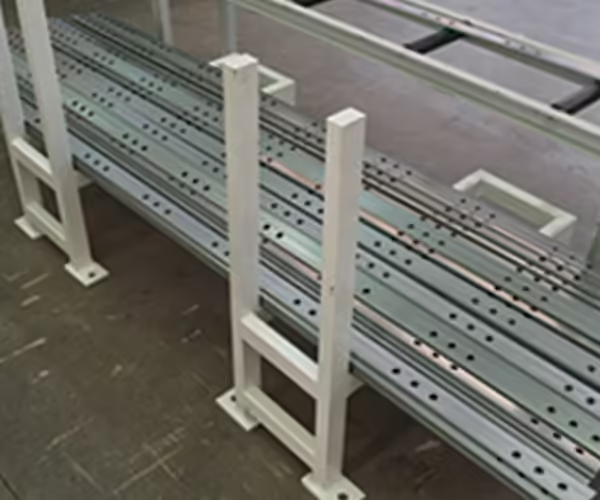
Quality inspection should occur during production, not only before shipment.
A modern PV bracket factory should provide dedicated space for:
- Incoming material inspection
- فحص المادة الأولى
- In-process dimensional checks
- Connector-fit testing
- Surface inspection
- Final batch release
التفتيش على المادة الأولى
After a setup or changeover, check:
- أبعاد الملف الشخصي
- زوايا الانحناء
- نمط الثقب
- طول القطع
- الاستقامة
- تطور
- Burrs
- حالة الطلاء
- تناسب الجمعية
Production should begin only after the first article is accepted.
التفتيش أثناء العملية
Repeat inspection after:
- تغييرات الملف
- Tool changes
- Roller adjustments
- Punch sharpening
- Cutter replacement
- إنذارات
- Production interruptions
Tool wear and material variation can change the product after the first article has passed.
معدات القياس
Depending on the product, inspection may use:
- Calipers
- Micrometers
- Height gauges
- Angle gauges
- Tape measures
- Straightedges
- Surface plates
- Profile fixtures
- Coordinate measuring equipment
- Optical measurement
All instruments should have suitable range, resolution and calibration status.
11. التعبئة والتغليف وتخزين المنتج النهائي
Packaging should protect products while preserving identification.
A finished bundle may include:
- Product code
- Drawing revision
- كمية
- Batch number
- دفعة المواد
- Production date
- Inspection status
- Destination
- Handling instructions
التخزين الجاف والتهوية
Galvanized profiles should be protected from trapped moisture. Closely stacked wet components can develop staining.
Storage should include:
- Dry flooring
- Drainage
- Ventilation
- Protection from rain
- Separation from chemicals
- Controlled bundle support
- Clear shipment lanes
منتجات منفصلة مقبولة وغير معتمدة
Finished products awaiting inspection should not be stored with released batches.
Use clearly defined statuses such as:
- Awaiting inspection
- Accepted
- Rework
- Rejected
- Ready for shipment
12. التحكم في الإنتاج الرقمي
Modern manufacturing uses production data to support decisions rather than relying only on operator memory.
NIST’s work on التصنيع الذكي addresses measurement, control and information technologies that support more connected manufacturing systems.
A PV bracket factory may record:
- Product recipe
- Drawing revision
- Coil batch
- كمية الإنتاج
- Qualified quantity
- Rejected quantity
- التوقف
- تاريخ التنبيه
- Tooling status
- Energy use
- Maintenance records
وصفات المنتج
Recipes can store:
- أنماط الثقب
- طول المنتج
- كمية الدفعة
- مواقف المغذية
- أوامر القطع
- Adjustable-axis positions
Recipe access should be controlled, and critical changes should be recorded.
تتبع الإنتاج
Traceability connects a finished bundle with:
- مادة
- آلة
- الأدوات
- المشغل
- فحص
- وقت الإنتاج
This makes defect investigation and repeat production more reliable.
13. ورشة الصيانة وقطع الغيار
A factory cannot maintain stable output without access to tools and critical spare parts.
The maintenance area may store:
- Punches and dies
- شفرات القطع
- محامل
- أجهزة الاستشعار
- التشفير
- Hydraulic seals
- Filters
- Lubricants
- Electrical components
- Roller drawings
- Calibration tools
تخزين الأدوات
Rollers and punching tools should be:
- Clearly identified
- Protected from corrosion
- Stored in defined locations
- Connected with product drawings
- Recorded after maintenance
- Inspected before installation
الوصول إلى الصيانة حول الخط
The factory layout should leave enough space to:
- Remove rollers
- Change punching dies
- service hydraulic equipment
- Open electrical cabinets
- Replace motors
- Lift major components
- Clean scrap chutes
A compact layout that prevents safe maintenance may create longer downtime later.
14. مرافق المصنع والبنية التحتية
A complete PV bracket factory may require:
- Electrical power
- الهواء المضغوط
- الأنظمة الهيدروليكية
- Cooling
- Network connection
- إضاءة
- Ventilation
- Cranes
- Forklifts
- Fire protection
- سياج السلامة
التخطيط الكهربائي
يؤكد:
- Voltage
- تردد
- Installed load
- Peak demand
- Distribution panels
- Cable routes
- Grounding
- Backup requirements
الهواء المضغوط
Pneumatic systems may operate:
- المشابك
- Marking units
- إزالة الخردة
- نقل المنتج
- أجهزة السلامة
Pressure, flow and air quality should match the machine specification.
الشبكة والبيانات
Remote diagnostics, production reporting and factory-system integration require controlled network access.
The factory should define:
- Connection method
- أذونات المستخدم
- Cybersecurity responsibility
- Data ownership
- Backup
- Remote-access approval
15. تدفق المواد والأفراد
Machines are only part of the layout. Operators, maintenance staff, forklifts and cranes also move through the facility.
A good layout separates:
- Pedestrian walkways
- طرق الرافعات الشوكية
- Coil transport
- Finished-product transport
- الوصول إلى الصيانة
- مخارج الطوارئ
تجنب عبور الطرق
Raw material should enter near the beginning of production. Finished products should leave from the opposite or clearly separated area where practical.
Repeated crossing increases:
- Handling time
- Collision risk
- Product damage
- Production interruption
توفير مساحة التفتيش بالقرب من الإنتاج
Quality staff should not need to carry long profiles through several production areas for routine measurement.
An inspection point near the line allows faster first-article approval.
نماذج المصانع الأساسية وشبه الأوتوماتيكية والآلية
| Factory model | Main features | Suitable conditions |
|---|---|---|
| أساسي | Manual coil handling and stacking | Moderate output and stable products |
| شبه أوتوماتيكي | Automated feeding, punching, forming and cutting | Growing volume with controlled investment |
| آلي | Connected loading, forming, cutting, stacking and data collection | High output and multi-shift operation |
| Flexible multi-line | Dedicated and adjustable cells | Broad product range and varied batches |
A fully automated factory is not automatically the most efficient. Automation should address confirmed bottlenecks and match the product mix.
قياس أداء مصنع الأقواس الكهروضوئية
Useful performance indicators include:
| Metric | غرض |
|---|---|
| Qualified pieces per shift | Measures actual output |
| Tons or meters per day | Supports material planning |
| وقت التحول | Measures production flexibility |
| Coil-change time | Measures entry-section efficiency |
| Setup scrap | Shows material loss |
| معدل الرفض | Measures quality loss |
| Downtime by reason | Identifies bottlenecks |
| Tool life | Supports maintenance planning |
| Energy per qualified product | Connects utilities with output |
| On-time batch completion | Measures production reliability |
The global photovoltaic market continues to develop across multiple applications. The برنامج أنظمة الطاقة الكهروضوئية التابع لوكالة الطاقة الدولية publishes reports on photovoltaic deployment and industry trends. Factory planning, however, should translate market opportunity into specific profiles, batch sizes and capacity requirements.
أخطاء تخطيط مصنع القوس الكهروضوئي الشائعة
اختيار المعدات قبل الانتهاء من المنتجات
Machine design should follow profile drawings, materials and hole patterns.
مقارنة سرعة التشكيل فقط
Punching, cutting and stacking may determine total output.
وضع الآلات بدون طرق المواد
A machine can fit physically while creating inefficient forklift and operator movement.
تجاهل تخزين الأدوات
Uncontrolled tooling increases changeover time and damage.
توفير مساحة تفتيش غير كافية
Slow first-article approval reduces available production time.
خلط المنتجات المقبولة وغير المعتمدة
Poor status control creates shipment and traceability risks.
عدم ترك أي منطقة للتوسع
Future punching, stacking or secondary-processing equipment may become difficult to add.
التقليل من أهمية تصريح الصيانة
Technicians need safe access to rollers, dies, cutters, drives and electrical systems.
المعلومات المطلوبة لاقتراح المصنع
Before requesting a complete factory or production-line proposal, prepare:
معلومات المنتج
- رسومات الملف الشخصي
- Connector drawings
- Length range
- أنماط الثقب
- التسامح
- عينات المنتج
معلومات مادية
- درجة المواد
- قوة
- سمك
- أبعاد الملف
- وزن الملف
- طلاء
- متطلبات السطح
معلومات الإنتاج
- الحجم السنوي
- Pieces per shift
- عدد التحولات
- أحجام الدفعة
- مزيج المنتج
- تردد التحول
- Expected expansion
معلومات المصنع
- رسم الورشة
- مواقف العمود
- أبعاد الباب
- Floor capacity
- سعة الرافعة
- الجهد والتردد
- إمدادات الهواء المضغوط
- Raw-material entrance
- Finished-product exit
خاتمة
A modern PV bracket factory is a coordinated manufacturing system rather than a collection of separate machines.
Raw-material receiving, coil storage, leveling, punching, roll forming, cutting, inspection, stacking and packaging should follow a clear workflow. Digital recipes, traceability, downtime records and energy monitoring can strengthen production control when they are connected with practical factory decisions.
The layout should be based on actual bracket drawings, materials, hole patterns, tolerances, batch sizes and output targets. It should also reserve safe access for operators, maintenance, cranes, forklifts and future expansion.
Jinbolida provides photovoltaic forming, punching, cutting and automated material-handling solutions for factories producing rails, channels, posts and connectors. Manufacturers can submit product drawings, material information, capacity targets and workshop layouts through the صفحة الاتصال جينبوليدا for a customized PV bracket factory evaluation.
التعليمات
ما هي الآلات المطلوبة في مصنع الأقواس الكهروضوئية؟
A typical factory may need coil handling, decoiling, leveling, servo feeding, punching, roll forming, cutting, receiving and stacking equipment. Short connectors may require separate punching and forming systems. The final configuration depends on profile drawings, materials, hole patterns, batch sizes and automation requirements.
هل يجب دمج التثقيب مع خط تشكيل اللفة؟
Inline punching reduces material transfers and supports coordinated feeding, forming and cutting. It is suitable for stable repeated patterns. Separate punching offers independent scheduling and can serve varied batches or multiple lines. The correct arrangement depends on cycle time, product mix, floor space and required flexibility.
ما هي مساحة المصنع اللازمة لإنتاج الأقواس الكهروضوئية؟
The required area depends on coil storage, machine length, product length, punching, stacking, inspection, maintenance clearances and material routes. A complete automated line needs more than its listed machine footprint. Request a general arrangement drawing that includes cranes, forklifts, operators and finished-product storage.
ما هو عنق الزجاجة الرئيسي في مصنع الأقواس الكهروضوئية؟
The bottleneck may be punching, cutting, coil replacement, profile changeover, inspection or stacking. The roll former is not always the constraint. Measure every repeated operation using an actual product and track both major downtime and frequent minor stops before deciding where to add speed or automation.
How should PV bracket production be traced?
Assign each coil and finished batch a unique identification. Connect the material certificate, product recipe, drawing revision, machine, tooling, operator, production time and inspection records. This allows the factory to investigate deviations, isolate affected products and reproduce approved settings for later orders.
 Arabic
  English
  Russian
  Spanish
  French