
Внутри современного завода фотоэлектрических кронштейнов: оборудование и рабочий процесс
Оглавление
A modern PV bracket factory converts metal coils and prepared blanks into rails, channels, posts, connectors and other components used in photovoltaic mounting systems. Its performance depends not only on the speed of individual machines but also on the way materials, production data, quality checks and finished products move through the facility.
An efficient factory should coordinate:
- Raw-material receiving and identification
- Coil storage and handling
- Leveling and servo feeding
- Automatic punching
- Continuous roll forming
- Длинная резка
- Connector manufacturing
- In-process inspection
- Automatic receiving and stacking
- Packaging and finished-product storage
- Production traceability
- Maintenance and utility planning
The best factory layout follows the product workflow while keeping raw materials, unapproved parts, accepted products, operators and forklifts under controlled movement. It should also provide enough access for tooling changes, inspection and equipment maintenance.
A PV bracket factory should be planned from the finished product backward. Profile drawings, material specifications, hole patterns, tolerances, batch sizes and output targets determine which machines are required and how the production areas should be connected.
Что производит завод фотоэлектрических кронштейнов?

A photovoltaic mounting structure contains more than one bracket. Depending on the system, a factory may manufacture:
- С-канальные рельсы
- U-канальные опоры
- Каналы со щелевыми стойками
- Z-образные прогоны
- Ground-mounting posts
- Профили крепления крыши
- Брекет-члены
- Разъемные пластины
- Базовые пластины
- Module clamps
- Triangular connectors
- Компоненты солнечного трекера
- Индивидуальные профили открытого сечения
Each component creates different production requirements.
Long profiles are commonly produced through continuous roll forming, while short connector parts may require punching, stamping, cutting and forming. Some components may also need welding, surface treatment or assembly.
Джинболида Машина для формовки кронштейнов для солнечных фотоэлектрических систем range includes equipment for C-channel, U-channel and related photovoltaic profile production.
Начните с матрицы продукта и мощности
Before selecting equipment, the factory should create a product matrix.
Матрица должна включать
| Product information | Details to define |
|---|---|
| Тип профиля | C-channel, U-channel, Z-profile, post or connector |
| Поперечное сечение | Width, height, lips, bends and radii |
| Материал | Grade, strength, thickness and coating |
| Шаблон отверстия | Diameter, slot size, pitch and edge distance |
| Длина продукта | Minimum, maximum and standard lengths |
| Tolerances | Section, holes, length, straightness and twist |
| Количество партии | Typical order and minimum production batch |
| Annual demand | Pieces, meters or tons |
| Переключения | Frequency and product sequence |
| Downstream work | Welding, coating, assembly or packaging |
This document helps determine whether the factory needs:
- Dedicated production lines
- Adjustable roll forming equipment
- Multi-station punching
- Separate connector production
- Автоматическая укладка
- Additional profile-processing equipment
Отдельное крупносерийное и гибкое производство
A factory may use dedicated equipment for stable, high-volume profiles and flexible equipment for smaller customized batches.
This separation can prevent frequent tooling changes on the main production line while still allowing the factory to serve multiple bracket specifications.
Основные помещения завода по производству фотоэлектрических кронштейнов
A practical factory can be divided into several connected areas.
| Заводская территория | Main purpose | Important controls |
|---|---|---|
| Получение | Accept coils and purchased materials | Documentation and condition inspection |
| Raw-material storage | Store approved coils and blanks | Identification and safe handling |
| Coil preparation | Load, center and prepare strip | Coil size and material verification |
| Штамповка | Produce holes, slots and notches | Position, burr and tooling control |
| Формирование рулона | Form long structural profiles | Dimensions, straightness and surface |
| Connector production | Produce short bracket parts | Tooling, part count and forming accuracy |
| Резка | Separate profiles to length | Length, squareness and end condition |
| Инспекция | Verify products | Calibrated instruments and records |
| Штабелирование и упаковка | Protect and identify products | Controlled handling and ventilation |
| Finished storage | Hold accepted batches | Status and shipment identification |
| Обслуживание | Store tools and repair equipment | Spare parts and controlled access |
The flow between these areas should be clear. Material should not repeatedly cross forklift routes or pass through unrelated work zones.
1. Прием и проверка сырья
Production quality begins before the coil reaches the forming machine.
When raw material arrives, the factory should verify:
- Supplier documentation
- Идентификация катушки
- Материальный сорт
- Толщина
- Ширина полосы
- Спецификация покрытия
- Внутренний диаметр катушки
- Внешний диаметр катушки
- Вес катушки
- Состояние края
- Состояние поверхности
- Packaging condition
Утвержденный и помещенный на карантин материал
Approved material should be physically or digitally separated from material awaiting inspection.
A quarantine area prevents unverified coils from entering production. The status should be visible through labels, location control or an inventory system.
Материальная отслеживаемость
Each coil should have a unique identification connected with:
- Supplier
- Batch or heat
- Material certificate
- Покрытие
- Размеры
- Receiving date
- Inspection result
- Storage location
When a finished-profile issue is discovered, traceability allows the factory to identify which coil was used.
2. Хранение и обращение с катушками
Coils require stable support and controlled movement. Incorrect storage can cause edge damage, telescoping, contamination or safety hazards.
The storage plan should consider:
- Максимальный вес катушки
- Number of grades
- Number of thicknesses
- Daily consumption
- Мощность крана или вилочного погрузчика
- First-in, first-out use
- Напольная загрузка
- Coil orientation
- Moisture protection
Позиционное хранение рядом с производством
Coil storage should be near the beginning of the line but outside the operator and maintenance areas.
The material route should allow a coil to move from storage to the coil car or decoiler without crossing finished-product handling.
Подготовьте следующую катушку
Where production volume justifies it, the next approved coil can be staged before the current coil finishes. This reduces time spent searching, inspecting and transporting material during a coil change.
3. Разгрузка и выравнивание
The decoiler supports and releases the metal strip. The leveler reduces coil curvature before feeding, punching and forming.
A basic entry section may include:
- Катушка автомобиля
- Гидравлический декоилер
- Support arm
- Peeler or threading device
- Выравнивающие ролики
- Руководства входа
- Loop-control sensors
Выбор декоилера
The decoiler should match:
- Вес катушки
- Ширина катушки
- Inner diameter
- Outer diameter
- Требуемая скорость линии
- Способ загрузки
- Метод расширения
A heavy coil may require a hydraulic mandrel, powered rotation and a coil car.
Качество выравнивания
Poor leveling affects:
- Servo-feeding stability
- Позиции отверстий
- Forming consistency
- Прямолинейность
- Внешний вид поверхности
Settings should be documented for each material and thickness. Excessive roller pressure can mark galvanized steel, while insufficient pressure leaves too much coil curvature.
4. Пробивка и обработка отверстий
PV brackets often contain repeated round holes, slots, notches and connector features.
A punching system may operate:
- Inline before roll forming
- Inline after forming
- As a separate production cell
- As part of a connector forming machine
Джинболида Оборудование для штамповки солнечных фотоэлектрических стоек includes three-, six- and nine-station hydraulic punching systems for different bracket requirements.
Встроенный перфоратор
Inline punching connects material feeding with the main forming line.
Benefits may include:
- Reduced material transfers
- Lower work-in-process inventory
- Programmed hole spacing
- Easier product tracking
- Coordinated cutting
Its main limitation is line balance. If the punching cycle is slower than the roll former, punching determines total output.
Отдельные перфорационные ячейки
Separate punching supports independent scheduling and may be useful for:
- Varied short batches
- Prepared blanks
- Shared punching capacity
- Existing roll forming lines
- Special connector components
The factory must provide enough space for intermediate storage and batch identification.
Проверка качества перфорации
Осмотреть:
- Диаметр отверстия
- Slot dimensions
- Расстояние между отверстиями
- Расстояние от отверстия до края
- Высота заусенца
- Состояние покрытия
- Part deformation
- Удаление слизней
Tool-life records should be connected with burr and dimensional inspection.
5. Профиле Длинные фотоэлектрические профили для профили

Roll forming gradually bends metal strip through multiple roller stations. It is well suited to producing long components with a constant cross-section.
A photovoltaic profile line may produce:
- C-channels
- U-channels
- Lipped strut sections
- Z-purlins
- Ground posts
- Roof rails
- Bracing channels
Статья Руководство по профилегибочной машине: от катушки до квалифицированного профиля provides a broader explanation of feeding, progressive forming and cutting. After publication, this anchor should be updated to the final URL assigned to the article.
Специальная линия профиля
A dedicated line uses tooling designed for one stable profile or a narrow size range.
It may provide:
- Simplified setup
- Stable production
- Reduced changeover
- Clear quality standards
Гибкая линия профиля
A flexible line may use:
- Movable roller stands
- Spacer adjustment
- Cassette tooling
- Motorized axes
- Servo adjustment
- Product recipes
Flexibility should be defined through an adjustment matrix showing which dimensions can change and which tools must be replaced.
Проверки качества профиля
Осмотреть:
- Ширина паутины
- Высота фланца
- Длина губы
- Открытие канала
- Углы изгиба
- Прямолинейность
- Камбер
- Твист
- Состояние поверхности
A profile can meet its cross-sectional dimensions and still be difficult to assemble if it is twisted or bowed.
6. Резка и контроль длины
The completed profile must be cut to the programmed length.
Common methods include:
- Стоп-то-кут
- Летающая отсечка
- Резка пилы
- Гидравлическая высечка
- Предварительная резка
Стоп-то-Кат
The line stops before each cut. This arrangement is relatively straightforward but reduces average speed when products are short and cuts occur frequently.
Летающая отсечка
A flying cutter moves with the profile. It can support continuous operation but requires accurate synchronization between line speed, tool travel and product position.
Режущий осмотр
Проверка:
- Длина продукта
- Cut squareness
- Деформация торца
- Burrs
- Повреждение покрытия
- Final hole-to-end distance
The cutting tool should support the completed profile to prevent crushed or distorted ends.
7. Разъем и мелкосерийное производство
A PV bracket factory may also produce shorter connectors, plates and shaped parts.
These components may require:
- Coil or blank feeding
- Multi-station punching
- Резка
- Тиснение
- Изгиб
- Part forming
- Automatic discharge
- Подсчет
The Машина для пробивки соединителей для солнечных фотоэлектрических кронштейнов integrates punching, cutting and forming for C-shaped, U-shaped and triangular photovoltaic connection components.
Разделите длинный и короткий поток продукта
Long rails and small connectors have different handling requirements. Producing them in separate but coordinated cells can reduce congestion.
Small parts need:
- Reliable discharge
- Controlled counting
- Bin identification
- Tooling management
- Protection from part mixing
8. Сварка и вторичная обработка
Some bracket systems require welding or other secondary processing.
Possible operations include:
- Spot welding
- MIG or robotic welding
- Бурение
- Резка пилы
- Маркировка
- Deburring
- Surface repair
- Ассамблея
The Оборудование для обработки профилей category can support additional operations required after the main forming process.
Избегайте ненужных материальных переводов
Secondary equipment should be positioned according to product routing. A component that requires welding should not pass through the packaging area and then return to production.
A routing sheet can define the required operations for every product.
9. Прием и укладка
Finished profiles must be removed from the line at least as quickly as they are produced.
Receiving options include:
- Manual run-out table
- Powered conveyor
- Автоматическая разгрузка
- Токарная обработка продукта
- Автоматическая укладка
- Пакетный трансфер
Ручное получение
Manual receiving may be suitable for:
- Moderate output
- Short profiles
- Light components
- Occasional operation
However, long profiles can be difficult to lift and align consistently.
Автоматическая Укладка
Automatic stacking becomes valuable when:
- Профили длинные
- Output is high
- Several shifts are used
- Manual handling limits speed
- Surface damage occurs during collection
Джинболида Формовочная машина Вспомогательное оборудование can be considered when unloading and stacking restrict production.
Защитите поверхности с покрытием
Galvanized and coated profiles should not be dragged across rough tables or one another.
Receiving surfaces should be clean and free from:
- Metal chips
- Burr fragments
- Exposed fasteners
- Damaged rollers
- Grinding dust
10. Зона контроля качества
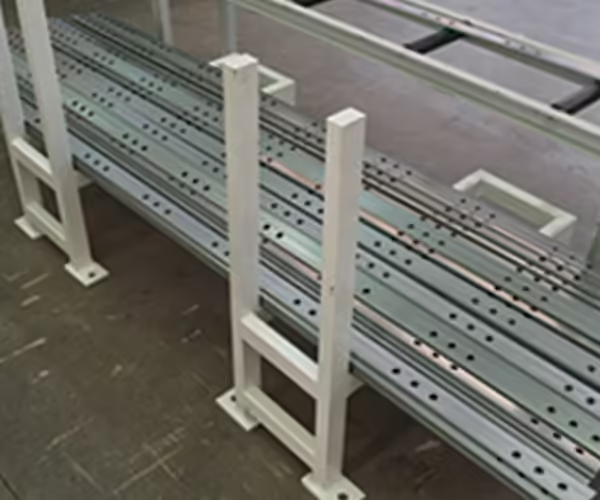
Quality inspection should occur during production, not only before shipment.
A modern PV bracket factory should provide dedicated space for:
- Incoming material inspection
- First-article inspection
- In-process dimensional checks
- Connector-fit testing
- Поверхностный осмотр
- Final batch release
Проверка первой статьи
After a setup or changeover, check:
- Размеры профиля
- Углы изгиба
- Шаблон отверстия
- Длина разреза
- Прямолинейность
- Твист
- Burrs
- Состояние покрытия
- Assembly fit
Production should begin only after the first article is accepted.
Внутрипроцессный осмотр
Repeat inspection after:
- Изменения катушки
- Изменения инструмента
- Roller adjustments
- Punch sharpening
- Cutter replacement
- Сигнализации
- Production interruptions
Tool wear and material variation can change the product after the first article has passed.
Измерительное оборудование
Depending on the product, inspection may use:
- Calipers
- Micrometers
- Height gauges
- Angle gauges
- Tape measures
- Straightedges
- Surface plates
- Profile fixtures
- Coordinate measuring equipment
- Optical measurement
All instruments should have suitable range, resolution and calibration status.
11. Упаковка и хранение готовой продукции
Packaging should protect products while preserving identification.
A finished bundle may include:
- Код продукта
- Ревизия рисунка
- Quantity
- Batch number
- Материальная партия
- Дата производства
- Inspection status
- Destination
- Handling instructions
Сухое и вентилируемое хранилище
Galvanized profiles should be protected from trapped moisture. Closely stacked wet components can develop staining.
Storage should include:
- Dry flooring
- Дренаж
- Ventilation
- Protection from rain
- Separation from chemicals
- Controlled bundle support
- Clear shipment lanes
Отдельные принятые и несанкционированные продукты
Finished products awaiting inspection should not be stored with released batches.
Use clearly defined statuses such as:
- Awaiting inspection
- Accepted
- Rework
- Rejected
- Ready for shipment
12. Цифровой контроль производства
Modern manufacturing uses production data to support decisions rather than relying only on operator memory.
Работа НИСТ на умное производство addresses measurement, control and information technologies that support more connected manufacturing systems.
A PV bracket factory may record:
- Рецепт продукта
- Ревизия рисунка
- Coil batch
- Количество продукции
- Qualified quantity
- Rejected quantity
- Простой
- История тревоги
- Tooling status
- Использование энергии
- Maintenance records
Рецепты Продукта
Recipes can store:
- Выкройки отверстий
- Длина продукта
- Количество партии
- Feeder positions
- Cutting commands
- Adjustable-axis positions
Recipe access should be controlled, and critical changes should be recorded.
Прослеживаемость производства
Traceability connects a finished bundle with:
- Материал
- Машина
- Инструментарий
- Оператор
- Инспекция
- Время производства
This makes defect investigation and repeat production more reliable.
13. Мастерская технического обслуживания и запасные части
A factory cannot maintain stable output without access to tools and critical spare parts.
The maintenance area may store:
- Punches and dies
- Режущие лезвия
- Подшипники
- Датчики
- Кодеры
- Hydraulic seals
- Фильтры
- Lubricants
- Электрические компоненты
- Roller drawings
- Calibration tools
Инструментальное хранилище
Rollers and punching tools should be:
- Clearly identified
- Protected from corrosion
- Stored in defined locations
- Connected with product drawings
- Recorded after maintenance
- Inspected before installation
Доступ к техническому обслуживанию по линии
The factory layout should leave enough space to:
- Remove rollers
- Change punching dies
- service hydraulic equipment
- Open electrical cabinets
- Replace motors
- Lift major components
- Clean scrap chutes
A compact layout that prevents safe maintenance may create longer downtime later.
14. Заводские коммунальные услуги и инфраструктура
A complete PV bracket factory may require:
- Electrical power
- Сжатый воздух
- Гидравлические системы
- Охлаждение
- Сетевое подключение
- Освещение
- Ventilation
- Cranes
- Forklifts
- Fire protection
- Защитное ограждение
Электрическое планирование
Подтвердить:
- Voltage
- Частота
- Installed load
- Peak demand
- Distribution panels
- Cable routes
- Grounding
- Backup requirements
Сжатый воздух
Pneumatic systems may operate:
- Clamps
- Marking units
- Удаление лома
- Перенос продукта
- Защитные устройства
Pressure, flow and air quality should match the machine specification.
Сеть и данные
Remote diagnostics, production reporting and factory-system integration require controlled network access.
The factory should define:
- Способ подключения
- Разрешения пользователя
- Cybersecurity responsibility
- Владение данными
- Backup
- Remote-access approval
15. Материально-кадровый поток
Machines are only part of the layout. Operators, maintenance staff, forklifts and cranes also move through the facility.
A good layout separates:
- Pedestrian walkways
- Маршруты вилочных погрузчиков
- Coil transport
- Finished-product transport
- Доступ к техническому обслуживанию
- Аварийные выходы
Избегайте пересекающихся маршрутов
Raw material should enter near the beginning of production. Finished products should leave from the opposite or clearly separated area where practical.
Repeated crossing increases:
- Handling time
- Collision risk
- Product damage
- Production interruption
Обеспечьте инспекционное пространство рядом с производством
Quality staff should not need to carry long profiles through several production areas for routine measurement.
An inspection point near the line allows faster first-article approval.
Базовые, полуавтоматические и автоматизированные заводские модели
| Factory model | Main features | Suitable conditions |
|---|---|---|
| Базовый | Manual coil handling and stacking | Moderate output and stable products |
| Полуавтоматический | Automated feeding, punching, forming and cutting | Growing volume with controlled investment |
| Автоматизированный | Connected loading, forming, cutting, stacking and data collection | High output and multi-shift operation |
| Flexible multi-line | Dedicated and adjustable cells | Broad product range and varied batches |
A fully automated factory is not automatically the most efficient. Automation should address confirmed bottlenecks and match the product mix.
Измерение производительности завода по производству фотоэлектрических кронштейнов
Useful performance indicators include:
| Метрический | Цель |
|---|---|
| Qualified pieces per shift | Measures actual output |
| Tons or meters per day | Supports material planning |
| Время переключения | Measures production flexibility |
| Время смены катушки | Measures entry-section efficiency |
| Настройка лома | Shows material loss |
| Частота отбраковки | Measures quality loss |
| Downtime by reason | Identifies bottlenecks |
| Tool life | Supports maintenance planning |
| Energy per qualified product | Connects utilities with output |
| On-time batch completion | Measures production reliability |
The global photovoltaic market continues to develop across multiple applications. The Программа фотоэлектрических энергетических систем Международного энергетического агентства publishes reports on photovoltaic deployment and industry trends. Factory planning, however, should translate market opportunity into specific profiles, batch sizes and capacity requirements.
Распространенные ошибки в компоновке заводских фотоэлектрических кронштей
Выбор оборудования перед завершением производства продукции
Machine design should follow profile drawings, materials and hole patterns.
Сравнение только скорости формирования
Punching, cutting and stacking may determine total output.
Размещение машин без материальных маршрутов
A machine can fit physically while creating inefficient forklift and operator movement.
Ignoring Tooling Storage
Uncontrolled tooling increases changeover time and damage.
Providing Insufficient Inspection Space
Slow first-article approval reduces available production time.
Mixing Accepted and Unapproved Products
Poor status control creates shipment and traceability risks.
Leaving No Expansion Area
Future punching, stacking or secondary-processing equipment may become difficult to add.
Underestimating Maintenance Clearance
Technicians need safe access to rollers, dies, cutters, drives and electrical systems.
Information Needed for a Factory Proposal
Before requesting a complete factory or production-line proposal, prepare:
Информация о продукте
- Рисунки профиля
- Connector drawings
- Диапазон длины
- Выкройки отверстий
- Tolerances
- Образцы продукции
Материальная информация
- Материальный сорт
- Сила
- Толщина
- Размеры катушки
- Вес катушки
- Покрытие
- Требования к поверхности
Производственная информация
- Годовой объем
- Штук в смену
- Количество смен
- Размеры партий
- Смесь продуктов
- Частота переключения
- Expected expansion
Информация о фабрике
- Рисунок мастерской
- Позиции столбцов
- Размеры двери
- Floor capacity
- Мощность крана
- Напряжение и частота
- Подача сжатого воздуха
- Raw-material entrance
- Finished-product exit
Заключение
A modern PV bracket factory is a coordinated manufacturing system rather than a collection of separate machines.
Raw-material receiving, coil storage, leveling, punching, roll forming, cutting, inspection, stacking and packaging should follow a clear workflow. Digital recipes, traceability, downtime records and energy monitoring can strengthen production control when they are connected with practical factory decisions.
The layout should be based on actual bracket drawings, materials, hole patterns, tolerances, batch sizes and output targets. It should also reserve safe access for operators, maintenance, cranes, forklifts and future expansion.
Jinbolida provides photovoltaic forming, punching, cutting and automated material-handling solutions for factories producing rails, channels, posts and connectors. Manufacturers can submit product drawings, material information, capacity targets and workshop layouts through the Контактная страница Джинболида for a customized PV bracket factory evaluation.
Часто задаваемые вопросы
What machines are required in a PV bracket factory?
A typical factory may need coil handling, decoiling, leveling, servo feeding, punching, roll forming, cutting, receiving and stacking equipment. Short connectors may require separate punching and forming systems. The final configuration depends on profile drawings, materials, hole patterns, batch sizes and automation requirements.
Следует ли интегрировать штамповку с линией профилирования валков?
Inline punching reduces material transfers and supports coordinated feeding, forming and cutting. It is suitable for stable repeated patterns. Separate punching offers independent scheduling and can serve varied batches or multiple lines. The correct arrangement depends on cycle time, product mix, floor space and required flexibility.
How much factory space is needed for PV bracket production?
The required area depends on coil storage, machine length, product length, punching, stacking, inspection, maintenance clearances and material routes. A complete automated line needs more than its listed machine footprint. Request a general arrangement drawing that includes cranes, forklifts, operators and finished-product storage.
What is the main bottleneck in a PV bracket factory?
The bottleneck may be punching, cutting, coil replacement, profile changeover, inspection or stacking. The roll former is not always the constraint. Measure every repeated operation using an actual product and track both major downtime and frequent minor stops before deciding where to add speed or automation.
How should PV bracket production be traced?
Assign each coil and finished batch a unique identification. Connect the material certificate, product recipe, drawing revision, machine, tooling, operator, production time and inspection records. This allows the factory to investigate deviations, isolate affected products and reproduce approved settings for later orders.
 Russian
  English
  Arabic
  Spanish
  French