
تصميم أدوات تشكيل اللفة: كيف يؤثر على الدقة
جدول المحتويات
مقدمة
يؤثر تصميم أدوات تشكيل اللف بشكل مباشر على ما إذا كان من الممكن إنتاج مقطع معدني بأبعاد مستقرة، وزوايا انحناء دقيقة، وجودة سطح متسقة، وهندسة قابلة للتكرار. حتى عندما تكون آلة تشكيل اللف نفسها سليمة ميكانيكيًا، فإن تخطيط الأدوات غير المناسب يمكن أن يؤدي إلى الالتواء، أو القوس، أو موجة الحافة، أو الزنبرك الزائد المفرط، أو انحراف الأبعاد، أو إعداد الآلة الصعب.
إن تصميم الأدوات الناجح يفعل أكثر بكثير من مجرد إعادة إنتاج المقطع العرضي النهائي للملف الشخصي. فهو يحدد كيفية تحرك الشريط المعدني المسطح تدريجيًا من حالته الأصلية إلى الشكل النهائي من خلال تسلسل يتم التحكم فيه بعناية من تمريرات التشكيل. يجب أن تؤدي كل محطة أسطوانية القدر المناسب من التشوه مع الحفاظ على تدفق ثابت للمواد وتجنب الإجهاد الطولي غير الضروري.
بالنسبة للمصنعين الذين يقومون بتقييم الملفات الشخصية الجديدة، يجب أن يبدأ تصميم أدوات تشكيل اللف برسم المكونات النهائية، وخصائص المواد، والتفاوتات، ومتطلبات التثقيب، وعملية الإنتاج، وليس فقط مع شكل الملف الشخصي النهائي. جينبوليدا دليل آلة تشكيل لفة يوفر سياقًا إضافيًا حول كيفية تناسب الأدوات مع عملية الإنتاج الكاملة من الملف إلى الملف الشخصي.
ما هو تصميم أدوات تشكيل اللفة؟

تصميم أدوات تشكيل اللف هو العملية الهندسية المستخدمة لتحديد كيفية ثني الشريط المسطح تدريجيًا في المظهر الجانبي النهائي وكيف ستتحكم اللفات الفردية والأعمدة والأدلة واللفات الجانبية والمسطحات والمكونات ذات الصلة في هذه العملية.
يبدأ المصمم عادةً بالمقطع العرضي النهائي المطلوب. ومن هناك، ينقسم المظهر الجانبي إلى سلسلة من الأشكال المتوسطة، والتي تسمى غالبًا تقدم التشكيل أو نمط الزهرة. يمثل كل شكل متوسط حالة المظهر الجانبي في مرحلة تشكيل معينة.
ثم يتم تصميم اللفات حول تلك المراحل.
وهذا يعني أن نظام الأدوات النهائي يحتاج إلى الإجابة على عدة أسئلة في نفس الوقت. كم عدد تمريرات التشكيل الضرورية؟ أين يجب أن يبدأ كل انحناء؟ ما مدى سرعة زيادة زاوية الانحناء؟ ما هي مناطق الشريط التي تتطلب دعمًا إضافيًا؟ كيف سيؤثر سمك المادة والظهر الزنبركي على الزاوية النهائية؟ كيف ستتصرف الثقوب أو الفتحات المثقوبة عند تشكيل المظهر الجانبي؟
نظرة عامة فنية لشركة Roll-Kraft على التصميم الأساسي لشكل اللفة وبالمثل، يحدد المقطع العرضي النهائي، وعرض الشريط المقدر، وتطور الانحناء، وتخطيط الأدوات، والأدلة، واللفات الجانبية، وأجهزة التقويم كأجزاء مترابطة من عملية تصميم الأدوات.
لماذا يؤثر تصميم الأدوات بشكل كبير على دقة الملف الشخصي
تحتوي آلة التشكيل باللف عادةً على سلسلة من حوامل التشكيل بدلاً من أداة واحدة تقوم بإنشاء المظهر الجانبي الكامل على الفور.
يعد هذا التشوه التدريجي أحد المزايا الرئيسية لتشكيل اللفة لأنه يسمح بإنتاج مقاطع طويلة ومعقدة بشكل مستمر. ومع ذلك، فهذا يعني أيضًا أن الأخطاء يمكن أن تتراكم.
إذا قام حامل مبكر بتحريك المادة بشكل غير صحيح، فإن الحوامل التالية تتلقى ملف تعريف مختلف بالفعل عن تقدم التشكيل المقصود. قد تقوم البكرات اللاحقة بإجبار المادة على العودة نحو الشكل الهندسي المستهدف، مما يؤدي إلى ضغط إضافي بدلاً من حل المشكلة الأصلية.
يساعد تصميم الأدوات الذي يوزع التشوه بشكل صحيح في الحفاظ على استقرار تدفق المواد في جميع أنحاء الماكينة. قد يؤدي التقدم الضعيف إلى تمديد منطقة واحدة من الشريط أكثر من أخرى، أو التسبب في عدم استقرار الحواف، أو تغيير مواقع الانحناء، أو زيادة الضغط المتبقي في المظهر الجانبي النهائي.
لهذا السبب، يجب تصميم الدقة في تسلسل التشكيل بأكمله بدلاً من تصحيحها فقط عند حوامل الأسطوانة النهائية.
رسم الملف الشخصي النهائي يأتي أولاً
قبل تصميم البكرات، يجب تحديد الجزء النهائي بوضوح.
يجب أن يحدد رسم الملف الشخصي الأبعاد المهمة مثل العرض الإجمالي والارتفاع وأبعاد الحافة وأبعاد الشفاه وزوايا الانحناء ونصف القطر ومواقع الفتحات والفتحات والنقوش والميزات الوظيفية الأخرى. وينبغي أيضًا تمييز التفاوتات الحرجة عن الأبعاد التي تسمح بتباين أكبر.
هذا التمييز مهم لأنه ليس كل بعد له نفس الأهمية الوظيفية.
على سبيل المثال، قد تتطلب قناة التثبيت مواضع ثقب دقيقة للتجميع مع السماح بمزيد من الاختلاف قليلاً في الحافة غير الوظيفية. قد يعتمد المظهر الهيكلي الآخر بشكل كبير على هندسة الزاوية والعرض والقسم لأن هذه الأبعاد تؤثر على كيفية اتصاله بالمكونات الأخرى.
ويجب أن تعكس قرارات الأدوات هذه الأولويات.
المصمم الذي يتلقى رسمًا أساسيًا فقط دون معلومات التسامح لديه معلومات أقل بكثير لتحديد المكان الذي يجب أن تتركز فيه دقة التشكيل.
يجب مراعاة خصائص المواد قبل تصميم اللفات
يمكن أن تتصرف نفس هندسة المظهر الجانبي بشكل مختلف عند إنتاجها من مواد مختلفة.
يعد سمك المادة أحد المتغيرات الأكثر وضوحًا، ولكن قوة الخضوع، وقوة الشد، والاستطالة، والصلابة، وحالة الطلاء، ومتطلبات السطح يمكن أن تؤثر أيضًا على سلوك التشكيل.
قد تقاوم المادة الأقوى الانحناء أكثر من المادة الأكثر ليونة. بعد ترك لفة التشكيل، قد يستعيد أيضًا المزيد من شكله الأصلي من خلال الزنبرك الخلفي. إذا لم تأخذ الأدوات في الاعتبار هذا السلوك، فقد تختلف زاوية الانحناء النهائية عن الهندسة المقصودة.
يمكن أن يؤثر اختلاف السُمك على ملامسة اللفة والأبعاد النهائية أيضًا. ولذلك يجب تقييم مجموعة الأدوات المصممة حول سمك واحد بعناية عند توقع نطاق سمك واسع.
تعتبر حالة السطح اعتبارًا مهمًا آخر. قد تتطلب المواد المجلفنة أو المطلية أو غير القابلة للصدأ أو المطلية مسبقًا أسطح أدوات وظروف تلامس تقلل من خطر الخدش أو وضع العلامات.
ولهذا السبب يجب توفير مواصفات دقيقة للمواد قبل بدء تطوير الأدوات.
كيف يتحكم نمط الزهرة في عملية التشكيل
يعد نمط الزهرة أحد أهم أجزاء تصميم أدوات تشكيل اللف.
يوضح كيف يتغير شكل الشريط المسطح تدريجيًا من تمريرة التشكيل الأولى إلى المظهر الجانبي النهائي.
تخيل قناة بسيطة. لا يدخل الشريط عادةً إلى الحامل الأول بشكل مسطح ويغادر على الفور بحافتين بزاوية 90 درجة. وبدلاً من ذلك، يتم تطوير هذه الانحناءات تدريجيًا عبر عدة محطات.
يعتمد التقدم الدقيق على هندسة المظهر الجانبي، والمواد، وموقع الانحناء، وعمق القسم، وطول الحافة، والسمك، وتكوين الماكينة، ومتطلبات المعالجة الأخرى.
يتجنب التقدم المصمم جيدًا إحداث الكثير من التشوه في محطة واحدة. كما أنه يحاول التحكم في الاختلافات في الحركة الطولية لأجزاء مختلفة من الشريط.
عندما يحدث الكثير من التشكيل بسرعة كبيرة جدًا، قد تصبح المادة غير مستقرة. يمكن أن تتطور الحواف العريضة إلى موجة حافة، أو قد يلتوي القسم، أو يمكن أن يتراكم الضغط المتبقي على طول المظهر الجانبي.
ومع ذلك، فإن إضافة محطات التشكيل لا تضمن جودة أفضل تلقائيًا. الهدف ليس مجرد زيادة عدد التمريرات إلى الحد الأقصى. الهدف هو تحديد التقدم الذي يسمح لكل حامل بأداء جزء مفيد ومتحكم فيه من التشوه الكلي.
كيف يؤثر عدد تمريرات التشكيل على الدقة
يؤثر عدد تمريرات التشكيل على استقرار الملف الشخصي وتعقيد الأدوات.
عدد قليل جدًا من التمريرات قد تجبر الشريط على إجراء تغييرات عدوانية على مسافة قصيرة. وهذا يمكن أن يزيد من الضغط المحلي ويجعل التحكم في الأشكال الهندسية الصعبة أكثر صعوبة.
يمكن أن تؤدي العديد من التمريرات غير الضرورية إلى جعل الخط أطول وتقديم أدوات إضافية ومتطلبات إعداد دون إنشاء ميزة تشكيل ذات معنى.
وبالتالي فإن الرقم الصحيح يعتمد على الملف الشخصي الفعلي.
قد يحتاج ملف تعريف الزاوية البسيط نسبيًا إلى مراحل أقل من القناة العميقة ذات الشفاه الراجعة أو الأضلاع أو الانحناءات المتعددة أو الهندسة غير المتماثلة. قد تتطلب الملفات الشخصية التي تحتوي على عدة انحناءات متقاربة أيضًا تحكمًا أكبر في التسلسل الذي يتم فيه إدخال تلك الانحناءات.
تؤثر قوة المادة وسمكها على القرار أيضًا.
ولذلك ينبغي أن يكون سؤال التصميم:
ما مقدار التشوه الذي يمكن أن يحدثه كل تمريرة مع الحفاظ على استقرار تدفق المواد؟
بدلاً من:
كم عدد حوامل الأسطوانة التي يجب أن تحتوي عليها الآلة؟
يجب أن يعمل تقدم الانحناء وموقع الانحناء معًا
يتطلب التشكيل الدقيق للفة التحكم في كل من مقدار الانحناء وموقع الانحناء.
إذا بدأت الأدوات في ثني الشريط في الموضع الخاطئ، فقد تواجه البكرات اللاحقة صعوبة في تحريك خط الانحناء مرة أخرى إلى الموقع المقصود. يمكن أن يُظهر الملف الشخصي النهائي اختلافات في الأبعاد حتى لو بدت الزاوية النهائية صحيحة.
يصبح هذا مهمًا بشكل خاص في الملفات الشخصية ذات الانحناءات المتعددة القريبة من بعضها البعض.
For example, a lipped channel may include a web, two main flanges, and return lips. The order and rate at which these elements are formed influence how the entire cross-section behaves.
The tooling designer must consider how one bend affects adjacent material and whether forming one feature too early could restrict the movement required for another feature later in the line.
يجب تصميم Springback في الأدوات

Metal does not remain exactly at the shape imposed by the roller at the instant it leaves the roll gap.
Elastic recovery causes the material to move slightly back toward its original condition. This behavior is commonly called springback.
The amount of springback depends on several factors, including material strength, thickness, bend radius, angle, and forming history.
Roll forming tooling may therefore use controlled over-forming in selected stages so that after springback occurs, the profile moves closer to the required final geometry.
However, over-forming should not be treated as a universal correction.
If a profile angle is incorrect because the material is entering off-center or because a roller stand is misaligned, adding more over-form may introduce new problems. Effective compensation depends on identifying whether the deviation actually comes from predictable material behavior.
تؤثر فجوة اللفة على كل من الهندسة وتدفق المواد
The relationship between upper and lower rolls affects how the tooling contacts and guides the material.
If the roll gap is inappropriate, the profile may not follow the intended forming path. Excessive contact pressure can also mark the surface, increase friction, accelerate tooling wear, or introduce unwanted deformation.
At the same time, insufficient control may allow the strip to move unpredictably within the roll set.
Roll gap therefore needs to correspond with the tooling design, material thickness, and purpose of each forming stand.
It is generally better to use tooling geometry to guide the material correctly than to rely on excessive pressure to force the profile into position.
يمكن أن تكون اللفات والأدلة الجانبية ضرورية للملفات الشخصية المعقدة
Not every forming requirement can be controlled effectively by horizontal upper and lower rolls alone.
Side rolls may be used where the profile requires lateral support, vertical forming actions, flange control, or stabilization at particular stages. Entry guides help establish the strip position before it reaches the first forming stand.
These components may appear secondary compared with the main forming rolls, but their influence on repeatability can be significant.
If the strip enters the first pass at the wrong lateral position, every later forming stage begins from an incorrect reference point. Likewise, inadequate support in a difficult section of the profile can allow material to move away from the intended forming path.
Tooling design therefore needs to consider the complete guiding system rather than treating individual rolls in isolation.
عوامل الأدوات التي تؤثر على دقة الملف الشخصي
| Tooling Factor | ما يتحكم فيه | Possible Result if Incorrect |
|---|---|---|
| Flower pattern | تشكيل التقدم | Twist, wave, residual stress |
| Number of passes | Deformation per station | Over-forming or unstable forming |
| Bend location | هندسة الملف الشخصي | Incorrect flange or web dimensions |
| Roll geometry | Material path | اختلاف الأبعاد |
| Roll gap | Contact and material control | Marks, distortion, inconsistent shape |
| Side rolls | Lateral profile support | Flange instability or sideways movement |
| أدلة الدخول | Strip centerline | Camber, twist, dimensional drift |
| Over-form compensation | Springback control | زوايا الانحناء غير صحيحة |
| سطح الأدوات | Surface contact | Scratches or coating damage |
| Final calibration | Finished geometry | Poor dimensional consistency |
يصبح تصميم الأدوات أكثر تعقيدًا مع الملفات الشخصية غير المتماثلة
Symmetrical profiles generally allow forming forces to be distributed more evenly across the strip. Asymmetrical profiles can be more challenging because the two sides may require different amounts of deformation.
One side may contain several bends while the other remains relatively flat. This creates different forming paths across the strip width.
If these differences are not controlled, the profile may naturally pull, rotate, bow, or twist during forming.
The tooling progression must therefore account for how forces develop across the entire section. Side support, forming order, pass spacing, and correction strategy may all become more important.
For highly asymmetrical profiles, successful tooling design depends on understanding not only the final dimensions but also how the material wants to move during every intermediate forming stage.
يجب مراعاة الثقوب والفتحات المثقوبة أثناء تصميم الأدوات
Many roll formed profiles are not simply formed and cut. They may also contain holes, slots, embossments, notches, or connection features.
When punching occurs before forming, these features become part of the material that passes through the tooling.
Their location relative to bend lines therefore matters.
A slot positioned close to a bend may distort as the surrounding metal is formed. Hole spacing may also change slightly if the surrounding strip experiences longitudinal strain during the forming process.
This is particularly important for solar mounting profiles, steel structural profiles, brackets, and other components where holes need to align with downstream assemblies.
Tooling design and punching design should therefore be coordinated rather than developed independently.
جينبوليدا تشكيل حلول الآلات can integrate forming with feeding, punching, cutting, and related production operations according to the finished profile and required process sequence.
يجب أن يأخذ تصميم الأدوات في الاعتبار القطع من البداية
Cutting may occur before or after forming depending on the product and production-line configuration.
Pre-cut material changes the way individual blanks move through the forming stands because the material no longer has the same continuous-strip support.
Post-cutting allows continuous forming but requires the finished profile to be separated without damaging its cross-section.
For complex profiles, the cut-off tooling must match the geometry of the finished section. Poor support during cutting can deform the end of the part even when the roll forming process itself is stable.
This means tooling design should not stop at the final forming stand. The interaction between forming, straightening, cutting, and receiving needs to be evaluated as part of the complete production process.
يؤدي ارتداء الأدوات إلى تغيير حالة التصميم الأصلي تدريجيًا
Even accurately designed tooling cannot maintain the original forming condition indefinitely without inspection.
Roll surfaces experience repeated material contact. Bearings, shafts, spacers, and adjustment mechanisms also operate continuously during production.
As tooling wears, effective roll geometry or roll position may gradually change. Bend locations can shift slightly, gaps can change, and surface conditions may deteriorate.
These changes often appear as gradual dimensional drift rather than an immediate major defect.
A useful maintenance approach is therefore to compare current profile measurements with established baseline measurements. If a critical dimension slowly changes across multiple production periods, tooling condition should be included in the investigation.
لا يمكن فصل تصميم الأدوات ومحاذاة الماكينة
Good tooling installed on a poorly aligned machine may still produce poor results.
The tooling design assumes that shafts, stands, and rolls operate within the intended geometric relationship. If shafts are not parallel or a stand is positioned incorrectly, the actual forming condition no longer matches the design.
This is why tooling development and machine setup should be treated as connected engineering activities.
When a profile does not meet specification, changing the roller shape should not be the first response automatically. Engineers should first determine whether the problem comes from the tooling design, tooling installation, machine alignment, raw material, or operating setup.
Otherwise, tooling may be modified to compensate for a mechanical problem that should have been corrected elsewhere.
كيف يساعد تصميم الأدوات في تقليل عيوب تشكيل اللفة
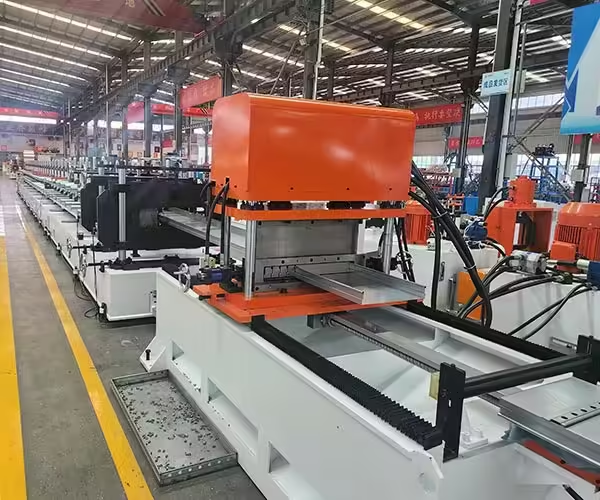
A large proportion of common roll forming problems are connected in some way with how deformation is introduced and controlled.
Edge wave may appear when flange material accumulates excessive longitudinal strain. Twist may develop when forces are not balanced across the section. Bow can result when different areas of the profile experience unequal length changes. Dimensional inconsistency can occur when bend positions or forming pressure are unstable.
Good tooling design reduces these risks by controlling the forming path before the machine enters continuous production.
This does not mean tooling can eliminate every process problem. Incoming coil variation, machine wear, setup errors, feeding instability, and operating conditions still influence the finished product.
However, a well-designed progression provides a much more stable foundation for troubleshooting and process control.
ما هي المعلومات المطلوبة قبل تصميم أدوات نموذج اللفة؟
Before tooling development begins, the equipment and tooling team should understand the actual production requirement.
The most important starting point is the finished profile drawing. Material grade, thickness range, strip condition, coating, and surface requirements should also be defined as accurately as possible.
Hole patterns and punching sequences need to be considered when they are part of the finished component.
Production requirements such as profile length, cutting method, required dimensional accuracy, product variation, and changeover needs may influence tooling configuration as well.
If several related profiles need to run on the same machine, this should be identified early. Combination tooling or adjustable tooling requirements can affect the overall design approach.
Providing these details at the beginning is more effective than attempting to adapt generic tooling after the production line has already been defined.
كيفية تقييم تصميم أدوات تشكيل اللفة
A tooling design should be evaluated by more than whether the final profile visually resembles the drawing.
Engineers should examine whether deformation is distributed logically between passes, whether critical bends remain controlled, whether material has sufficient support, and whether likely springback behavior has been considered.
The tooling should also suit the actual machine dimensions and shaft configuration.
During trial forming, profile measurements should be taken at selected stages rather than only after the final stand. This makes it easier to determine whether the strip is following the intended flower pattern.
The final evaluation should include dimensional accuracy, straightness, twist, surface condition, hole position where relevant, end condition after cutting, and repeatability across multiple samples.
A profile that can be produced correctly once is not enough. The purpose of good tooling design is to create a process capable of producing the required geometry consistently.
خاتمة
Roll forming tooling design is one of the most important factors affecting profile accuracy because it determines how deformation develops throughout the production line.
The finished profile drawing establishes the target geometry, but achieving that geometry requires a carefully planned forming progression. Material properties, bend locations, number of passes, roll geometry, roll gaps, guides, side rolls, springback, punching, cutting, and machine alignment all influence the result.
The best tooling design does not simply force the strip into its final shape. It controls material movement progressively so that each forming stand contributes the correct amount of deformation while minimizing unnecessary stress.
For manufacturers developing a new roll formed component, tooling should therefore be considered at the beginning of production-line planning. Accurate drawings, complete material information, realistic tolerance requirements, and clearly defined processing steps provide the foundation for more stable tooling development and more consistent finished profiles.
التعليمات
ما هو تصميم أدوات تشكيل اللفة؟
Roll forming tooling design is the process of developing the roller geometry and forming sequence used to gradually transform flat metal strip into a specified cross-section. It includes the flower pattern, roll passes, guides, side rolls, compensation for springback, and other tooling elements.
كيف يؤثر تصميم الأدوات على دقة تشكيل اللفة؟
Tooling determines where bends occur, how quickly they develop, how the material is supported, and how forming forces are distributed. Poor tooling design can contribute to twist, bow, edge wave, dimensional variation, and inconsistent bend angles.
كم عدد تمريرات تشكيل اللفة المطلوبة؟
There is no universal number. The required number depends on profile complexity, material properties, thickness, bend geometry, section depth, tolerances, and machine configuration. The goal is to distribute deformation across enough stages to maintain stable material flow.
ما هو نمط الزهرة في تشكيل لفة؟
A flower pattern shows the intermediate profile shapes between the initial flat strip and finished section. It allows designers to plan how bends will develop progressively through each roll forming station.
هل يمكن لمجموعة واحدة من أدوات تشكيل اللف أن تنتج ملفات تعريف مختلفة؟
Some tooling can be designed for related profile sizes or adjustable configurations, but this depends on the differences between the finished sections, material range, machine structure, and accuracy requirements. Multi-profile requirements should be identified before tooling development begins.
هل تحتاج إلى مساعدة بشأن ملف تعريف تشكيل اللفة المخصص؟
A reliable production line starts with the finished profile, material, tolerance, punching pattern, cutting method, and required production process. If you are evaluating tooling or equipment for a new metal profile, اتصل بجينبوليدا to discuss your drawings and manufacturing requirements.
 Arabic
  English
  Russian
  Spanish
  French