
Puncher Machine Trends 2026: What Metal Fabricators Need to Know
Table of Contents
Key Takeaways
- Punching equipment is becoming more automated, connected, and easier to integrate with complete production lines.
- Manufacturers increasingly evaluate total production cost instead of comparing purchase prices alone.
- Flexible tooling and programmable feeding systems help factories handle smaller batches and more product variations.
- Predictive maintenance is moving from an optional feature to an important production-management tool.
- Machine safety, operator access, and compliance documentation are receiving greater attention.
- Buyers should compare real material tests, feeding accuracy, tooling costs, service support, and production data before ordering.
- Application-specific solutions are becoming more valuable in solar mounting, construction, highway barrier, and profile-processing industries.
Metal fabrication is entering a more connected and flexible era. In 2026, buyers are no longer looking only for a machine that can create holes in metal. They want equipment that can communicate with other systems, reduce manual handling, maintain repeatable accuracy, and provide useful production data.
A modern puncher machine may combine hydraulic or mechanical punching technology with CNC feeding, automatic loading, multi-station tooling, sensors, and remote production monitoring. These developments are changing how manufacturers calculate capacity, labor requirements, maintenance costs, and return on investment.
This guide examines the most important trends influencing the market in 2026 and explains what they mean for companies planning a new equipment investment.
What Is a Puncher Machine?
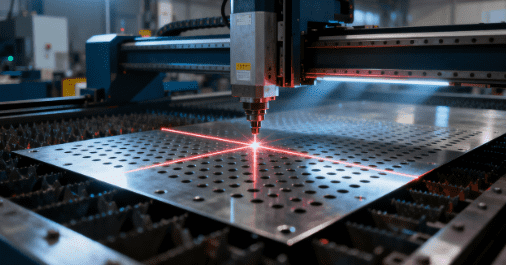
A puncher machine uses a punch and die to create holes, slots, notches, or formed features in metal sheets, coils, tubes, and structural profiles. The equipment applies controlled force to separate or shape the material according to a specified design.
The basic principle is related to the operation of a punch press, but industrial configurations vary considerably. Equipment may be designed for individual sheets, continuous coils, long profiles, round tubes, solar mounting components, or construction products.
Punching Force
Punching force is the pressure required to push the tool through the workpiece. It depends on material thickness, shear strength, hole perimeter, tooling condition, and die clearance.
A machine should provide sufficient capacity without operating continuously at its maximum rated force. Maintaining a reasonable capacity margin can support stable operation and extend the working life of critical components.
Die Clearance
Die clearance is the space between the cutting edges of the punch and die. Correct clearance helps control burr height, edge quality, tool wear, and the amount of force required.
The ideal value varies by material and thickness. Buyers should therefore ask suppliers to test the actual steel, aluminum, or other material used in production.
Feeding Accuracy
Feeding accuracy describes how precisely the system positions the workpiece before every stroke. It is particularly important when a component contains multiple holes or when punching must align with a later forming, cutting, or welding process.
A high press capacity cannot compensate for an unstable feeder. For this reason, the feeding system, clamping method, encoder, servo control, and support structure should be evaluated together.
Major Puncher Machine Trends in 2026
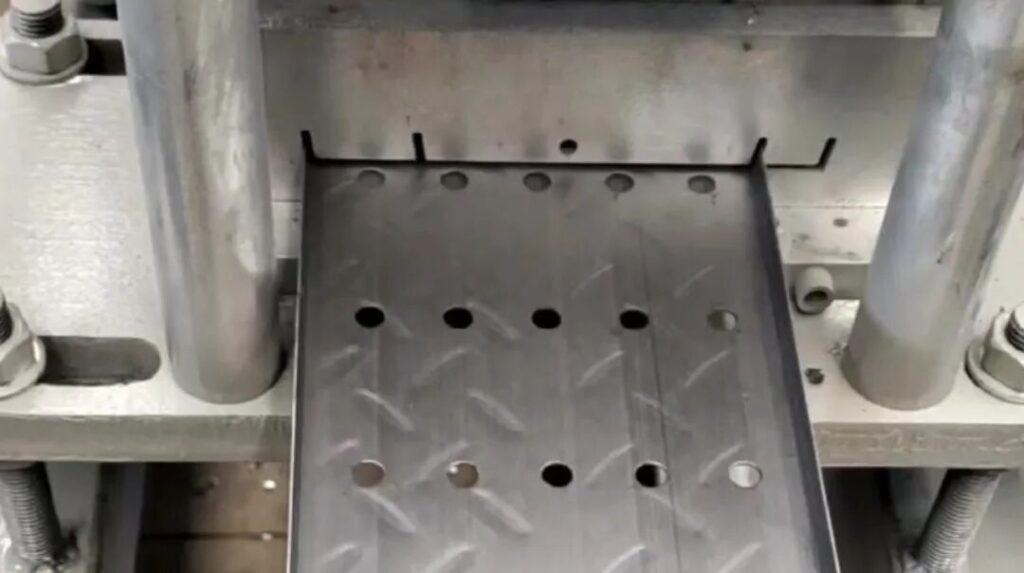
1. Intelligent Automation Becomes More Practical
Automation is shifting from isolated machine functions to coordinated production-line control. A puncher machine can now be connected to automatic loading, servo feeding, length measurement, cutting, stacking, and downstream forming equipment.
This approach reduces repeated material handling and creates a more consistent production rhythm. It is especially useful for companies producing standardized profiles in medium or high volumes.
Automatic Recipe Management
Recipe management allows operators to store parameters for different products. Hole spacing, feed length, station selection, and batch quantity can be recalled through the control interface.
The feature reduces setup errors when orders change frequently. However, stored programs should still be verified after tool replacement, material changes, or maintenance work.
Multi-Station Processing
Multi-station systems place several punching stations within one coordinated machine. Different stations may produce round holes, slots, notches, or application-specific features without repeated manual repositioning.
Jinbolida’s Nine-Station Punch Machine demonstrates how multi-station design and automatic feeding can support high-speed profile processing. The correct configuration still depends on the component drawing, material specification, and required production cycle.
2. Data-Driven Maintenance Gains Importance
More manufacturers are using equipment data to identify changes in machine condition. Sensors can monitor temperature, vibration, pressure, cycle counts, lubrication status, and abnormal loads.
According to the U.S. National Institute of Standards and Technology, predictive maintenance uses observed information such as noise, temperature, and vibration to anticipate equipment failure. Its overview of manufacturing machinery maintenance provides a useful distinction between reactive, preventive, and predictive strategies.
Preventive Maintenance
Preventive maintenance is performed according to time, cycle count, or a planned schedule. It may include lubrication, fastener inspection, filter replacement, alignment checks, and tooling inspection.
This method is straightforward to manage but can replace components earlier than necessary. It can also miss failures that develop between scheduled inspections.
Predictive Maintenance
Predictive maintenance uses equipment-condition data to determine when intervention may be required. The objective is to plan service before a breakdown without replacing healthy parts unnecessarily.
A connected puncher machine can make this approach more practical, provided the collected data is reliable and the maintenance team knows how to interpret it.
3. Flexible Production Replaces Single-Product Thinking
Many metal fabricators must now process shorter orders, customized hole patterns, and a wider range of profiles. As a result, flexibility is becoming nearly as important as maximum speed.
Programmable feeding, adjustable guides, modular dies, and quick-change tooling can reduce the time between product batches. Buyers should measure actual changeover time rather than relying only on a supplier’s maximum strokes-per-minute figure.
Modular Tooling
Modular tooling allows selected punches and dies to be changed without rebuilding the entire system. It is useful when several products share similar profiles but require different hole patterns.
The main purchasing questions are tooling availability, replacement cost, storage requirements, setup repeatability, and expected tool life under the buyer’s actual operating conditions.
Programmable Hole Patterns
CNC control makes it possible to produce different hole spacings from stored programs. This is valuable for solar supports, construction profiles, shelving systems, and other products with multiple design variations.
Before purchasing, buyers should confirm program capacity, file-transfer methods, operator permissions, data backup, and compatibility with existing drawing or production-management systems.
4. Application-Specific Punching Lines Expand
A general-purpose machine can support varied work, but an application-specific line may produce a standardized component more efficiently. In 2026, more suppliers are designing equipment around the complete production process rather than selling an isolated press.
For example, Jinbolida provides Solar Photovoltaic Rack Punching Equipment for producing mounting profiles with repeatable holes and connection features. Buyers planning a photovoltaic production line can also review the comparison between inline and separate solar bracket punching systems.
Solar Mounting Components
Solar mounting profiles may require repeated round holes, elongated slots, and connection features across long sections. Accurate feeding helps maintain consistent spacing and supports installation compatibility in the field.
The system must also suit the surface coating and mechanical properties of the selected carbon steel, galvanized steel, or aluminum material.
Construction and Infrastructure Profiles
Construction profiles, highway barrier parts, climbing-frame tubes, and formwork components can require punching before or after forming. The processing sequence affects accessibility, positional accuracy, burr direction, and line layout.
Jinbolida’s industry solutions show how punching, CNC feeding, roll forming, cutting, welding, and material transfer can be combined for different manufacturing sectors.
5. Energy Use Is Evaluated at Line Level
Energy efficiency is no longer judged only by the rated motor power. Manufacturers are looking at power consumed per qualified component, idle-time consumption, hydraulic-system efficiency, scrap levels, and the effect of unplanned downtime.
Variable-speed control can improve process control in suitable motor applications, as explained in the U.S. Department of Energy’s motor and drive system guidance. However, drive selection must match the high-torque and repetitive operating demands of punching equipment.
Energy per Finished Part
Energy per finished part provides a more useful comparison than motor size alone. A faster machine may have a higher installed power rating but consume less energy per accepted component if it reduces idle operation and rejects.
Buyers should request test data based on realistic material, batch size, and production speed. Estimated savings without defined test conditions should be treated cautiously.
Scrap Reduction
Accurate feeding and stable tooling can reduce incorrectly positioned holes, damaged edges, and rejected profiles. Material savings may contribute more to operating cost reduction than small differences in electricity consumption.
Factories should track first-pass yield, scrap weight, rework hours, and tool-related defects when comparing old and new equipment.
6. Machine Safety Becomes a Buying Criterion
Safety is increasingly considered during equipment specification instead of being addressed only after installation. Important features may include fixed guards, interlocked access doors, emergency stops, light curtains, two-hand controls, guarded foot controls, and lockout provisions.
The appropriate safeguards depend on the machine type, feeding method, operating mode, and local regulations. ISO 12100 provides general principles for machinery risk assessment and risk reduction, while the U.S. Occupational Safety and Health Administration publishes specific requirements for mechanical power presses.
Point-of-Operation Protection
The point of operation is the area where the punch and die act on the material. It presents a serious crushing and cutting risk if operators can reach it during a dangerous movement.
Guarding should be selected through a documented risk assessment. Automatic feeding does not remove the need to consider access during setup, cleaning, jam removal, inspection, and maintenance.
Safer Maintenance Access
Maintenance safety involves more than an emergency-stop button. The design should provide safe access, clearly identified isolation points, mechanical blocking where appropriate, and procedures for controlling stored hydraulic, pneumatic, electrical, or gravitational energy.
Buyers should request circuit diagrams, maintenance instructions, spare-parts information, and safety documentation before shipment.
Puncher Machine Technology Comparison
The best technology depends on production volume, material type, part geometry, flexibility requirements, and budget. The following table provides a practical starting point.
| Machine Type | Main Advantages | Main Limitations | Suitable Applications |
|---|---|---|---|
| Manual or basic punching equipment | Low initial cost and simple operation | High labor input and limited repeatability | Repairs, samples, and very small batches |
| Mechanical punch press | Fast stroke rates and efficient repeat production | Less flexible force control and demanding safety requirements | High-volume sheet-metal components |
| Hydraulic puncher machine | Adjustable force and stable control through the working stroke | Hydraulic maintenance and potentially slower cycling | Tubes, profiles, thick materials, and varied jobs |
| CNC punching system | Programmable positioning and flexible hole patterns | Higher investment and more operator training | Mixed products and repeatable custom orders |
| Multi-station punching line | Several operations in one material flow | More application-specific tooling and layout planning | Solar profiles, barriers, supports, and structural components |
| Punching and roll-forming line | Reduced handling and continuous production | Greater integration complexity | High-volume profile manufacturing |
Inline vs Stand-Alone Punching Systems
Inline Punching
An inline system connects punching with forming, cutting, stacking, or another production process. It can reduce work-in-progress, manual transfer, and floor-space duplication.
Its performance depends on line balancing. If one station stops, the interruption may affect the entire connected process.
Stand-Alone Punching
A stand-alone puncher machine operates independently from the forming line. It can serve several products and may be easier to maintain without stopping other equipment.
The tradeoff is additional material handling, storage, scheduling, and alignment between separate production stages.
Which Option Is Better?
Choose inline processing when product demand is stable, the processing sequence is proven, and reducing handling is a priority. Choose a separate system when flexibility, shared capacity, or independent maintenance is more valuable.
Manufacturers comparing automation levels may also read Jinbolida’s guide to a semi-automatic vs fully automatic steel formwork production line.
How to Choose a Puncher Machine in 2026

Start With the Finished Component
Provide the supplier with dimensioned drawings, acceptable tolerances, hole types, annual quantities, batch sizes, and quality requirements. The finished component should define the equipment—not the supplier’s standard configuration.
If several products will use the same machine, include representative drawings from both common and difficult jobs.
Test the Actual Material
Material grade, thickness, width, surface treatment, and mechanical properties influence force, die clearance, feeding, and edge quality. A demonstration using an easier substitute material may not represent factory performance.
Ask the supplier to record test conditions, production speed, positional results, burr condition, and any adjustments made during the trial.
Calculate Total Cost of Ownership
The purchase price is only one part of the investment. Include tooling, installation, utilities, training, freight, maintenance, consumables, labor, scrap, downtime, software, and expected production life.
A lower-cost puncher machine can become expensive if dies wear quickly, changeovers take too long, or technical support is difficult to obtain.
Review Supplier Capability
A capable supplier should understand tooling, feeding, controls, line integration, and the target product. Buyers can use Jinbolida’s article on how to select a puncher machine as a structured checklist before requesting a quotation.
Questions to Ask Before Ordering
- Can the equipment process my actual material grade and maximum thickness?
- What accuracy can be maintained across the complete profile length?
- How long does a normal product changeover take?
- Which tooling and wear parts are included?
- Can production recipes and operating data be backed up?
- What safety functions are included in the quoted configuration?
- How are installation, training, remote support, and spare parts handled?
- Can the supplier perform a documented factory acceptance test?
Practical Purchasing Outlook for 2026
The strongest investment is not automatically the fastest or most automated machine. It is the system that matches the factory’s product mix, staffing, material flow, quality targets, and realistic growth plan.
For a business with stable, high-volume orders, a connected multi-station line may deliver the best result. For a job shop with frequent product changes, a flexible CNC system with modular tooling may provide a better return.
Buyers can compare additional machine configurations in Jinbolida’s guide to the top metal punching machines in 2026 or explore the company’s complete range of metal-forming and profile-processing equipment.
Frequently Asked Questions About Puncher Machines
What type of puncher machine should I buy for a small metal shop?
A small shop processing varied orders will usually benefit from programmable feeding, accessible tooling, and straightforward setup rather than maximum production speed. Compare the machine’s minimum and maximum material range, changeover time, operator skill requirements, and local service options.
Is a hydraulic puncher machine better than a mechanical press?
Neither technology is universally better. Hydraulic equipment offers controllable force and is widely used for tubes and profiles, while mechanical presses can provide fast, repeatable strokes for suitable high-volume sheet applications.
How much punching force does my machine need?
Required force depends on the material’s shear strength, thickness, and total cutting perimeter. The calculation should also include a suitable operating margin and any force needed for stripping or forming operations.
Can one machine punch different hole shapes?
Yes, if the tooling and machine configuration support the required shapes. Multi-station equipment can accommodate several punches and dies, while quick-change tooling can help a flexible system switch between products.
Can punching be connected directly to a roll-forming line?
Yes. An inline puncher machine can be integrated before or after forming, depending on profile geometry and hole requirements. The supplier should evaluate line speed, synchronization, material support, accumulated tolerance, and access for tool maintenance.
How accurate is an automatic puncher machine?
Accuracy depends on more than the press itself. Servo feeding, encoder resolution, material slippage, clamping, profile support, tool condition, and thermal effects can all influence the final hole position.
Does an automatic system eliminate operators?
Automation can reduce repetitive feeding and handling, but operators are still required for setup, inspection, material replenishment, maintenance coordination, and safe process supervision. The objective is usually better labor productivity and consistency rather than completely unattended operation.
What maintenance does a puncher machine require?
Typical tasks include lubrication, tooling inspection, fastener checks, hydraulic-fluid and filter maintenance, sensor cleaning, alignment verification, and inspection of guards and safety devices. The exact schedule should follow the equipment manufacturer’s instructions and actual operating conditions.
How can I compare quotations from different suppliers?
Create one technical specification and ask each supplier to respond to the same requirements. Compare verified output, accuracy, material range, tool-change time, included accessories, safety systems, energy consumption, acceptance-testing method, warranty, and lifetime support—not only the quoted price.
What information should I send when requesting a quote?
Send component drawings, material specifications, thickness range, profile length, hole patterns, tolerances, target output, batch sizes, factory voltage, available floor space, and the preferred level of automation. Clear input helps the supplier propose a realistic configuration and reduces changes later.
Conclusion
The defining puncher machine trends of 2026 are intelligent automation, flexible processing, connected maintenance, application-specific integration, improved safety, and closer attention to total production cost. These developments can create significant value, but only when the equipment is matched to a clearly defined manufacturing requirement.
Before investing, compare the complete production process, run trials with real materials, verify achievable accuracy, and document acceptance criteria. A well-specified system should not simply punch faster—it should produce qualified parts consistently, reduce unnecessary handling, and support the factory’s long-term production strategy.
 English
  Arabic
  Russian
  Spanish
  French